


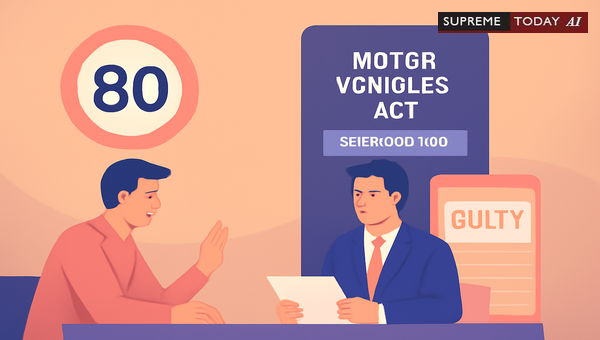
Can You to Speeding via Lawyer? Explained
Getting caught for over-speeding can be stressful, especially with court dates looming. Many drivers wonder: Can an accused in an offence of over speeding under the Motor Vehicles Act through an ? The good news is that Indian law provides a straightforward path for resolution, often avoiding lengthy trials. This blog breaks down the legal framework, procedures, and practical tips based on of the (), along with insights from relevant cases. Note: This is general information, not specific legal advice—consult a lawyer for your situation.
Understanding the Legal Framework Under
The governs traffic offences like over-speeding, typically punishable under (driving at excessive speed). specifically addresses the , making it a key provision for minor offences.
Through an
- Under of the , an accused person has the to charges related to offences under the Act, including over speeding. Crucially, the section explicitly states that the accused may appear by a () or in person. This means that an can represent the accused in pleading guilty
2008 0 Supreme(Gau) 859.
- This provision empowers advocates to handle pleas on behalf of clients, streamlining the process for busy individuals.
General criminal procedure under the also supports this. For instance, requires magistrates to inform the accused of charges and record the plea. Courts verify voluntariness, especially when done via counsel 2022 Supreme(Online)(KER) 65261.
Step-by-Step Procedure for Pleading Guilty
Pleading guilty isn't just a verbal statement—it's a formal process designed for efficiency.
Key Steps:
- Receive the and Notice: After an over-speeding , you'll get a specifying the offence and fine.
- Before Hearing: The accused can by a specified date prior to the hearing of the charge and remit the specified fine to the Court via money order. The plea of guilt must be indicated in the money order coupon itself
2008 0 Supreme(Gau) 859.
- 's Role: Your lawyer can submit the plea and fine on your behalf, appearing in court if needed.
- Court Verification: The magistrate confirms the plea is voluntary. If accepted, no further proceedings will be taken against them, and they will not be disqualified from holding or obtaining a driving licence due to this plea
2008 0 Supreme(Gau) 859.
This method is particularly useful for petty traffic violations, allowing without trial.
Implications of Pleading Guilty
Opting for a guilty plea has clear upsides and considerations:- Quick Resolution: Once the accused pleads guilty and pays the fine, the case is , meaning that the accused will not face further legal action for that specific offence
2008 0 Supreme(Gau) 859. No need for evidence presentation or witnesses.- No License Disqualification: For minor over-speeding, this plea typically avoids endorsement on your driving record.- Cost-Effective: Avoids multiple court visits and legal fees from full trials.
However, it's not always ideal. Pleading guilty admits liability, which could impact insurance premiums or future claims.
Insights from Case Law and Related Offences
While directly applies to offences, courts emphasize proper authorization for -led pleas.
Pleading Guilty via Counsel: Court Precedents
- In various cases, accused persons have pleaded guilty through their lawyers, with courts generally accepting such pleas if they are voluntary and properly explained. Yet, challenges arise if the accused claims no authorization, underscoring the need for 2024 Supreme(Online)(KER) 41632 2024 Supreme(Online)(Ker) 87831 2025 Supreme(Online)(Ker) 48801
.
- Unauthorized Pleas: Courts may set aside pleas if the acted without explicit consent. When an pleads guilty without or against the accused's instructions, it can be challenged 2022 Supreme(Online)(KER) 65261. Mere lawyer presence doesn't imply authority.
-Specific Contexts
- Over-speeding often pairs with other sections like 184 (dangerous driving) or 185 (drunk driving). In one case, the accused was proposed guilty under for causing death, showing pleas apply across offences 2025 Supreme(Online)(Mad) 70903.
- For (drunk driving), Absence of a medical test report may be fatal for the offence under of the , highlighting proof requirements—but guilty pleas bypass this by admission 2023 0 Supreme(Ker) 242.
- Speeding allegations in accidents: Going by the version in the final report, there is no case that the accused was speeding, yet pleas resolve uncontested matters swiftly 2024 0 Supreme(Ker) 1124.
In non-MV contexts like , courts note accused cannot simplicitor say 'I plead not guilty' and wants to face trial without disclosing defense early—paralleling efficiency 2013 0 Supreme(Del) 1473 2013 0 Supreme(Del) 1450.
For , allows pleas through counsel, reinforcing practices 2012 0 Supreme(Mad) 4869.
Practical Recommendations
To navigate this effectively:- Document Instructions: Provide written authority to your for the plea.- Timely Action: Remit fines via money order with plea noted, before the hearing date.- Seek Advice: Discuss with a lawyer if contesting (e.g., faulty speed gun) makes sense.- Prepare Documentation: copy, ID proof, and fine amount ready.
Ensure that the accused is informed about the procedure for pleading guilty, including the requirement to remit the fine and the implications of such a plea
2008 0 Supreme(Gau) 859.
Conclusion and Key Takeaways
Yes, an accused can to an over speeding offence under the Motor Vehicles Act through an , thanks to . This offers a streamlined resolution: remit fine, indicate plea, and case closed—no trial, no disqualification for minor cases. Courts protect rights by verifying voluntariness and authorization, as seen in precedents.
Key Takeaways:- Leverage for quick disposal.- Authorize your explicitly.- Ideal for uncontested minor offences.
Always consult a qualified lawyer for personalized guidance, as procedures may vary by jurisdiction. Drive safe!
References:-
2008 0 Supreme(Gau) 859- Additional cases: 2025 Supreme(Online)(Mad) 70903, 2023 0 Supreme(Ker) 242, 2024 0 Supreme(Ker) 1124, 2022 Supreme(Online)(KER) 65261, 2012 0 Supreme(Mad) 4869 #MVAct #SpeedingFine #LegalPlea















