SupremeToday Landscape Ad
AI Thinking

AI Thinking...

Searching Case Laws & Precedent on Legal Query.....!

Scanned Judgements…!

Checking relevance for Iqbal @ Bala VS State Of U. P. ...

Checking relevance for Ramji Lal Bairwa VS State of Rajasthan...

2024 8 Supreme 271 : The legal document explicitly addresses the issue of quashing petitions in POCSO cases and clearly states that quashing criminal proceedings under the POCSO Act based solely on a compromise between the offender and the victim (or their parent) is not permissible, especially when the offence is heinous and has a serious impact on society. The court emphasizes that offences under the POCSO Act are not of a private nature but are offences against society, and therefore cannot be settled amicably. The document further holds that invoking Section 482 CrPC to quash FIRs in such cases without hearing the victim or considering the gravity of the crime would go against the legislative intent. It specifically rejects the idea that a mere compromise can justify quashing proceedings, particularly where the allegations involve sexual assault on a child, and underscores that the High Court must consider the nature and gravity of the crime before exercising inherent powers. Thus, quashing a POCSO case without hearing the victim is impermissible.Checking relevance for X VS Rajesh Kumar...

2025 0 Supreme(SC) 727 : The court explicitly held that the High Court erred in quashing the FIRs without permitting the victims to testify, emphasizing that the victims should have been allowed to enter the witness box and depose about the incidents. The judgment states: ''''The issue has been apparently pre-judged by the High Court without even permitting the victims to enter witness box and depose about various instances, which are briefly noted in their preliminary statements.'''' This indicates that quashing petitions challenging POCSO cases cannot be admitted without hearing the victim, as the victim''''s testimony is essential to determine the existence of sexual intent and the prima facie case under the POCSO Act.Checking relevance for P. Yuvaprakash VS State Rep. By Inspector of Police...

Checking relevance for GANESAN VS STATE REPRESENTED BY ITS INSPECTOR OF POLICE...

Checking relevance for Sr. Tessy Jose VS State of Kerala...

Checking relevance for NIPUN SAXENA VS UNION OF INDIA...

Checking relevance for Abdul Salam, S/o. Habeeb Muhammed VS State Of Kerala...

Checking relevance for Jacob, S/o. Johnson VS State of Kerala, Represented by the Public Prosecutor, High Court of Kerala, Ernakulam...

Checking relevance for Akash Chandrakar VS State of Chhattisgarh...

2022 0 Supreme(Chh) 38 : Quashing petitions challenging a POCSO case cannot be admitted without hearing the victim. The court has held that notice to the victim or their guardian/informant is absolutely necessary in the interests of justice before hearing any application for suspension of sentence under Section 389(1) of the CrPC in a pending appeal by an accused convicted under the POCSO Act. This is mandated by Rule 4(15) of the POCSO Rules, 2020 and the guidelines issued under Section 39 of the POCSO Act, which entitle the victim to information about the status of the accused, including bail, release, or detention. The court emphasized that the victim has a right to be heard and to receive full information about the proceedings, and that failure to provide notice would prejudice the victim''''s rights. Therefore, quashing petitions or any application affecting the victim''''s interests must be accompanied by prior notice to the victim or their representative.Checking relevance for Rohit VS State of Maharashatra...

2023 0 Supreme(Bom) 2281 : Quashing petitions challenging a POCSO case can be admitted without hearing the victim. The court held that while the family or guardian of a child victim is entitled to legal assistance and to be informed about the proceedings, their presence in appeals or applications for suspension of sentence is not mandatory. The victim and their family are not required to be made parties in appeals or applications for suspension of sentence under the POCSO Act, and the victim should not be subjected to unnecessary hardship. The court emphasized that the victim''''s presence is not obligatory and directed that the victim should not be produced in court unless expressly required.Checking relevance for BIBI AYESHA KHANUM W/O BABA ABDUL NABI KHAN VS UNION OF INDIA THROUGH ITS SECRETARY MINISTRY OF LAW AND JUSTICE NEW DELHI...

2022 0 Supreme(Kar) 48 : The legal document establishes that in cases under the POCSO Act involving offences under Sections 376(3), 376-AB, 376-DA, or 376-DB of the Indian Penal Code, notice to the victim must be issued under Section 439(1-A) read with Rule 4(13) and 4(15) of the POCSO Rules, 2020. This mandates that the victim or their legal representative be informed of bail applications and heard before bail is granted. The court explicitly holds that the legal representative of the child victim, parent, guardian, or complainant must be heard before bail is granted to the accused, affirming that victims have a right to participate in bail proceedings. This directly answers the user''''s query by confirming that quashing petitions challenging POCSO cases cannot be admitted without hearing the victim or their legal representative, as the law requires their notice and opportunity to be heard.


AI Overview

AI Overview...

  • Cross-examination of Victims and Witnesses - Multiple sources emphasize the importance of cross-examination in POSCO cases, highlighting that it is permitted and essential for establishing the credibility of evidence. Courts have clarified that cross-examination must adhere to Section 33 of the POSCO Act, where questions are to be put to the court, which then puts them to the victim, ensuring procedural fairness ["2024 Supreme(Online)(GAU) 12503"], ["2022 Supreme(Online)(Kar) 56095"], ["2022 0 Supreme(Kar) 823"].

  • Effectiveness and Limitations of Cross-Examination - Several instances show that even hostile witnesses can be cross-examined, but the substance of their testimony often remains consistent, limiting the scope for contradiction. For example, PW 4's cross-examination was used to negate defense claims about the victim's age, but no significant contradictions emerged ["2024 Supreme(Online)(MP) 41856"], ["2023 Supreme(Online)(HP) 15387"].

  • Rights of the Accused and the Victim - The courts have upheld the rights of both parties to cross-examine witnesses, including victims, under the POSCO Act, with safeguards to prevent undue harassment. The process involves communication of questions through the court to protect the child's welfare ["2022 0 Supreme(Kar) 823"], ["2022 Supreme(Online)(Kar) 56095"].

  • Medical Evidence and Cross-Examination - Medical reports and forensic evidence are subject to cross-examination. Experts' testimonies regarding injuries, semen, and blood samples are scrutinized, but often their statements remain consistent, strengthening the evidence (e.g., sodomy indications, blood and hair analysis) ["2022 0 Supreme(HP) 425"], ["2023 0 Supreme(P&H) 3489"].

  • Challenges in Cross-Examination - Some witnesses, even when declared hostile, do not contradict their initial statements, which can limit the impact of cross-examination. Additionally, procedural issues such as timing discrepancies in medical examinations or incomplete reports are noted but do not necessarily undermine the evidence ["2023 0 Supreme(Gau) 604"].

Analysis and Conclusion:Cross-examination in POSCO cases is a vital procedural tool that must be conducted within the framework of Section 33 of the POSCO Act. Courts recognize its importance for testing the veracity of witnesses, including victims, even if they are hostile. The process aims to uphold fairness and prevent undue harassment, ensuring that evidence is thoroughly examined. Medical and forensic evidence are also scrutinized through cross-examination, which generally supports the prosecution's case when consistent. Overall, effective cross-examination enhances the reliability of evidence and aids the court in delivering just verdicts in sensitive cases involving minors.

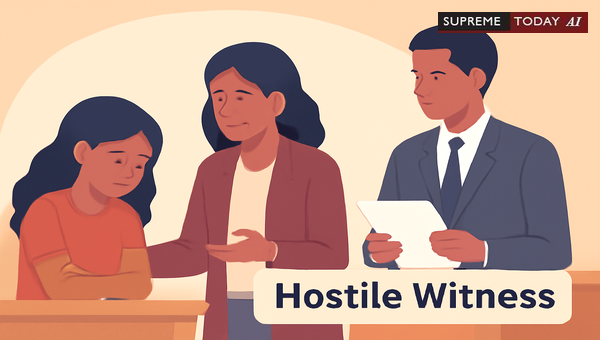
Cross-Examining Hostile Victims in POCSO Cases: Preserving Fair Trial Rights and Procedure

Cross-Examination in POCSO Cases: Victim Hostile Rights

In sensitive cases involving child sexual offences, the balance between ensuring a fair trial and protecting vulnerable victims is paramount. A common query from legal practitioners and concerned parties is: Cross Examination of Posco Case. This question delves into the nuances of cross-examining victims under the Protection of Children from Sexual Offences (POCSO) Act, 2012, particularly when the victim turns hostile. Understanding this right is essential for prosecution, defense, and courts alike, as it upholds justice without compromising child welfare.

This article breaks down the legal framework, judicial precedents, practical considerations, and insights from related cases. Note that this is general information based on established precedents and should not be considered specific legal advice—consult a qualified lawyer for case-specific guidance.

Legal Framework Under POCSO Act

The POCSO Act prioritizes child protection while guaranteeing procedural fairness. Section 33 mandates a child-friendly atmosphere during trials, including recording statements and testimony in a manner that minimizes trauma. However, this does not bar cross-examination, especially if the victim's testimony becomes inconsistent or hostile.

Courts have consistently held that denying cross-examination rights is unsustainable, as it undermines the fair trial principle. The State must be permitted to cross-examine to establish truth and justice 2022 0 Supreme(Kar) 823. As emphasized, The court has established that denying the right to cross-examine a victim under the POSCO Act is unsustainable. The State must be allowed to cross-examine the victim to ensure justice 2022 0 Supreme(Kar) 823.

This framework draws from constitutional rights under Article 21, ensuring no party is prejudiced.

When Victims Turn Hostile: Prosecution's Right to Cross-Examine

A pivotal scenario arises when the victim turns hostile, resiling from earlier statements. Here, the prosecution can seek permission to cross-examine under Section 154 of the Indian Evidence Act, 1872, read with POCSO provisions.

Judicial precedents affirm this:1. Essential for Prosecution Case: If inconsistencies emerge, cross-examination clarifies them. If a victim turns hostile, the prosecution has the right to seek cross-examination to clarify inconsistencies in their testimony. The court has ruled that such cross-examination is essential for the prosecution to establish its case 2023 0 Supreme(Kar) 713.2. Balancing Child Protection: Courts reference Nipun Saxena v. Union of India and Doula v. The State, reinforcing Section 33's interpretation. Cross-examination is allowed but must avoid re-traumatization 2022 0 Supreme(Kar) 823.

In a POCSO conviction appeal, the court noted challenges with hostile witnesses: This witness was declared hostile, but even in cross-examination, prosecution was not able to extract something contrary what he stated in his examination-in-chief 2021 0 Supreme(HP) 93. This highlights that while rights exist, effective elicitation of contrary evidence is key, and failure can weaken the case.

Child-Friendly Procedures During Cross-Examination

POCSO emphasizes sensitivity:- Atmosphere: Proceedings in camera, with support persons, screens, or video links to shield the child.- Questioning Style: Avoid aggressive tactics; focus on inconsistencies without harassment. The importance of maintaining a child-friendly atmosphere in court is paramount. This includes ensuring that the cross-examination process does not further traumatize the victim 2022 0 Supreme(Kar) 823.

Related cases underscore effective cross-examination's role. For instance, in disciplinary proceedings, minor procedural lapses were overlooked if cross-examination was thorough: A perusal of the cross-examination shows that there was effective cross-examination 2018 0 Supreme(AP) 384. Similarly, in POCSO contexts, courts scrutinize if questioning prejudices the child.

Practical Considerations for Legal Practitioners

Counsel must navigate these cases adeptly:- Thorough Preparation: Assess the victim's emotional state. Prepare questions targeting key inconsistencies, backed by prior statements under Section 164 CrPC.- Focus on Essentials: Limit to facts of the offence; avoid irrelevant probes. The cross-examination should aim to clarify specific inconsistencies in the victim's testimony and establish the facts surrounding the alleged offences 2022 0 Supreme(Kar) 823.- Support Mechanisms: Ensure victim access to legal aid or counselors. Ensure that the victim has access to legal representation or support during the cross-examination process to maintain a child-friendly environment 2022 0 Supreme(Kar) 823.

Insights from other domains apply analogously. In NDPS cases, cross-examination on sample integrity revealed lapses: He was asked in the cross-examination the date on which the sample was analysed. The cross-examination shows that after preservative is added, the sample could be saved for one year approximately 2016 0 Supreme(Bom) 2026. In POCSO, similar rigor tests testimony reliability.

In hostile witness scenarios beyond POCSO, like food adulteration appeals, cross-examination negated defenses: The above defence set forth before PW.1 is negatived by virtue of the answers elicited from the mouth of PW.4 during cross-examination 2022 0 Supreme(AP) 530. This reinforces cross-examination's power to uncover truth.

Judicial Precedents and Broader Implications

Key rulings shape practice:- Nipun Saxena v. Union of India: Advocates child-centric trials but permits cross-examination.- POCSO appeals where DNA evidence couldn't standalone without corroboration: DNA report cannot be sole and conclusive evidence to record conviction and same cannot be accepted in isolation, in the absence of foundational evidence on record 2021 0 Supreme(HP) 93. Cross-examination fills evidentiary gaps.

Courts quash convictions if procedures falter, as in NDPS: Conviction of appellant would clearly be unsustainable on this ground alone due to procedural non-compliance 2013 0 Supreme(Pat) 852. In POCSO, adherence ensures robustness.

Challenges and Evolving Standards

Challenges include:- Victim Reluctance: Due to pressure or trauma, leading to hostility.- Evidentiary Hurdles: Sole reliance on forensics without testimony support fails, as seen in acquittals.

Evolving standards demand technology like video recording for review.

Conclusion and Key Takeaways

Cross-examination under POCSO is a vital right, upheld to ensure fair trials while safeguarding children. Courts balance justice imperatives with welfare, allowing it when victims turn hostile but mandating sensitivity.

Key Recommendations:- Comply with POCSO's child-friendly mandates.- Leverage precedents like those in 2022 0 Supreme(Kar) 823 and 2023 0 Supreme(Kar) 713 for permissions.- Prioritize preparation and ethics for credible outcomes.- Foster supportive court environments.

By adhering to these principles, stakeholders contribute to just resolutions in grave cases. For tailored advice, engage legal experts promptly.

References:- 2022 0 Supreme(Kar) 823- 2023 0 Supreme(Kar) 713- 2021 0 Supreme(HP) 93- 2022 0 Supreme(AP) 530- 2018 0 Supreme(AP) 384

(Word count: approx. 1050. This post is for informational purposes only.)

#POCSOAct, #CrossExamination, #ChildJustice
Chat Download
Chat Print
Chat R ALL
Landmark
Strategy
Argument
Risk
Chat Voice Bottom Icon
Chat Sent Bottom Icon
SupremeToday Portrait Ad
logo-black

An indispensable Tool for Legal Professionals, Endorsed by Various High Court and Judicial Officers

Please visit our Training & Support
Center or Contact Us for assistance

qr

Scan Me!

India’s Legal research and Law Firm App, Download now!

For Daily Legal Updates, Join us on :

whatsapp-icon Back to top