


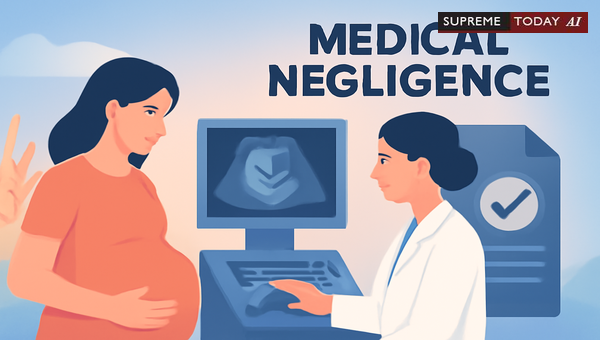
in Pregnancy Ultrasounds: India Cases
Introduction
Pregnancy is a delicate phase where expectant mothers rely heavily on medical professionals for accurate diagnostics, especially ultrasounds. But what happens when an ultrasound misreport or failure to detect anomalies leads to harm? The question of Ultrasound Related in Pregnancy Matter arises frequently in , often under the . These cases highlight the fine line between medical errors and negligence, affecting mothers, fetuses, and families emotionally and physically.
This blog explores the legal landscape, key principles, landmark judgments, and practical recommendations. While this provides general insights, it is not legal advice—consult a qualified lawyer for specific situations.
Understanding in Pregnancy Ultrasounds
occurs when healthcare providers deviate from accepted standards of care, causing harm. In pregnancy ultrasounds, this might involve incorrect reporting, failure to diagnose twins or anomalies, or inadequate . Under Indian law, patients can seek redress via for .
For instance, courts expect radiologists and obstetricians to use their expertise judiciously. As noted in legal findings, All the Radiologists are qualified and having vast experience in diagnostic radiology including pregnancy Ultrasound. After the birth of child, was diagnosed. ... If it would have been detected prenatally, they (couple) could have opted for timely and avoided the cruel ordeal and unexplainable agony to them. 2023 Supreme(Online)(NCDRC) 177
Such oversights can lead to prolonged suffering, unwanted births, or mental trauma, opening doors to compensation claims.
Key Legal Principles Governing These Cases
apply several core principles to ultrasound negligence claims:
: Practitioners must follow established medical norms. Deviation causing harm constitutes negligence. Medical practitioners are expected to adhere to the accepted standards of practice. A deviation from these standards may constitute negligence if it results in harm.
G. Vijayashankar VS Madras Medical Mission - Consumer
R. P. Gupta VS Anurag - Consumer
: Mothers must be informed of risks, benefits, and ultrasound implications. Lack thereof is a common negligence ground. Patients must be adequately informed about the risks and benefits of procedures, including ultrasounds. Failure to obtain can lead to claims of negligence.
: Per the Consumer Protection Act, substandard care leading to harm qualifies as deficiency. Under the Consumer Protection Act, a medical professional can be held liable for if they fail to provide the expected , leading to physical or mental harm.
Additionally, not every deviation equals negligence—context matters. Courts have consistently ruled that mere deviation from normal practice does not automatically imply negligence. The context of the medical decision-making process and the information available at the time are critical.
01200048256
Landmark Case Laws on Ultrasound Negligence
Indian jurisprudence offers clear precedents:
Incorrect Reporting: In one case, an ultrasound falsely reported a single live fetus at 30 weeks when the patient was only four months pregnant. The court held professionals liable for the false report causing mental agony.
Failure to Diagnose Twins: A doctor missed a twin pregnancy, leading to one child's death. Compensation was upheld due to unmet standards. A case highlighted the negligence of a doctor who failed to diagnose a twin pregnancy, resulting in the death of one child. The court upheld the compensation awarded to the complainant, emphasizing the doctor's failure to meet the expected.
R. P. Gupta VS Anurag - Consumer
Missed Fetal Anomalies: In a maternity negligence suit, doctors failed to spot at . The court awarded Rs.5,00,000, noting, Delay or failure to diagnose can cause unnecessary period of pain and suffering for pregnant mother and can even result in an unwanted birth. Compensation included litigation costs.
From other rulings, no negligence was found where scans reasonably missed anomalies: The said obstetric ultrasound scan does not reveal the anomaly found in the limbs. Hence, submits that there is no negligence on the part of treating the complainant during her pregnancy.
Mental health plays a role too. Courts allow MTP if pregnancy risks grave mental injury. Medical Board Recommendations: Medical boards have recommended termination of pregnancies in cases where severe are detected, emphasizing the mental stress on the mother and the incompatibility of the fetus with life. 2021 0 Supreme(P&H) 103 2020 0 Supreme(P&H) 665 2016 6 Supreme 129 2017 5 Supreme 493
In a severe malformation case beyond , termination was permitted: The Permanent Medical Board recommended the termination of pregnancy due to severe congenital anomaly, and the court allowed the writ petition. 2020 0 Supreme(P&H) 423
Integrating Advanced Diagnostics and Regulations
Ultrasounds aid in detecting like , often in midtrimester. This kind of abnormality can occur in isolation or in association with other anomalies, which can also be characterized with ultrasound.
Related laws like the regulate clinics. One gynecologist avoided conviction by proving online record compliance: The court found that the petitioner had been filling up the online and sending the same to the authorities under the Act on a daily basis. 2012 0 Supreme(Bom) 912
Ultrasound also supports procedures like MTP or . Ultrasound guided procedures such as medical termination of pregnancy, external cephalic version etc. and their follow-up. 2012 0 Supreme(Bom) 912
In consent disputes, like forceful terminations, medical evidence is key: Ultrasound scan was conducted just five days prior to her medical termination of pregnancy, the foetus was healthy without any abnormalities. 2016 0 Supreme(Kar) 797
Practical Recommendations for Prevention
To avoid liability:
Thorough Documentation: Record all findings and discussions meticulously.
Robust : Explain risks clearly, especially anomaly possibilities.
Ongoing Training: Stay updated on ultrasound tech for better anomaly detection, like pulmonary atresia. 2023 Supreme(Online)(NCDRC) 177
Multi-Expert Reviews: In complex cases, involve medical boards early.
Patients should seek second opinions if doubtful and preserve records for potential claims.
Conclusion and Key Takeaways
in pregnancy ultrasounds underscores the need for precision and accountability. Legal precedents stress standards, consent, and context, offering remedies via consumer courts. While technology advances, human judgment remains pivotal—Doctors are expected to make best judgment in critical cases.
Key Takeaways:- Adhere to standards to avoid '' claims.- Prioritize and documentation.- Early anomaly detection can prevent agony, enabling timely MTP where viable.- Courts balance negligence with reasonable care.
For references, see: 2021 0 Supreme(Bom) 1024
G. Vijayashankar VS Madras Medical Mission - Consumer
01200048256
R. P. Gupta VS Anurag - Consumer
2021 0 Supreme(P&H) 103 2016 6 Supreme 129 2017 5 Supreme 493This is general information based on public cases; seek professional legal counsel.
#MedicalNegligence #PregnancyUltrasound #IndiaLaw















