


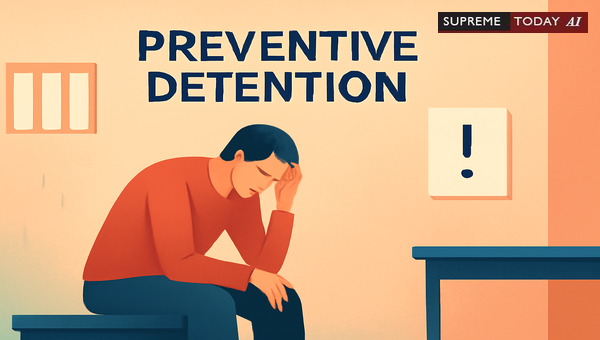
in Solitary Detention Cases: Legal Analysis
laws are powerful tools used by authorities to curb potential threats to public order or state security. However, they come with strict constitutional safeguards under Article 22 of the . A common challenge arises when there's no material in a solitary case, and the sponsoring authority merely states that the detenu will indulge in further activities. Does this reflect ? This blog post dissects the issue, drawing from key judgments to sustain this argument.
We'll examine legal standards for , the need for proper application of mind, and how courts view unsubstantiated claims about future conduct. Whether you're a legal professional, detenu's representative, or someone navigating detention challenges, understanding these principles is crucial.
Understanding and Core Principles
allows authorities to detain individuals without trial if there's a reasonable apprehension of prejudicial activities. Under laws like , , or state , the must form a based on relevant material. Courts repeatedly emphasize that detention orders must reflect a to vital facts, not mechanical repetition. Mere without backing material often fails this test. 2002 2 Supreme 573
As noted, detention must be based on a , judged on past conduct and surrounding circumstances. 2002 2 Supreme 573 Failure here vitiates the order.
in
In —where there's only one incident—the burden on authorities is higher. Courts hold that material must establish a nexus with detention grounds and demonstrate the detenu's likelihood of repeating offenses. Simply stating the detenu will indulge in further activities without cogent evidence signals .
Key standards include:- Relevance and Nexus: Material must link past conduct to future threats. In solitary instances, isolated events rarely suffice unless they show organized patterns. 2004 1 Supreme 489- Consideration of All Facts: Authorities must review court orders, bail status, and representations. Ignoring these, like a relevant order, invalidates detention. 1987 0 Supreme(SC) 291
For instance, the sufficiency of material, especially in , depends on whether the authority has properly applied its mind to the crucial aspects. 2004 1 Supreme 489 Without this, the order crumbles.
: Judicial Scrutiny
occurs when authorities fail to consciously evaluate relevant material. Courts quash orders if:- Crucial documents or court orders are overlooked. 1987 0 Supreme(SC) 291- Decisions appear boilerplate, ignoring specifics like bail compliance. 2010 0 Supreme(Mad) 3671
In one case, the detention order noted the detenu was on bail and complying with conditions, yet claimed he will indulge in further activities prejudicial to public order. The court deemed this , as circumstances didn't warrant it. 2010 0 Supreme(Mad) 3671
Similarly, where the authority stated the passport was impounded but still claimed future smuggling, it showed lack of consideration: there is on the part of the as to how the detenu could indulge in smuggling activities in future. 2012 0 Supreme(Mad) 1501
Translated documents under Article 22(5) aid the detenu's representation but aren't strictly needed for authority review under Section 11, if crucial aspects are broadly considered. Still, absence in amplifies scrutiny. 2004 1 Supreme 489
Sponsoring Authority's Statements on Future Activities
Authorities often claim the detenu, if released, would indulge in activities prejudicial to the security of the State. But courts demand for such prognosis. 2012 0 Supreme(Mad) 1501
Supporting the argument:- In Gimik Piotr vs. State of T.N., mere impounding of passport undermined future smuggling claims, vitiating the order. 2012 0 Supreme(Mad) 1501- Under , lack of real or imminent possibility of release or repetition shows non-application. 2010 0 Supreme(Mad) 5273
Counterviews exist: If multiple grounds support detention, one weak ground doesn't vitiate it. 2019 0 Supreme(J&K) 378 Also, ongoing activities post-detention order strengthen cases. 2011 0 Supreme(Ker) 958 Yet, in , unsubstantiated future claims rarely hold, as the court found that the 's ... was not supported by . 2012 0 Supreme(Mad) 1501
Integrating Court Orders and Procedural Safeguards
Court orders are vital material. Non-consideration, as in Ramlal's case, equals non-application. 1987 0 Supreme(SC) 291 Orders of courts... are relevant material that must be considered. Failure... amounts to . 1987 0 Supreme(SC) 291
In challenges via habeas corpus, courts assess:- Adverse Cases: Number and nature, but solitary ones need more. 2010 0 Supreme(Mad) 5273- Bail Status: Ongoing custody or compliance weakens future threat claims. 2010 0 Supreme(Mad) 3671- Relied-Upon Documents: Non-supply prejudices detenu. 2010 0 Supreme(Mad) 5273
Case Studies: Sustaining the Argument
- Gold Smuggling Case: Detenu attempted solitary smuggling; authority claimed future risk without material. Court set aside order: no acceptable material to support... likelihood of indulging in smuggling activities. 2012 0 Supreme(Mad) 1501
- Goonda Detention: On bail and compliant, yet detained for future prejudice—quashed for non-application. 2010 0 Supreme(Mad) 3671
- Case: Multiple grounds saved order, but solitary weakness noted. 2019 0 Supreme(J&K) 378
These sustain that in solitary scenarios, bare statements fail.
Key Takeaways
- Solitary Material: Must show clear nexus; isolated acts insufficient without more. 2004 1 Supreme 489
- Future Prognosis: Based on past + circumstances, not suspicion. 2002 2 Supreme 573
- Application of Mind: Mandatory; ignore court orders or facts at peril. 1987 0 Supreme(SC) 291
- Challenge Strategy: Highlight non-supply, bail compliance, lack of pattern in habeas petitions.
Conclusion
In solitary detention cases, claiming future prejudicial activities without robust material typically evidences , as courts demand reasoned . While multi-ground orders may survive, solitary ones falter under scrutiny. Always consult a legal expert for case-specific advice—this post provides general insights based on judgments like 2002 2 Supreme 573 2004 1 Supreme 489 1987 0 Supreme(SC) 291 2012 0 Supreme(Mad) 1501 2010 0 Supreme(Mad) 3671.
Disclaimer: This is not legal advice. Laws and interpretations vary; seek professional counsel.
#PreventiveDetention, #LegalRights, #HabeasCorpus












