


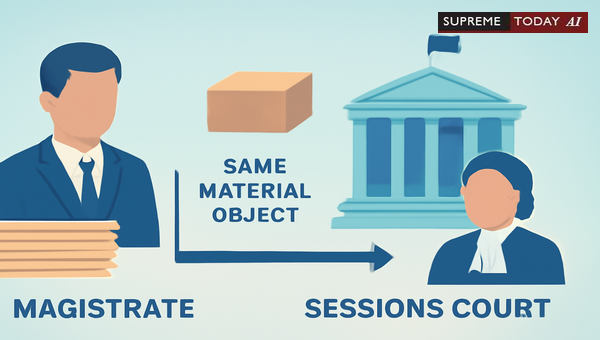
Procedure for Same Object in & Sessions Crimes
Introduction
In criminal law, a single piece of evidence or material object can sometimes link to multiple offences, complicating and trial procedures. Imagine a weapon used in two separate incidents: one minor offence triable by a and another serious crime exclusively handled by a . What happens next? This scenario raises critical questions about court authority, case , and ensuring fair trials under the ), 1973.
This blog post explores the procedure to be followed when the same material object was used in two different crimes, one triable by a and another by a . Drawing from key judicial precedents and provisions, we'll break down the steps, rules, and best practices. Note: This is general information based on legal principles and should not be considered specific legal advice—consult a qualified lawyer for your case.
Understanding the Core Legal Issue
The question at hand is straightforward yet pivotal: What is the Procedure to be Followed when a Same Material Object was Used in Two Different Crimes of which 1 is Triable by and Another is Triable by ?
The law prioritizes proper classification of offences to determine . Offences triable exclusively by a (e.g., those punishable with life imprisonment or death) override . When the same object ties into such cases, the cannot proceed independently. Instead, to the is mandatory 2001 1 Supreme 569.
As held in relevant judgments, once committed to the , the subsequent proceedings are to be conducted in that Court, and the has no to try the offence triable exclusively by the or to interfere with the proceedings once committed 2001 1 Supreme 569.
Step-by-Step Procedure Under
1. Identification of Offence Nature
The process begins with the identifying the offence involving the material object. Key question: Is it exclusively triable by the ?
- If yes, the case must be committed under of ().
- Reference for initial in sessions-triable cases 2001 1 Supreme 569 2021 0 Supreme(All) 1517.
Courts emphasize: The must determine whether the offence involving the object is triable exclusively by the 2001 1 Supreme 569.
2. to
Upon confirmation, the follows these steps:
- Record reasons for .
- Commit the case under Section 209 or if it emerges later that Sessions trial is appropriate 2001 1 Supreme 569 2021 0 Supreme(All) 1517.
- Transfer records to the .
Section 323 empowers the to commit at any stage if the case should be tried by Sessions, especially when connected to an exclusive Sessions case 2001 1 Supreme 569 2021 0 Supreme(All) 1517.
From judicial insights: even if one case is triable by , there is no bar to get it tried along with the triable by
. This allows but only after proper .
3. Trial in
Post-:
- assumes exclusive .
- Follow procedure (), not warrant procedures
.
- The procedure applicable for trial before a under i.e., from Sections 225 to 237 would alone have an application. It would be against the mandate of law if a is asked to follow the procedure of a being followed by the
.
The loses authority—no trial or interference allowed 2001 1 Supreme 569.
Handling Mixed or Cross Cases
When the object links mixed offences (some -triable, some Sessions-exclusive):
- : For non-exclusive Sessions cases, may try or commit
.
- : Exclusive Sessions cases mandate . Section 228(1)(b) Cr.P.C deals with the cases which are exclusively triable by the
.
Multiple trials for the same object are permissible, but procedural regularity is key. It is permissible to try the same material object in two different cases, even if one is triable by a and the other by a . The courts can handle such cases jointly, but must be avoided (summarized from sources
).
guidance stresses: If one case is Sessions-triable, commit the linked case under Section 323 rather than trying independently
.
Exceptions, Limitations, and Judicial Clarifications
- Discretion under Section 228: can try non-exclusive cases but not override Sessions exclusivity 2021 0 Supreme(All) 1517.
- No Automatic Joinder: Same object doesn't force all cases together—classify each offence 2001 1 Supreme 569.
- Special Courts: For NDPS or Gangster Act cases, similar applies, following
. It would be against the mandate of law if a is asked to follow the procedure of a ... if a case exclusively triable by is made out, or not and if made out then he has to commit the case
.
Authorities should use tools like / to avoid duplicate FIRs on the same incident 2001 1 Supreme 569 2021 0 Supreme(All) 1517.
Practical Recommendations
To navigate these cases effectively:
- Classify early: Determine triability before proceedings.
- Commit promptly: Use Sections 209/323 for Sessions cases.
- Avoid irregularities: Stick to statutory procedures—no improvisation.
- Seek if feasible: Link cases post- for efficiency
.
Conclusion and Key Takeaways
When the same material object spans and Sessions-triable crimes, hinges on offence classification. Exclusive Sessions offences trigger mandatory under , shifting all control to the . This ensures procedural integrity and fairness, as reinforced across judgments 2001 1 Supreme 569 2021 0 Supreme(All) 1517
.
Key Takeaways:- Identify if exclusively Sessions-triable → Commit under Section 209/323.- Post-: handles via .- : No trial/interference post-commit.- Use tech/tools for case linkage; possible with regularity.
This framework upholds 's balance of efficiency and justice. For tailored advice, engage legal experts promptly.
References:1. 2001 1 Supreme 569: Commitment and jurisdictional boundaries.2. 2021 0 Supreme(All) 1517: powers under Sections 209/323.3.
,
, etc., for cross-case handling. #CrPCProcedure, #SessionsCourt, #LegalJurisdiction















