


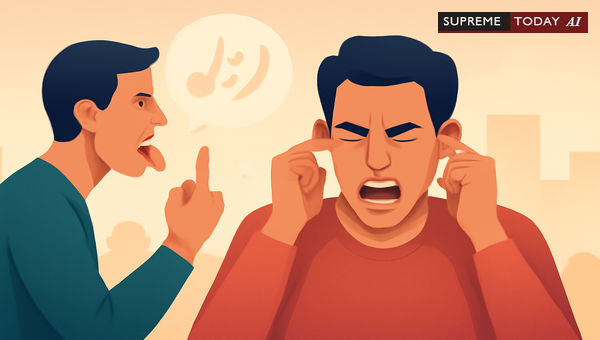
Understanding Annoyance Under IPC Section 294
In today's diverse and often contentious public spaces, what one person finds offensive might be everyday banter to another. But when does annoyance cross into criminal territory under Indian law? A common query from those navigating public disputes or legal defenses is: What is Annoyance under IPC? This question points directly to , which addresses and songs in public places to the annoyance of others. Understanding this provision is crucial for anyone facing charges, defending a case, or simply curious about .
This blog post breaks down the legal definition, key principles, judicial interpretations, and practical considerations. Note: This is general information based on legal precedents and is not specific legal advice. Consult a qualified lawyer for your situation.
Definition of Annoyance Under
Annoyance, in the context of , refers to a feeling of displeasure or disturbance caused by or songs. It is essential for establishing the offense that the act or song must cause annoyance to others. Courts have emphasized that mere use of obscene language or acts is insufficient for conviction; there must be evidence of experienced by individuals 2024 0 Supreme(MP) 66 2011 0 Supreme(All) 168.
The term annoyance is not rigidly defined in the IPC but is interpreted through judicial lenses. As one source notes, The word 'annoyance', therefore, indicates such conduct of a person which would harm, injure or irritate other persons or to make them angry. The word 'annoyance' is stated to mean an action of annoying, molestation, or state of feeling caused by what annoys. 1995 0 Supreme(Guj) 263. This highlights that annoyance involves tangible discomfort, not just subjective offense.
Further, annoyance under Section 294 can encompass obscene words, indecent acts, or even noise in public. Importantly, The said offence is not only made out when an obscene act is committed to the annoyance of others in any public place but also when the accused utters words to the annoyance of others in or near any public place. 2024 Supreme(Online)(Ker) 81971. Even annoyance to a single person can suffice if proven, though it often implies public impact
MENON v. PERERA
.Key Legal Principles for Proving Annoyance
To secure a conviction under , several principles must align:
Requirement of Proof: The prosecution must demonstrate that the accused's actions resulted in annoyance to others. Without this proof, a conviction cannot be sustained 2023 0 Supreme(UK) 368 2024 0 Supreme(MP) 66. Mere potential or probability of annoyance is insufficient; or disturbance must be established
CROOS v. SHAFI
TISSERA v. FERNANDO
.Contextual Analysis: Annoyance is highly contextual, depending on societal norms and circumstances. For instance, what may be considered annoying in one community might not be viewed the same way in another 2024 0 Supreme(MP) 66 1976 0 Supreme(All) 5. In Dhal Singh v. State of M.P., the court noted that in certain societal contexts, abusive language may not be perceived as offensive, failing to establish annoyance 2024 0 Supreme(MP) 66. Similarly, Roshanlal v. State of M.P. reiterated that annoyance is the crux of the offense 2024 0 Supreme(MP) 66.
Public Figures and Criticism: Courts recognize that public figures must tolerate higher criticism, including vulgar remarks, as part of democratic discourse. This tolerance influences whether an act constitutes annoyance 2011 0 Supreme(All) 168.
Additional sources reinforce this: Annoyance also more or less means the same thing as . What is or annoyance is a question of fact depending on the facts and circumstances of each case. 2001 0 Supreme(Kar) 184. may be a species of annoyance, but not all annoyances qualify as —key is interference with ordinary comforts 2015 0 Supreme(Bom) 477 1995 0 Supreme(Guj) 263.
and Evidence Standards
Courts demand concrete evidence. In cases like the one referenced, The evidence in this case shows that annoyance was caused to only one person. The words of the rule are 'unnecessary annoyance to persons.' In any event, to justify a conviction, there should have been evidence that...
MENON v. PERERA
. Without recorded evidence of the language or act causing annoyance, conviction fails 2023 Supreme(Online)(Bom) 17490.Intent plays a role too: Annoyance can be presumed if the act was done with knowledge it would likely annoy. or intimidate can be inferred from the circumstances, and the natural consequence of an act can establish an
SUPPAIYA v. PONNIAH et al.
. For example, persistent accosting causing annoyance requires proof it was against the will of those affectedGOVINDAN v. SILVA
.In broader contexts, like , laws extend to causes annoyance to any person in an indecent manner by statements or verbal or comments or telephone calls or calls of any type or by chasing or sending messages or mails by any means 2020 0 Supreme(Ker) 849. Though not strictly IPC 294, it mirrors the principle.
Scope of Annoyance: , Songs, and Beyond
Section 294 targets:- or songs in public to the annoyance of others.- Uttering obscene words in public places.
The annoyance must be to others, often the public or specific individuals. Meaning of Annoyance in IPC Section 294 - Annoyance refers to causing discomfort or disturbance to others, which can be to an individual or the public at large. The injury, danger, or annoyance must be common and not limited to a few individuals
SARAM v. SENEVIRATNA
. However, precedents allow single-person annoyance if evidencedCROOS v. SHAFI
.Noise cases illustrate: Unnecessary noise via exhortations causing annoyance has been scrutinized, but intent matters
MENON v. PERERA
. Theft or other acts with annoyance intent differ under IPC but echo the themeGUNASEKERA v. SOLOMON et al.
.Practical Recommendations
- For Prosecution: Collect evidence of , such as or recordings demonstrating disturbance 2023 0 Supreme(UK) 368.
- For Defense: Highlight context, societal norms, and lack of proven annoyance. For public figures, stress tolerance of criticism 2011 0 Supreme(All) 168.
- Evidence Collection: Always document specifics; vague claims like What was the cause of annoyance, the same is not clear weaken cases 2011 0 Supreme(UK) 654.
Conclusion and Key Takeaways
Annoyance under is the linchpin of the offense—without proof of actual disturbance from or songs, charges falter. Courts weigh context heavily, from community norms to 2024 0 Supreme(MP) 66. As summarized: Annoyance is Essential: To secure a conviction under , it is imperative to prove that the accused's actions caused annoyance to others. Context Matters: The societal context and the nature of the act play a significant role. Public Discourse: Public figures are expected to endure a level of criticism that may not constitute legal annoyance.
Key Takeaways:- Prove actual, not potential, annoyance.- Context is king—societal norms dictate perception.- Evidence is non-negotiable for conviction.
Stay informed, respect public spaces, and seek professional advice for legal matters. This analysis draws from established precedents to clarify a nuanced area of law
SARAM v. SENEVIRATNA
CROOS v. SHAFI
TISSERA v. FERNANDO
. #IPCSection294, #AnnoyanceIPC, #IndianPenalCode












