


How to Identify Kerosene Residues in Fire-Related Deaths: A Forensic Guide
Fire-related deaths are tragic events that often trigger forensic investigations, particularly when arson is suspected. In legal proceedings, proving the use of accelerants like kerosene can be pivotal in establishing . A common question arises: How to Identify the Residues of Hydro Carbon/ Kerosene in a Death Suffered by Fire Accident? This blog post explores reliable forensic markers, analytical techniques, challenges, and preventive measures, drawing from case evidence and scientific insights. Note: This is general information for educational purposes and not specific legal advice. Consult qualified professionals for case-specific guidance.
Why Detecting Kerosene Residues Matters in Legal Cases
In arson or suspicious fire deaths, identifying kerosene as an accelerant strengthens the . Courts rely on forensic reports to corroborate eyewitness accounts, scene observations, and chemical analyses. For instance, the presence of kerosene on a victim's burnt clothes or at the scene can indicate deliberate ignition. Key cases highlight this: chemical analyzer reports confirmed kerosene on clothing and swabs 2020 0 Supreme(Bom) 454, while burnt articles like sarees smelled of kerosene 2018 0 Supreme(Bom) 67
However, detection isn't always straightforward due to kerosene's volatility and potential background hydrocarbons in fire debris. Proper protocols ensure reliability.
Key Forensic Markers for Kerosene Exposure
1. Residues on Biological and Non-Biological Materials
Kerosene leaves detectable traces on victims' bodies and scene items. Common evidence includes:- Burnt clothes (sarees, petticoats, blouses), hair, skin swabs.- Containers like bottles, cans, stoves, funnels, or pins used for pouring 1983 0 Supreme(Del) 308
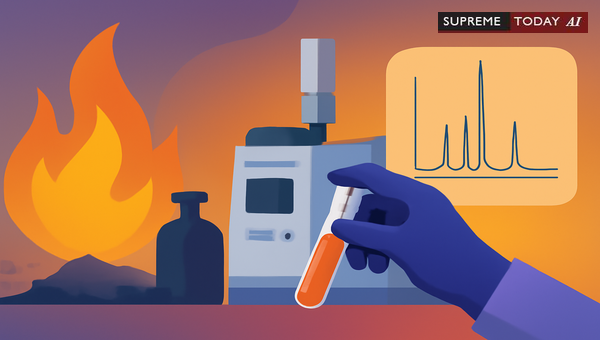
Primary Technique: Gas Chromatography-Mass Spectrometry (GC-MS)This gold-standard method profiles hydrocarbons unique to kerosene, distinguishing it from other fuels. In one case, Exhibit 68 from the chemical analyzer confirmed kerosene via GC on clothes and swabs 2020 0 Supreme(Bom) 454. Hydrocarbon fractions—aliphatic and aromatic compounds—form the signature profile.
2. Scene Evidence and Sensory Indicators
Preliminary clues often start with sensory detection:- Strong kerosene odor at the scene or on items 2018 0 Supreme(Bom) 67 1983 0 Supreme(Del) 308- Seized artifacts: full-sized kerosene tins (e.g., 16-liter), plastic cans, pouring tools 1983 0 Supreme(Del) 308
Forensic labs confirm via GC-MS. The report verified residues on clothes and objects 1983 0 Supreme(Del) 308
3. Specific Hydrocarbon Profiles and Advanced Markers
Kerosene's mix of C9-C16 hydrocarbons sets it apart. Analysts compare samples against standards. While not always noted, UV-fluorescent additives in some kerosene aid visualization, though standard GC-MS suffices.
Corroborative finds, like kerosene bottles near the victim, bolster claims 1983 0 Supreme(Del) 308
Challenges and Limitations in Kerosene Detection
Despite robust methods, hurdles exist:- Volatility: Kerosene evaporates quickly in intense fires, demanding prompt evidence collection.- Background Interference: Hydrocarbons naturally occur in ashes, complicating attribution. The mere detection of hydrocarbons does not confirm their use as accelerants, as these compounds can naturally occur in ashes or be present due to other reasons. No permissible limits or definitive markers distinguish hydrocarbons originating from kerosene/diesel from background levels 2024 Supreme(Online)(MP) 7115- Lack of Standards: Without detailed profiles or spot visits, conclusions falter 2024 Supreme(Online)(MP) 7115
, control samples, and advanced GC-MS mitigate these. Cases like 2004 0 Supreme(MP) 231 and 1992 0 Supreme(J&K) 30 underscore the need for meticulous documentation.
Integrating Scene Investigation and Eyewitness Testimony
Forensic markers shine when combined:- Odor + residues + containers form a cohesive narrative 2018 0 Supreme(Bom) 67 1983 0 Supreme(Del) 308- Eyewitnesses noting pouring tools align with seized evidence 1983 0 Supreme(Del) 308
This framework supports legal arguments on causation and intent 2020 0 Supreme(Bom) 454
Prevention: Fire Safety Measures for Hydrocarbon Risks
Beyond investigation, prevention is key, especially in industrial or household settings prone to kerosene fires:- Install multi-gas detectors at tank areas.- Route condenser vents through VOC absorption media like activated carbon.- Conduct mock drills for gas leaks and spills 2024 Supreme(Online)(NGT) 620 2024 Supreme(Online)(NGT) 4624 2023 Supreme(Online)(NGT) 5092 2024 Supreme(Online)(NGT) 4264 2023 Supreme(Online)(NGT) 4979 2024 Supreme(Online)(NGT) 4810 2024 Supreme(Online)(NGT) 3292 2024 Supreme(Online)(NGT) 2033 2023 Supreme(Online)(NGT) 4587
These protocols reduce accident risks and aid forensic clarity by minimizing accelerant scenarios.
Scientific and Legal Significance
Positive GC-MS results provide crucial corroborative evidence in establishing in arson cases 2020 0 Supreme(Bom) 454 2018 0 Supreme(Bom) 67 1983 0 Supreme(Del) 308. Yet, as noted, Identifying kerosene residues in fire victims relies on detailed chemical analysis, which is often lacking or inconclusive 2024 Supreme(Online)(MP) 7115
Courts weigh these holistically, emphasizing prompt, standardized testing.
Conclusion and Key Takeaways
Identifying kerosene residues in fire deaths hinges on:1. Chemical Profiling: GC-MS for hydrocarbon signatures on clothes, skin, and scene items 2020 0 Supreme(Bom) 4542. Sensory and Physical Evidence: Odors, containers, tools 2018 0 Supreme(Bom) 67 1983 0 Supreme(Del) 3083. Overcoming Limitations: Address volatility and backgrounds with controls 2024 Supreme(Online)(MP) 71154. Prevention Focus: Safety drills and detectors avert tragedies.
For robust investigations, integrate forensics, scene exams, and testimony. Always prioritize accredited labs and legal experts.
Word count: 1028. Sources compiled from forensic reports and safety guidelines for comprehensive insight.
#ForensicScience, #ArsonInvestigation, #FireForensics












