


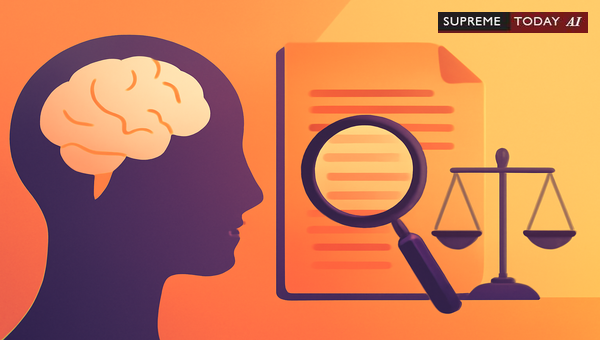
Understanding State of Mind in the Context of the Evidence Act
In criminal law, proving what was going on inside someone's head at the time of an alleged crime can make or break a case. The concept of state of mind is central to this, particularly under the . But what exactly does it mean? If you've ever wondered, Plz Explain to me the Concept of State of Mind in Context of Evidence Act, you're not alone. This blog dives deep into this pivotal legal principle, its evidentiary value, and real-world applications, drawing from landmark cases and statutory insights.
Whether you're a law student, legal professional, or simply curious about , understanding state of mind helps demystify how courts assess intention, knowledge, and mental capacity. Note: This is general information and not specific legal advice; consult a qualified lawyer for your situation.
Defining State of Mind: A Core Element in Criminal Evidence
State of mind refers to the mental condition or attitude of an individual at a particular time, especially in relation to . It encompasses whether the accused had the necessary mental awareness, intention (), or knowledge when committing the act. Under the Evidence Act, this is typically established through admissible evidence reflecting the person's genuine mental state at the crucial moment. Mere assumptions or conjectures won't suffice; the evidence must be clear, cogent, and direct. 2020 6 Supreme 246
In essence, courts examine the accused's mental attitude to determine culpability. As highlighted in judicial precedents, the ingredients of cannot be assumed to be ostensibly present but have to be visible and conspicuous. 2020 6 Supreme 246 This underscores that state of mind isn't inferred lightly—it's proven through facts.
Why It Matters: Linking and
Criminal offenses generally require both the act () and the guilty mind (). State of mind bridges this gap. For instance, in cases of murder or serious crimes, prosecutors must show the accused acted with intent or knowledge. Without it, liability may not attach, especially in defenses like insanity under , read with . 2023 1 Supreme 405
places the burden on the accused to prove exceptions like unsoundness of mind, but only at the time of the offense. The crucial point of time for considering the defence plea of unsoundness of mind has to be with regard to the mental state of the accused at the time the offence was committed collated from evidence of conduct... 2023 1 Supreme 405
Types of Evidence Admissible for State of Mind
Proving an invisible mental state relies on tangible indicators. Courts admit:
- : Statements made in the heat of the moment, unprompted and reflective of true feelings. In one case, The evidence of Bharti's spontaneous utterance is admissible as evidence... because it captured the genuine mental state during the event. 2023 0 Supreme(Del) 349
- Conduct and behavior: Actions proximate to the incident, like fleeing or unusual reactions.
- Communications: Letters, talks, or declarations showing intent or knowledge.
- Medical evidence: For insanity claims, though legal insanity (not just medical) is key—incapacity to know the act's nature or wrongfulness. 2025 4 Supreme 666
These must be contemporaneous; post-event statements may lack reliability. Under , facts showing state of mind or intention are relevant when in issue. 2014 0 Supreme(Bom) 1375
: Who Proves What?
The prosecution typically bears the initial burden to establish beyond reasonable doubt. However:
- For general offenses, must be visible and conspicuous, not assumed. 2020 6 Supreme 246
- In insanity defenses, the accused must prove unsoundness of mind on a under Section 105, Evidence Act. Courts assess if the person was incapable of knowing the nature of said act or that it was wrong/contrary to law. 2023 1 Supreme 405
As noted, does lie on accused to prove to satisfaction of Court that one is insane while doing act prohibited by law—Such a burden gets discharged based on a case and reasonable materials... 2023 1 Supreme 405 Failure to discharge this, as in 1961 0 Supreme(SC) 26, leads to rejection of the defense.
In circumstantial cases, evidence pieces—like confessions or flight—are considered dependently, not multiplied doubts, since guilty minds tend to produce such behaviors. 2009 5 Supreme 71
Landmark Cases Illustrating State of Mind
Insanity and Unsound Mind
In 1961 0 Supreme(SC) 26, the accused claimed insanity but failed to prove unsoundness at the act's time: The accused was charged with... claiming that he was incapable of knowing the nature of the act. Insufficient evidence doomed the plea.
Similarly, 2023 1 Supreme 405 acquitted an appellant under , emphasizing legal vs. medical insanity: Mere medical insanity cannot be said to mean unsoundness of mind—There must be inability of a person in knowing nature of act...
In a poignant mother-daughters murder case, conviction was softened to due to possible temporary insanity, absence of motive, and rural context where mental issues mimic superstitions. Only such mental or medical condition which affects... renders him unable to know nature of act... 2025 4 Supreme 666
Visibility
Courts demand concrete proof. In 2020 6 Supreme 246, had to be demonstrated, not conjectured, reinforcing Evidence Act principles.
Exceptions and Limitations
- Relevance and Timing: Evidence must be proximate; delayed expressions may not reflect the true state. 2023 0 Supreme(Del) 349
- Presumption of Sanity: Everyone is presumed sane unless proven otherwise, shifting burden to the accused.
- Scrutiny of Inferences: Conduct-based inferences need reliable support to avoid speculation. In conspiracy or abetment, reading the deceased's mind is tricky without direct evidence.
Motive's absence can bolster insanity pleas, as it's elusive and hidden in the mind. 2025 4 Supreme 666
Practical Recommendations for Litigants
- Gather contemporaneous evidence like utterances or witness accounts of conduct.
- For defenses, present medical/ lay evidence on mental state at the exact time.
- Courts may invoke , to probe inexplicable circumstances suggesting mental lapse. 2025 4 Supreme 666
Key Takeaways
- State of mind proves or exceptions like insanity via spontaneous, direct evidence.
- Burden varies: prosecution for basic guilt, accused for defenses (preponderance standard).
- Cases like 1961 0 Supreme(SC) 26, 2023 0 Supreme(Del) 349, and 2020 6 Supreme 246 highlight the need for visible proof.
In summary, under the Evidence Act, state of mind is the lens through which criminal intent is viewed. It demands rigorous evidentiary standards to ensure justice balances act and mind. Stay informed, but always seek professional advice for legal matters.
References:1. 1961 0 Supreme(SC) 26 – Burden for insanity.2. 2023 0 Supreme(Del) 349 – .3. 2020 6 Supreme 246 – Visible .4. 2023 1 Supreme 405 – Section 105, Evidence Act.5. 2025 4 Supreme 666 – Legal vs. medical insanity.
#EvidenceAct, #MensRea, #CriminalLaw















