


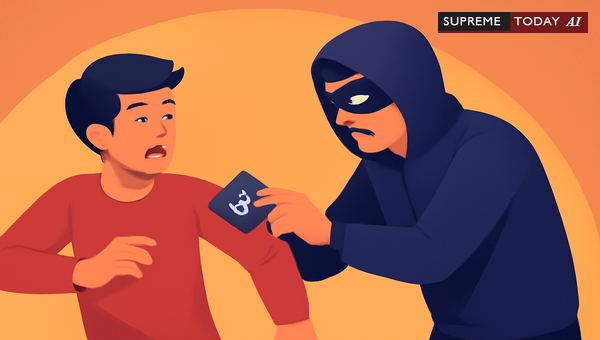
Pulling a Man Down While Taking Money from His Pocket: What Offence Applies?
Imagine a crowded street where someone suddenly pulls a man to the ground and snatches money from his pocket. What offence does this constitute under the ()? This scenario raises critical questions about , , and the role of force in property crimes. In this post, we break down the relevant sections, distinguish between and , and draw insights from real case documents to provide clarity.
Important Disclaimer: This article offers general information based on provisions and case references. It is not legal advice. Consult a qualified lawyer for advice specific to your situation.
The Legal Question at Hand
The query is straightforward: Pulls Man down while Taking Money from his Pocket what Offence under ? At first glance, it seems like simple —taking without consent. However, the act of pulling the man down introduces an element of force or violence, which could elevate it to a more serious offence like .
Under the , the classification hinges on intent, consent, and crucially, whether force, threat, or hurt was involved. Let's examine the key sections.
Relevant Sections Explained
:
is defined under as dishonestly taking out of another's possession without consent, intending to take it dishonestly. punishes it with imprisonment up to 3 years, or fine, or both.
If the money was taken from the pocket without the victim's knowledge or consent and without force, it qualifies as . For instance, in a documented case, an accused snatched money from a person, leading to charges under
. This shows pickpocketing-style thefts are prosecuted here.
However, pulling the victim down suggests more than stealth—it implies confrontation.
Sections 390 and 392 :
defines as committed with violence, threat of violence, or causing/attempting to cause or hurt to facilitate the or ensure escape. prescribes punishment: up to 10 years imprisonment and fine.
The act of pulling a man down while taking money typically involves force to overcome resistance or restrain the victim. This aligns with , as it goes beyond mere taking. Evidence from cases supports this:
- In one incident, a witness saw the accused taking out the mobile phone from the pant pocket of PW-2 after snatching, leading to prosecution under provisions 2023 0 Supreme(Bom) 875.
- Courts have convicted for similar forceful snatching under , especially with violence 2023 0 Supreme(Bom) 875 2024 0 Supreme(Del) 429 2023 0 Supreme(Del) 3780 2025 0 Supreme(Ker) 2130 2023 0 Supreme(Mad) 1946 2024 0 Supreme(P&H) 1397.
Additional Sections: , Hurt, and Deadly Weapons
- (): Punishes voluntary obstruction of a person's movements (up to 1 month imprisonment). Pulling someone down restrains them momentarily.
- (): If the pull causes injury, this applies (up to 1 year imprisonment).
- ( with Deadly Weapon): If a knife or similar is used/threatened, punishment jumps to 7 years minimum 2024 0 Supreme(Del) 429 2023 0 Supreme(Del) 3780. Even if unseen, threat suffices for Section 3922024 0 Supreme(P&H) 1397.
vs. : Key Differences
Understanding the distinction is crucial:
| Aspect | (S.379) | (S.390/392) ||-----------------|--------------------------------|--------------------------------------|| Force | None; stealthy | Violence, threat, or restraint || Examples | Pickpocketing unnoticed | Pulling down to snatch
|| Punishment | Up to 3 years | Up to 10 years || Escalation | No hurt/weapons | + Hurt (323), Weapon (397) |
The tipping point is force. Courts look at circumstances: Did the pull cause fear or hurt? Was it to commit or escape? In the scenario, pulling down indicates 2023 0 Supreme(Bom) 875.
Insights from Case Documents
Real cases illustrate application:
Snatching from Pocket with Pursuit: PW-5 deposed seeing the accused taking mobile phone from right side pocket of the pant of one of the passengers. That person got down from the train. PW-5 also got down and started following him 2023 0 Supreme(Bom) 875. Conviction under despite no separate weapon charge.
Forceful Recovery: Money recovered from accused's pocket post-snatch, establishing possession and intent 2023 0 Supreme(Mad) 1946.
Weapon Involvement: Cases with knives led to 2024 0 Supreme(Del) 429 2023 0 Supreme(Del) 3780. One notes threat and violence in pocket-snatching context 2024 0 Supreme(P&H) 1397.
Contrast with Non-Violent Taking: Mere recovery from pocket without force seen as weaker evidence, but violence strengthens case 2023 0 Supreme(J&K) 573 2014 0 Supreme(Del) 1054.
Other snippets highlight recovery: the appellant/accused took out the money from his left hand pocket 2013 0 Supreme(Megh) 55, but context of force differentiates.
These references show courts prioritize witness accounts of force and immediate pursuit for convictions 2023 0 Supreme(Bom) 875
.
Factors Determining the Exact Offence
- Use of Force/Violence: Pulling down = .
- Injuries: Supports Section 323.
- Weapons: Triggers Section 397.
- Evidence: Witness testimony, crucial 2023 0 Supreme(Bom) 875 2023 0 Supreme(Mad) 1946.
Prosecution often charges multiple sections; courts decide based on facts.
Conclusion and Key Takeaways
Pulling a man down while taking money from his pocket generally constitutes under , not mere under 379, due to the inherent force 2023 0 Supreme(Bom) 875
. If weapons or severe hurt involved, it escalates to Section 397 or others 2024 0 Supreme(Del) 429.
Key Takeaways:- Force elevates to .- Document injuries, witnesses for stronger cases.- Review facts carefully—consult legal experts.
Stay vigilant in public; report promptly. For deeper analysis, refer to texts or professionals.
#IPCRobbery, #TheftVsRobbery, #LegalIndia












