


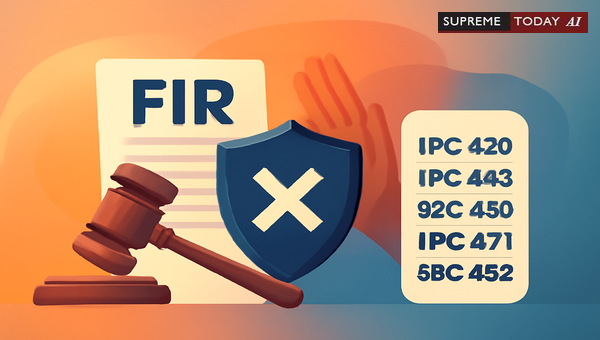
Quashing Sections 465, 468, 471, and 420: A Comprehensive Guide
Facing criminal charges under Sections 465 (forgery), 468 (forgery for cheating), 471 (using forged documents as genuine), and 420 (cheating) of the () can be daunting. Many individuals search for of 465 468 471 420 seeking ways to challenge these or proceedings. Fortunately, , invoking inherent powers under , often such cases under specific circumstances like insufficient evidence, settlements, or . This post explores the key grounds, landmark principles, and practical recommendations—remember, this is general information, not personalized legal advice. Consult a qualified lawyer for your situation.
Understanding the Offences
Before delving into quashing, it's essential to grasp these sections:- : Punishes forgery, making a false document with intent to cause damage or injury.- : Forgery specifically for cheating.- : Using a forged document as genuine, knowing it to be forged.- : Cheating and dishonestly inducing delivery of property.
These are typically , but courts may proceedings if they don't disclose a or continuation would be unjust. 2022 0 Supreme(Mad) 2782
Key Grounds for Quashing
Courts when allegations lack merit. Here are the primary principles:
Lack of Evidence or : Proving forgery and cheating requires clear evidence of (guilty mind). Without it, proceedings fail. In one case involving land grabbing accusations, the court quashed charges under these sections as allegations didn't substantiate falsification or cheating. 2022 0 Supreme(Mad) 2782 Establishing an offence under Sections 420, 465, 468, and 471 requires proof of and the act of creating a false document. 2022 0 Supreme(Mad) 2782
Masquerading as Criminal: If the matter is contractual or civil (e.g., property deals), criminal prosecution may be quashed. Courts prevent misuse of process for settling civil scores. 2010 0 Supreme(Mad) 1638
Settlements and Compromises: Even for offences, amicable resolutions can lead to quashing, especially if offences have civil undertones. For instance, offences punishable under Sections 420, 468, 471 and 465 offences punishable under Sections 468, 471 and 465 as the compromise arrived at between the parties.
Another case quashed an FIR post-settlement in a dispute with civil characteristics. 2015 0 Supreme(Del) 1783
: filed with , like family vendettas, are often set aside. A prosecution by a family member was quashed due to evident lack of and the malicious intent behind the complaint. 2009 7 Supreme 494
These align with guidelines in , emphasizing quashing to secure justice ends.
Relevant Case Law Insights
have consistently applied these principles:
Insufficient Evidence Example: In a conspiracy and document fabrication case, proceedings under 420, 465, 468, 471 were quashed for lack of proof. 2022 0 Supreme(Mad) 2782
Settlement-Driven Quashing: Parties settling led to FIR quashing, recognizing amicable resolutions' value. 2015 0 Supreme(Del) 1783 Similarly, in , under Secs. 420, 465, 468, 471 were quashed post-compromise. 2022 Supreme(Online)(Kar) 43611
Offences Quashed: Despite being , courts quashed cases under 420, 465, 466, 467, 468, 471 via settlements.
Sections 406, 420, 465, 466, 467, 468 and 471 , pending in the Court of Chief Judicial Magistrate, Dehradun, are . Yet, exceptional relief granted.
: Family disputes or baseless charges, like in 2009 7 Supreme 494, highlight courts' reluctance to entertain malice-driven cases.
Additional precedents show trends: Multiple under these sections quashed on settlements or evidence gaps. 2022 0 Supreme(Guj) 1527 2025 Supreme(Online)(Kar) 38326 The offences alleged are punishable under . 2018 0 Supreme(Bom) 926
Integrating Broader Trends from Judgments
Across sources, a pattern emerges: Courts exercise Section 482 powers cautiously but favorably when:- Disputes resolve amicably, even in forgery-cheating combos. 2023 0 Supreme(Raj) 2175- No criminal intent proven, e.g., in land revenue or bank loan cases. 2022 Supreme(Online)(Kar) 43611
- or quashings in clustered offences like 420/465/467/468/471/120-B. 2021 0 Supreme(P&H) 1137 2018 0 Supreme(J&K) 687
Hence, A1 and A2 committed offence under Sections 465, 468, 471, 477-A and 420 I.P.C. But such convictions are rare without solid proof; quashing prevails otherwise. 2022 0 Supreme(Mad) 3829
This underscores that while serious, these charges aren't insurmountable if defenses align with judicial precedents.
Practical Recommendations
If facing such charges:- Evaluate Evidence Thoroughly: Scrutinize prosecution's case for gaps in proving intent or forgery. 2022 0 Supreme(Mad) 2782- Pursue Settlements: Negotiate if feasible; courts favor them in civil-tinged matters. 2015 0 Supreme(Del) 1783- Prove Mala Fides: Document any vendetta or ulterior motives. 2009 7 Supreme 494- File Under Section 482 : Approach High Court early with affidavits and precedents.- Seek Interim Relief: Anticipatory bail can precede quashing. 2021 0 Supreme(P&H) 1137
Always engage experienced counsel; outcomes depend on facts.
Conclusion and Key Takeaways
Quashing 465, 468, 471, and 420 proceedings is viable typically via lack of evidence, civil nature, settlements, or process abuse. Courts prioritize justice over technicalities, as seen in cases like 2022 0 Supreme(Mad) 2782
. Key takeaway: Early assessment and strategic petitions can halt unwarranted prosecutions.
Disclaimer: This article provides general insights based on public judgments (e.g., 2010 0 Supreme(Mad) 1638 2009 7 Supreme 494). Laws evolve; it's not substitute for professional advice. For tailored guidance, contact a legal expert.
References:2022 0 Supreme(Mad) 2782 2010 0 Supreme(Mad) 1638 2015 0 Supreme(Del) 1783 2009 7 Supreme 494
2022 Supreme(Online)(Kar) 43611
2022 0 Supreme(Mad) 3829 2024 0 Supreme(P&H) 676 2021 0 Supreme(P&H) 1137
2018 0 Supreme(J&K) 687 2018 0 Supreme(Bom) 926 2022 0 Supreme(Guj) 1527 2025 Supreme(Online)(Kar) 38326 2023 0 Supreme(Raj) 2175 #QuashIPC420 #ForgeryQuashing #IPCSections












