


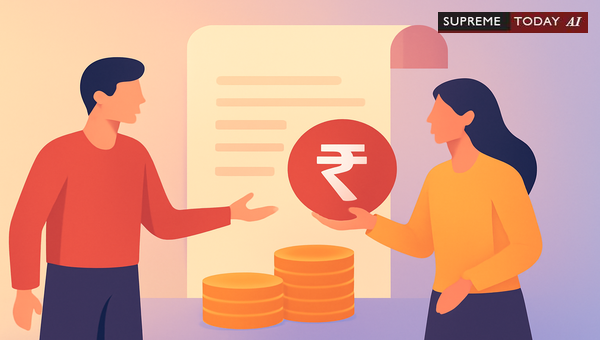
How to Recover Orally Lent Money in India
Lending money to friends, family, or acquaintances without paperwork is common in India, but what happens when repayment doesn't come? Many individuals face the dilemma of how to recover lended money when it is given on an oral basis. are legally valid, yet proving them in court can be an uphill battle. This guide explores the Indian judiciary's approach, key principles, practical steps, and real-world challenges, drawing from legal precedents and expert insights.
Disclaimer: This article provides general information based on Indian legal principles and is not a substitute for professional legal advice. Consult a qualified lawyer for advice tailored to your situation.
Understanding Under Indian Law
Indian law, primarily governed by the , recognizes as enforceable contracts, provided they meet essential elements like offer, acceptance, consideration, and lawful object. However, , prioritizes written evidence for contracts, making oral claims harder to substantiate. The lies on the party seeking to recover the money. They must provide sufficient evidence to establish the existence of the loan, the amount lent, and the terms of repayment.2024 2 Supreme 471
Civil proceedings are the primary route for money recovery, as these disputes are typically civil in nature rather than criminal. 2023 1 Supreme 435
Key Legal Principles
- Validity of Oral Loans: Oral contracts are binding, but courts scrutinize them closely due to the risk of fabrication. Witnesses who can corroborate the agreement are crucial.
- Evidence Requirements: While not mandatory, documentary proof like bank transfers, receipts, or messages strengthens claims.
- Statutory Options: In specific cases, laws like the , offer mechanisms, though limited to public dues. 2006 1 Supreme 306
Real-world cases highlight these principles. For instance, It is alleged that the present applicant has lended a hand loan of Rs.10 lakh at the rate of 10% interest to the husband of the complainant/victim and to recover the said amount, she along with the co-accused went to the house of the Complainant/victim.2025 Supreme(Online)(GUJ) 3499 Here, aggressive recovery tactics escalated into criminal allegations, underscoring the need for legal channels.
Similarly, Allegation against the applicant is that, he has lended money to the husband of the complainant and to recover the said amount, he pressurized him, due to which, alleged incident took place.2025 Supreme(Online)(Guj) 11902 Courts often dismiss unsubstantiated claims lacking evidence.
Step-by-Step Guide to Recovery
Recovering orally lent money requires a structured approach. Here's a recommended roadmap:
Consult a Lawyer Immediately: Engage a civil litigation specialist to evaluate your case's strength. They can guide on jurisdiction, limitation periods, and documentation.
Gather Robust Evidence:
- Witness Statements: Secure affidavits from those present during the lending.
- Documentary Proof: Collect bank statements, WhatsApp chats, or partial receipts. Even indirect evidence like the borrower's financial records helps.
- Financial Records: Note dates, amounts, and any partial repayments.
In one case, The complainant himself stated that the money was lended by me. There was no any receipt or promissory note was taken at the time of lending money.
Despite admissions, lack of documents complicated recovery.
Attempt Negotiation: Before litigation, send a legal notice demanding repayment. This can lead to settlements and preserves evidence.
File a Civil Suit: Approach the appropriate civil court (e.g., for amounts over Rs. 2 lakhs). Seek recovery under for if applicable.
Explore Alternatives: Mediation via Lok Adalat or arbitration can be faster and cheaper.
Pro Tip: Act within the —typically 3 years from the due date under the .
Common Challenges and Judicial Insights
Oral loans pose unique hurdles:
- Lack of Evidence: Courts view oral testimony skeptically. Oral declarations are weak and often insufficient for recovery or establishing offences like abetment.2024 Supreme(Online)(GUJ) 26035
- Borrower's Insolvency: Even with a decree, execution against assets may fail.
- Criminal Risks: Self-help recovery can backfire. The alleged incident took place in connection with... wherein the applicant has lended the money to the father of the complainant to recover the same, she went to his house.2025 Supreme(Online)(GUJ) 3500 Such actions led to FIRs.
Judicial trends show caution:- Lender can be termed itself to a Civil or Revenue Court who's functions are purely judicial. The lender uses the said mechanism to recover the money.2019 0 Supreme(Mad) 2027 2017 0 Supreme(Mad) 4108- High-interest or coercive recoveries invite scrutiny: any licence lended the money at the huge rate of interest and got registered sale-deed in his favour...2025 Supreme(GUJ) 325
In suicide-related cases, like money which he had lended to the applicant and others was not being paid back...2024 Supreme(Online)(MP) 55214, courts probe intent but prioritize civil remedies.
Account records have proven pivotal: Account maintained by Sanjeev Kumar Goyal (deceased), regarding money lended to accused-Vaibhav Jain.2020 0 Supreme(All) 939
Evidence Strategies from Case Law
- is Key: Combine oral testimony with call records or diaries, though unsigned details may be challenged. from perusal of the call details... it is clear that the same are neither signed...2018 0 Supreme(Raj) 2096
- Banking Transactions: The bank seeks to recover money lent and advanced on the basis of a banking transaction.2016 0 Supreme(Cal) 321 Even informal loans benefit from traceable transfers.
- Undertakings: Bail applications often include promises to repay, aiding civil claims. Innocence of the applicant has been claimed and undertaking has been given for participation in the trial.2023 Supreme(Online)(JHK) 6961
Courts emphasize: Recovery typically involves civil suits, with courts requiring proof of lending, such as bank deposits, witnesses, or written agreements. Oral claims alone are insufficient.
Key Takeaways and Conclusion
Recovering money lent orally in India is feasible with strong evidence, but success hinges on preparation. Prioritize documentation, legal consultation, and civil routes over confrontation. While challenges like evidentiary gaps and time bars exist, precedents affirm that corroborated claims prevail.
Final Tips:- Always get written agreements for future loans.- Use digital trails (e.g., UPI payments).- Monitor limitation periods diligently.
In summary, recovering lent money given on an oral basis in India can be challenging but not impossible. It is crucial to gather sufficient evidence, consult with a lawyer, and explore all available legal options.2024 2 Supreme 471 The strength of your evidence will determine the outcome.
Word count: 1028. References include court documents like 2023 1 Supreme 435, 2025 Supreme(Online)(GUJ) 3499, and others cited inline.
#OralLoanRecovery #IndiaLaw #MoneyRecovery















