


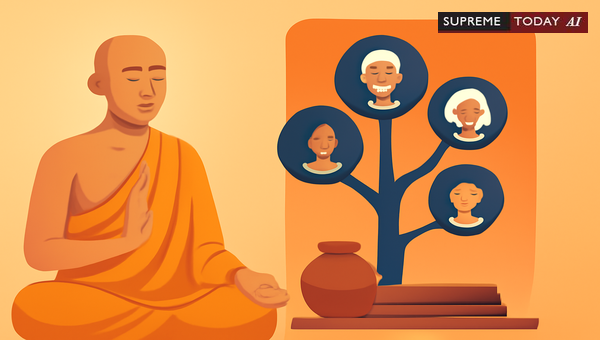
: What Happens After in Hindu Law?
In the rich tapestry of Hindu traditions, taking —the final stage of life marked by complete of worldly attachments—carries profound spiritual and legal implications. But what exactly occurs legally after sanyash ? This question often arises in family disputes over inheritance, maintenance, and property rights. Under Hindu law, can lead to , effectively severing ties with one's natural family. However, this isn't automatic; it hinges on specific religious ceremonies and judicial scrutiny. 2007 0 Supreme(HP) 305
This blog post delves into the nuances of -induced , drawing from established legal precedents. We'll cover its effects on familial relationships, key requirements, exceptions, and practical recommendations. Note: This is general information based on judicial interpretations and not specific legal advice. Consult a qualified lawyer for your situation.
Understanding and in Hindu Law
, the fourth ashram in Hindu life stages, involves a sanyasi renouncing material possessions, family, and societal duties to pursue spiritual liberation. Legally, this triggers —a legal fiction where the person is treated as deceased for civil purposes, extinguishing and obligations like maintenance. 2007 0 Supreme(HP) 305 1983 0 Supreme(Mad) 370
Courts have consistently held: Once a person has undergone and is deemed to have suffered under Hindu law, their relationship with their natural family, including inheritance and obligations such as maintenance, is extinguished, unless specific religious ceremonies or usages indicate otherwise. 1983 0 Supreme(Mad) 370
This principle ensures that true renouncers cannot hedge their bets by claiming family benefits post-. Yet, it's not merely a declaration; proof is paramount.
Key Effects on Legal Rights and Obligations
Upon valid , the sanyasi loses all rights to ancestral or self-acquired property from the family. Conversely, family members are relieved of duties toward the sanyasi, such as a son's obligation to maintain his parents. 2007 0 Supreme(HP) 305 1983 0 Supreme(Mad) 370
- : Completely forfeited. The sanyasi cannot claim a share in family property. 2007 0 Supreme(HP) 305
- : Cease entirely. A sanyasi-son, for instance, is no longer liable to support his mother, as the parent-child bond is legally dissolved. 1983 0 Supreme(Mad) 370
- Property Transactions: Prior to , any property dealings remain valid, but post-, the sanyasi steps out of the familial property pool.
The and affirm: A sanyasi, after performing the necessary ceremonies, is considered to have severed all worldly and familial ties, including and obligations like maintenance of parents. 2007 0 Supreme(HP) 305
Broader Implications in Civil Litigation
also affects ongoing lawsuits. For example, in cases where a party dies, proceedings may abate if legal heirs aren't substituted promptly. 2025 Supreme(Online)(MAD) 11142 Similarly, courts treat declarations with gravity, requiring robust evidence to avoid misuse. In disputes over accounts post-death, procedural rigor is enforced, mirroring the scrutiny in cases. 2024 Supreme(Online)(TEL) 5569
: Not Just Saffron Robes
Orthodox Hindu law demands more than wearing orange attire or a verbal declaration. Specific rites are essential:
- : Offering of rice balls to ancestors.
- : Symbolic funeral rites.
- : Purificatory fire ritual signifying worldly detachment.
The mere declaration or wearing of sanyasi attire is insufficient; necessary religious ceremonies are required to establish full . 2007 0 Supreme(HP) 305
Without these, courts won't recognize , preserving familial rights. This protects against fraudulent claims.
Orthodox Views vs. Modern Practices
Traditionally, only the (Brahmins, Kshatriyas, Vaishyas) could enter ; were barred. However, contemporary usages override this:
- Heads of (monasteries) like Dharmapuram Adhinam are treated as sanyasis by custom, even if orthodox texts disagree. 2007 0 Supreme(HP) 305
- Sect-specific practices determine recognition. Full withdrawal from possessions and family solidifies the status.
Courts examine evidence of ceremonies and lived , balancing tradition with usage.
Exceptions and Limitations
isn't absolute in every scenario:
- No Ceremonies Performed: Status not established; rights persist. 2007 0 Supreme(HP) 305
- Orthodox Restrictions: may face hurdles, though usage prevails. 2007 0 Supreme(HP) 305
- Sect Customs: Recognition varies; proof of true severance needed. 2007 0 Supreme(HP) 305
Other cases underscore this caution. Courts declare: is a serious nature matter, not to be inferred lightly without proof. Authorities lack power for casual declarations. 2022 Supreme(Online)(KER) 39431 2022 Supreme(Online)(KER) 65285
In motor accident claims or property withdrawals post-death, procedural safeguards highlight the need for evidence—paralleling scrutiny. 2025 Supreme(Online)(Tel) 10580 2024 Supreme(Online)(TEL) 5569
Practical Recommendations for Legal Practitioners and Families
Facing a -related dispute? Consider these steps:
- Gather Evidence: Produce records of ceremonies, sect endorsements, or witness testimonies. 2007 0 Supreme(HP) 305
- Verify Customs: Investigate mutt or sect practices overriding orthodox rules.
- Court Scrutiny: Expect judges to probe true —lifestyle, possessions, family contact.
- Document Everything: Maintain proof to assert or challenge .
Legal counsel should cross-verify status before litigation on inheritance or maintenance.
Conclusion: Navigating
In summary, after sanyash , familial bonds dissolve under Hindu law—provided requisite ceremonies confirm . Inheritance and maintenance rights vanish, reflecting the sanyasi's spiritual commitment. Yet, courts demand proof, blending religious rigor with legal caution. No direct precedents on specific 'Sanyash' cases emerge from broader sources, but general principles reinforce procedural gravity. 2007 0 Supreme(HP) 305 1983 0 Supreme(Mad) 370
Key Takeaways:- requires ceremonies, not mere declaration.- Practices may supersede orthodox limits.- Always substantiate claims with evidence.
This evolving area underscores Hindu law's adaptability. For personalized guidance, engage a specialist in Hindu personal law. Stay informed, and approach such profound decisions with clarity.
References
- 2007 0 Supreme(HP) 305: Core analysis on effects, ceremonies, and customs.
- 1983 0 Supreme(Mad) 370: Confirms severance of family ties post-.
- Additional contexts from 2022 Supreme(Online)(KER) 39431, 2022 Supreme(Online)(KER) 65285, 2025 Supreme(Online)(MAD) 11142, 2024 Supreme(Online)(TEL) 5569.












