


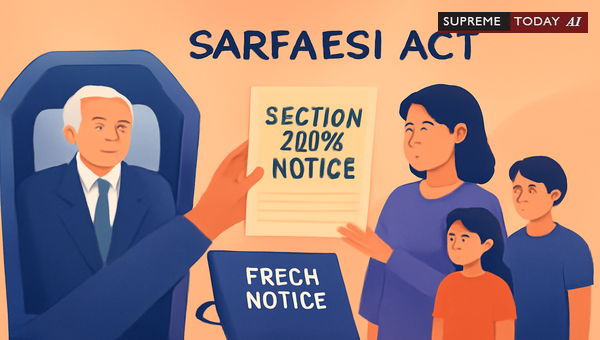
SARFAESI Proceedings After Borrower's Death: Rights of
Introduction
Imagine a family dealing with the sudden loss of a loved one, only to face aggressive bank recovery actions on their inherited property. This scenario often arises under the (), which empowers banks and financial institutions to recover dues from defaulting borrowers without court intervention. But what happens when the borrower dies mid-proceedings?
The question on every affected family's mind is: Proceedings under SARFAESI after Death of Borrower? This blog post breaks down the legal rights of heirs, mandatory procedural steps for secured creditors, and insights from key judicial precedents. While this provides general guidance based on statutes and case law, it is not legal advice—consult a qualified lawyer for your specific situation.
Legal Rights of Heirs of a Deceased Borrower or Guarantor
When a borrower or guarantor passes away, their step into a protected position under the law. Courts have emphasized fairness and due process to balance recovery rights with heirs' interests.
1. Right to Notice and Participation
are entitled to a proper notice under Section 13(2) before any action against their share in the secured property. The and have ruled that proceedings cannot continue against the deceased's estate without a to heirs, upholding their right to be heard. As noted, the of a deceased borrower or guarantor are entitled to receive proper notice under Section 13(2) 2017 0 Supreme(Ker) 1210.
2. Right to Challenge Proceedings
Heirs can contest if notices are missing or flawed. They may raise objections under the SARFAESI Act or seek judicial review via the () under Section 17. In one case, proceedings against a dead person were deemed bad in law because weren't brought on record before auction 2021 0 Supreme(All) 875. The court stressed: .
3. Rights in the Security Property
Heirs' claims depend on their inheritance share. Banks can target the deceased's portion but must follow due process for others. For instance, after a sale notice, a son who inherited entered a sale agreement, highlighting how heirs can assert post-death rights
.
4.
Proceedings don't abate automatically upon death if initiated earlier with proper notice. However, fresh steps are needed for heirs. Courts clarify: Proceedings initiated before the death... do not automatically abate 2022 0 Supreme(P&H) 297. Yet, death doesn't vitiate actions if handled correctly: the death of the guarantor or the borrower does not under the SARFAESI Act 2021 0 Supreme(All) 875.
Procedural Steps for Secured Creditors Post-Death
Banks must navigate carefully to avoid procedural lapses that courts often strike down.
1. Issue Under Section 13(2)
The cornerstone is serving a to identified heirs, detailing dues and recovery intent against their share. This must occur within timelines, as failure vitiates actions 2017 0 Supreme(Ker) 1210.
2. Identify and Property Shares
Creditors should obtain succession or heir certificates to map shares accurately. Skipping this risks invalid proceedings.
3. Enforce Against Heirs' Shares
Post-notice, banks can proceed, but only compliantly. The bank can enforce its security interest against the share of the deceased’s estate, but only after compliance with procedural requirements 2017 0 Supreme(Ker) 1210.
4. Handle Ongoing Proceedings
Pre-death actions continue sans abatement but require heir notices. For Section 14 possession, fresh orders may be needed 2022 0 Supreme(P&H) 297.
5. Judicial Oversight and Role
Courts mandate compliance: Courts have emphasized the necessity of procedural compliance, especially the issuance of a under Section 13(2) 2017 0 Supreme(Ker) 1210 2022 0 Supreme(P&H) 297. Borrowers/heirs have remedies under Section 17, deemed efficacious and expeditious by courts.
In parallel proceedings, like criminal cases alongside SARFAESI, no automatic halt occurs absent legal impediments 2019 0 Supreme(Bom) 1108. Petitioners have not brought to the notice of this Court any legal provisions/impediment for proceeding... due to pendency of proceeding under the SARFEASI Act 2019 0 Supreme(Bom) 1108.
Insights from Recent Case Law
Judicial trends reinforce notice imperatives:- No Vitiation by Death Alone: Death doesn't derail valid proceedings if heirs are notified 2021 0 Supreme(All) 875.- Invalid Sales Against Dead Persons: Auctions post-death without heir inclusion are void, allowing redemption chances 2021 0 Supreme(All) 875.- Heir Agreements Post-Notice: Inheritance doesn't block sales if notices precede
.- Section 14 Powers: Additional magistrates can assist possession, ministerial in nature 2022 0 Supreme(SC) 679.
These cases underscore: procedural rigor protects all parties.
Key Takeaways for Borrowers, Heirs, and Banks
- Mandatory : Always under Section 13(2) for heirs 2017 0 Supreme(Ker) 1210.
- No Auto-Abatement: But continuation demands due process 2022 0 Supreme(P&H) 297.
- Heirs' Protections: Participation, challenges, and share safeguards.
- Remedies Available: Section 17 appeals provide quick recourse.
| Aspect | Heirs' Rights | Creditor Obligations ||--------|--------------|----------------------|| Notice | Entitled to fresh Section 13(2) | Must issue promptly || Proceedings | Can challenge lapses | No auto-abatement, but notify || Property | Share protected | Target deceased's portion only || Court Role | Judicial review | Comply or risk quashing |
Conclusion
SARFAESI proceedings after a borrower's death demand precision: fresh notices to heirs under Section 13(2), heir identification, and respect for shares. While banks retain recovery powers, courts vigilantly enforce due process, preventing abuse. Families should promptly obtain heir documents and explore Section 17 remedies; banks, document compliance meticulously.
This overview draws from statutes and precedents like 2017 0 Supreme(Ker) 1210, 2022 0 Supreme(P&H) 297, 2021 0 Supreme(All) 875, and others. This is general information only—seek professional legal counsel tailored to your case, as outcomes vary by facts and jurisdiction. Stay informed to protect your rights in these complex scenarios.
#SARFAESIAct, #BorrowerDeath, #LegalHeirsRights












