


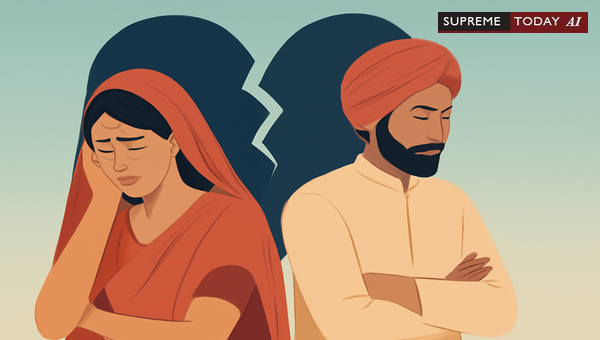
Can SC/ST Persons Seek Divorce on the Ground of ?
In India, marriage and divorce laws often intersect with social categories like caste and tribe, raising questions about equal access to legal remedies. A common query is: Can a Scheduled Caste (SC) or Scheduled Tribe (ST) person ask for divorce on the ground of ? This post delves into the legal landscape under the (HMA), examining —both physical and mental—as a ground for divorce, while addressing nuances for SC/ST communities. We'll explore key provisions, judicial precedents, and potential exceptions, providing clarity for those navigating family law challenges.
Note: This is general information based on legal precedents and statutes. It is not personalized legal advice. Consult a qualified lawyer for your specific situation.
Legal Framework: under the
The HMA governs divorce for Hindus, including those from SC communities and many ST groups. Section 13(1)(ia) explicitly recognizes as a valid ground for divorce. This includes both physical and , making it a broad and accessible remedy. 2002 4 Supreme 596
As per judicial interpretation, Clause (ia) of sub-Section (1) of Section 13 of the Act is comprehensive enough to include cases of physical as well as . 2002 4 Supreme 596 The law focuses on the conduct of the spouse and its impact, not the social background of the petitioner.
What Constitutes ?
- : Acts causing bodily harm or of harm.
- : More subtle but equally grave, involving conduct that causes mental suffering or fear. It can be inferred from circumstances like verbal abuse, false accusations, refusal to cohabit, or prolonged separation. 2002 4 Supreme 596
Courts emphasize: can cause even more grievous injury and create in the mind of the injured spouse that it will be harmful or unsafe to live with the other party. 2002 4 Supreme 596 Proof doesn't require direct evidence; cumulative facts suffice.
Applicability to Scheduled Castes and Scheduled Tribes
Generally, SC/ST persons can seek divorce on grounds under the HMA, as caste or tribal status does not restrict this right. The primary consideration is the spouse's conduct endangering the petitioner's well-being. 2002 4 Supreme 596
However, a key nuance arises for Scheduled Tribes due to , which states that the Act does not apply to members of Scheduled Tribes unless notified by the Central Government. This has led to debates in cases involving tribal customs.
For instance, in a matter, the trial court granted divorce under HMA on and grounds, but the wife challenged it claiming HMA inapplicability as they belonged to a notified Scheduled Tribe. 2021 Supreme(Online)(DEL) 2263 2021 0 Supreme(Del) 389 Similarly, in a Rajasthan case involving the Meena tribe (a Scheduled Tribe), the wife argued HMA provisions do not apply, seeking rejection of the divorce petition. The court noted the marriage was solemnized per Hindu rites and admissions that both parties were Hindus, allowing HMA applicability while urging progress toward a under . 2021 0 Supreme(Del) 389
In another precedent, parties from a Scheduled Tribe community sought dissolution on grounds, but the court examined Presidential Orders and notifications to confirm HMA's bar. 2024 Supreme(Online)(ORI) 977 These cases highlight that while HMA typically applies, tribal customs may govern if explicitly exempted, potentially requiring proof of customs for divorce instead of statutory grounds like .
Judicial Precedents on
Indian courts have consistently upheld claims across social strata. In a delicate human relationship like matrimony, one has to see the probabilities of the case... the conduct of the spouse is such that it causes an apprehension in the mind of the other spouse, about his or her mental welfare then this conduct amounts to . 2002 4 Supreme 596
Long separation, refusal to cohabit, or false accusations often qualify as , irrespective of caste. Exceptions require the conduct to be persistent and grave, endangering life, health, or mental well-being. 2002 4 Supreme 596
Related rulings reinforce equal application: In land transfer disputes, protections for SC/ST lands exist (e.g., ), but family law remedies like divorce remain conduct-based, not caste-restricted. 2015 0 Supreme(Raj) 353
Exceptions and Limitations
While broadly applicable, consider these factors:
- Tribal Exemptions: For certain STs (e.g., in agency areas or notified tribes), may prevail over HMA. Courts assess marriage rites and community status. 2021 Supreme(Online)(DEL) 2263 2021 0 Supreme(Del) 389
- Evidence Threshold: must make cohabitation unsafe or impossible. Isolated incidents typically fail.
- Maintenance and DV Act: Overlaps with , or , but don't bar HMA divorce. 2021 0 Supreme(Del) 389
- Push: Courts often reference , advocating uniform laws to resolve ambiguities. 2021 0 Supreme(Del) 389
Practical Recommendations
If you're an SC/ST individual facing :
- Gather Evidence: Document incidents, communications, witness statements, or medical records showing impact.
- File Strategically: Approach under HMA Section 13(1)(ia). Highlight conduct over caste.
- Address Tribal Status: If ST, verify HMA applicability via community notifications or prior marriage rites.
- Seek Counsel: Emphasize totality of circumstances—separation, abuses, etc. 2002 4 Supreme 596
- Alternative Reliefs: Explore (Section 13B) or if full divorce isn't immediate.
Courts view holistically, ensuring protections without caste-based barriers.
Conclusion and Key Takeaways
Yes, SC/ST persons can generally seek divorce on grounds under the HMA, with widely recognized based on spousal conduct. 2002 4 Supreme 596 While exceptions exist for certain Scheduled Tribes under Section 2(2), Hindu-rite marriages often bring HMA into play, as seen in High Court rulings. 2021 Supreme(Online)(DEL) 2263 2021 0 Supreme(Del) 389
Key Takeaways:- (physical/mental) is caste-agnostic under Section 13(1)(ia).- Prove via circumstances, not just violence.- Check tribal exemptions early.- Push for evidence-based claims.
For evolving family laws, stay informed on developments. Always consult a family law expert to tailor your approach.
References: Primary analysis from 2002 4 Supreme 596, supplemented by 2021 Supreme(Online)(DEL) 2263, 2021 0 Supreme(Del) 389, 2024 Supreme(Online)(ORI) 977, 2015 0 Supreme(Raj) 353.
#SCSTDivorce, #CrueltyDivorce, #HMAIndia












