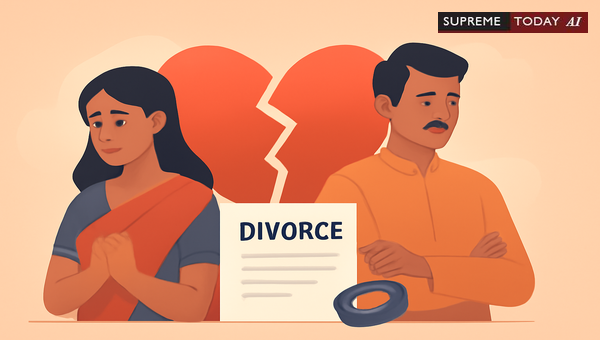
Divorce Grounds - Several sources discuss the grounds for divorce under different laws. For instance, Source 2023 0 Supreme(Mad) 924 highlights that a divorce petition was filed on grounds of irretrievable breakdown and cruelty under the Divorce Act, with issues regarding violation of anti-suit injunctions and recognition of foreign judgments. Source 2024 0 Supreme(Guj) 135 mentions customary divorce deeds as valid grounds for divorce, emphasizing that once a customary divorce is executed, parties lose the right to seek relief under the Hindu Marriage Act. Sources 2023 0 Supreme(Mad) 924, 2024 0 Supreme(Guj) 135
Mutual Consent - Sources 2023 0 Supreme(Ker) 281 and
Parvathamma VS Joint Director the Sainik Welfare and Resettlement - Current Civil Cases
stress that mutual consent is essential for divorce under Section 13B, and such consent must persist until the decree is granted. The courts require clear evidence of ongoing mutual agreement; resiling from initial consent can invalidate the decree. Sources 2023 0 Supreme(Ker) 281,Parvathamma VS Joint Director the Sainik Welfare and Resettlement - Current Civil Cases
Ex-Parte Decrees - Sources
Parvathamma VS Joint Director the Sainik Welfare and Resettlement - Current Civil Cases
and 2024 0 Supreme(Kar) 160 discuss ex-parte divorce decrees. An ex-parte decree, granted without the respondent’s appearance despite service of notice, is contested on grounds of legality and fairness. Courts have held that such decrees are not always valid in law and can be recalled if procedural irregularities are proven. The Supreme Court emphasizes the serious implications of divorce stigma, especially when decrees are granted ex-parte. SourcesParvathamma VS Joint Director the Sainik Welfare and Resettlement - Current Civil Cases
, 2024 0 Supreme(Kar) 160Divorce on Merits and Court Decisions - Source 2024 5 Supreme 459 details a divorce decree based on grounds of desertion and cruelty, upheld by the High Court, with the trial court's findings on desertion being significant. Source 2023 0 Supreme(Mad) 1050 notes that a divorce decree granted by the trial court was later reversed by the appellate court, affecting the rights of parties post-decree. Sources 2024 5 Supreme 459, 2023 0 Supreme(Mad) 1050
Legal Recognition and Procedural Issues - Several sources emphasize procedural correctness, such as the necessity of filing mutual divorce petitions, proper service, and the recognition of foreign judgments. Ignoring procedural requirements or filing in incorrect jurisdictions can lead to orders being challenged or invalidated. Sources 2023 0 Supreme(Mad) 924, 2024 0 Supreme(Guj) 135, 2024 0 Supreme(Kar) 160
Analysis and Conclusion:Divorce laws in India recognize various grounds, including mutual consent, cruelty, desertion, and irretrievable breakdown, with specific procedures for each. Mutual consent divorce requires ongoing agreement, and ex-parte decrees are subject to legal scrutiny due to potential procedural flaws. Customary divorces are valid if properly executed, but they may preclude relief under other laws. Court decisions can be appealed or recalled if procedural irregularities are identified, emphasizing the importance of adherence to legal protocols. The recognition of foreign judgments also depends on compliance with domestic legal standards. Overall, the legal process for divorce involves careful navigation of procedural and substantive laws to ensure validity and enforceability.