


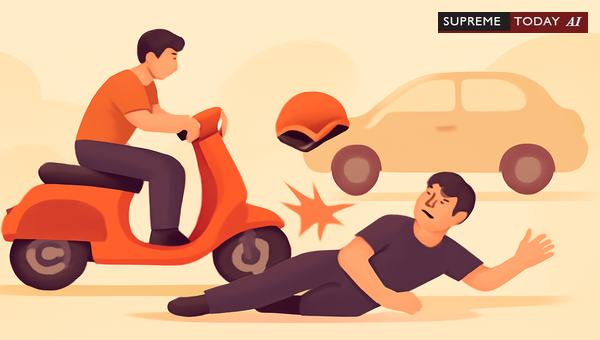
Scooter Accident Without Helmet: Understanding Legal Liability
Imagine this scenario: He was riding a scooter without a helmet and got into an accident. What are the legal ramifications? In India, this common situation raises critical questions about negligence, compensation, and insurance claims under the . While not wearing a helmet doesn't necessarily mean you're fully at fault, it can significantly influence court outcomes. This post breaks down the legal framework, key precedents, and practical implications to help you navigate such cases.
We'll explore how courts assess , the role of eyewitness accounts, and strategies for claims. Remember, this is general information based on legal precedents and not specific legal advice—consult a qualified lawyer for your situation.
Relevant Legal Framework: Motor Vehicles Act Section 129
The cornerstone of helmet-related cases is , which mandates helmets for riders and pillion passengers on two-wheelers, including scooters. Non-compliance is a , punishable under Section 177, and can be leveraged in accident claims as evidence of negligence. Courts typically view this as a factor that may aggravate injury severity rather than cause the accident itself. 2018 0 Supreme(Ker) 847
For instance, proceedings under Section 177 read with Section 129 were quashed in one case where the complaint lacked credible witness support, highlighting that mere allegations of riding without a helmet require substantiation. 2018 0 Supreme(Ker) 847 The allegation is that he was found riding a motor cycle without wearing a helmet. This underscores the need for evidence beyond the violation itself.
: How No Helmet Factors In
In scooter accidents, the failure to wear a helmet often contributes to the severity of injuries, particularly head trauma, leading courts to apportion some negligence to the rider. However, it's rarely the sole cause. Key findings from legal documents illustrate this balance:
- Claimant's Negligence: Riding without a helmet violates Section 129 and is argued to worsen head injuries. 2023 0 Supreme(Bom) 1320 2023 0 Supreme(Ker) 131
- Judicial Precedents: Tribunals have variably. In one case, the court assigned 90% negligence to the other vehicle's driver and only 10% to the deceased for not wearing a helmet, as the primary accident cause was external negligence. 2023 0 Supreme(Mad) 1930
Other cases reinforce that no helmet doesn't automatically imply fault for the crash. For example, there was no on the part of the deceased for cause of the accident, as it was not elicited from any one of the witnesses... that the deceased was not wearing... 2023 Supreme(Online)(AP) 9847. Here, the bus driver's rash actions were deemed the main culprit, absolving the scooter rider of contributory fault despite the helmet issue.
In contrast, was set aside in a tipper lorry collision where alcohol smell was noted but insufficiently proven, emphasizing evidence standards. The court enhanced compensation from Rs.1,03,600 to Rs.1,92,572 after rejecting contributory findings. 2022 0 Supreme(Ker) 427 Mere entry in wound certificate regarding smell of alcohol itself is not sufficient to find .
Eyewitness Accounts and Accident Circumstances
Eyewitness testimonies play a pivotal role in determining rash driving. Documents reveal:
- Riders overtaking at high speed or making sudden maneuvers can share blame. One witness described the claimant riding in a manner, overtaking other vehicles at high speed, leading to a pedestrian collision. 2022 0 Supreme(Bom) 660
- Another account noted sudden maneuvering as the trigger. 2022 0 Supreme(Bom) 660
Courts weigh these against other parties' actions. In a fatal scooter-TSR collision, the deceased's no-helmet status was noted, but the car driver's negligence was upheld with contributory apportionment to the scooterist. 2017 0 Supreme(Del) 2113 The tribunal modified compensation, increasing interest to 9% per annum.
Legal Implications for Insurance and Compensation
Insurers frequently argue that no-helmet violations reduce payouts via . Courts recognize this but demand proof of causation. Compensation may cover medical expenses, loss of earnings, and future prospects, often enhanced on appeal.
- Enhancement Examples: In a case, the court boosted Tribunal awards to Rs.3,38,800, considering injury nature and earning capacity. 2020 0 Supreme(Kar) 627 The court found that the compensation awarded by the Tribunal was meager and proceeded to enhance...
- Link: Even employer-provided scooters qualify for coverage if accidents occur during employment, per Section 147 proviso. 2014 0 Supreme(Ker) 728
Apportionment varies: 10-20% for helmet non-use is common if other negligence dominates. 2023 0 Supreme(Mad) 1930 Always gather medical records, , and witnesses to counter insurer defenses.
Defense and Claimant Strategies
For defendants/insurers:- Highlight Section 129 violation and rash riding to argue apportionment. 2022 0 Supreme(Bom) 660- Use precedents showing reduced compensation. 2023 0 Supreme(Ker) 131
For claimants:- Prove primary fault lies with the other party (e.g., rash driving). 2023 Supreme(Online)(AP) 9847- Challenge weak evidence on helmet's role in causation. 2022 0 Supreme(Ker) 427
Prepare robust arguments: Emphasize external factors while acknowledging the infraction's role in injury severity.
Key Takeaways and Recommendations
- Always Wear a Helmet: Beyond law, it mitigates risks and strengthens claims.
- Document Everything: Photos, witnesses, and medical reports are crucial.
- Seek Fair Apportionment: Courts balance violations against accident causes.
In conclusion, while riding a scooter without a helmet is a clear violation under Section 129 and can lead to findings—potentially reducing compensation—the overall circumstances, including other parties' actions, determine outcomes. Precedents like 90:10 splits show nuance. 2023 0 Supreme(Mad) 1930 2023 0 Supreme(Bom) 1320 2023 0 Supreme(Ker) 131 2022 0 Supreme(Bom) 660
Focus on evidence to build a strong case. For personalized guidance, consult a motor accident law expert. Stay safe on the roads!
References: 2023 0 Supreme(Bom) 1320 2023 0 Supreme(Ker) 131 2023 0 Supreme(Mad) 1930 2022 0 Supreme(Bom) 660 2023 Supreme(Online)(AP) 9847 2022 0 Supreme(Ker) 427 2020 0 Supreme(Kar) 627 2018 0 Supreme(Ker) 847 2017 0 Supreme(Del) 2113 2014 0 Supreme(Ker) 728
#ScooterAccident #HelmetLaw #MVAct















