
Searching Case Laws & Precedent on Legal Query.....!
Analysing the retrieved Case Laws
Scanned Judgements…!
Searching Case Laws & Precedent on Legal Query.....!
Analysing the retrieved Case Laws
Scanned Judgements…!
Complaint and Check Presentation - In cases under Section 138 of the Negotiable Instruments Act, once the complainant proves that the cheque was issued by the accused and the signature and issuance are not disputed, the burden shifts to the accused to prove that the cheque was not for a debt or was given as security. If the cheque was intended as security, the circumstances of its issuance must be clarified. In the provided sources, courts have emphasized that the presentation of the cheque by someone other than the complainant (e.g., the brother) does not invalidate the case if the complainant has sufficient knowledge or authority, and the cheque's issuance is not refuted. Sources: 2023 0 Supreme(Chh) 568, ["2023 0 Supreme(AP) 1257"], ["2024 0 Supreme(Chh) 44"], ["2023 0 Supreme(Gau) 895"]
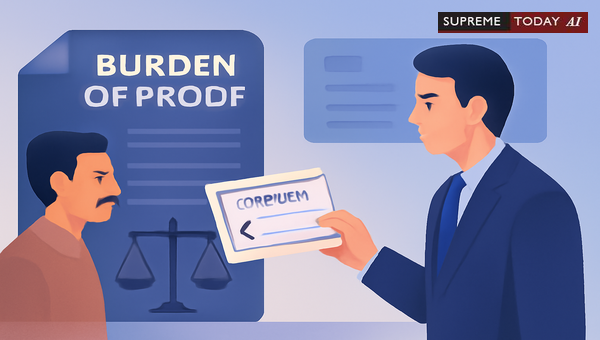
Legal Presumption and Burden of Proof - Under the Negotiable Instruments Act, a presumption in favor of the complainant arises once the cheque is presented and the signature is verified. The accused must then rebut this presumption by proving that the cheque was not for a debt, was given as security, or was obtained by coercion or fraud. Courts have held that mere possession of a cheque or its presentation does not prove guilt; the accused must establish a valid defense. Sources: 2024 0 Supreme(Chh) 44, ["2025 0 Supreme(Guj) 1923"], ["2024 Supreme(Online)(Kar) 38461"]
Evidence and Circumstances - Courts scrutinize the circumstances of cheque issuance, the relationship between parties, and the conduct of the accused. Failure to produce clear evidence of the cheque's purpose, or inconsistent explanations, weaken the defense. For instance, in some cases, the accused's failure to prove that the cheque was security or that the debt was repaid leads to conviction, whereas, in others, absence of proper proof results in acquittal. Sources: 2023 0 Supreme(Gau) 895, ["2025 0 Supreme(Guj) 1923"], ["INKAR00000064666"]
Presentation and Notice - Proper presentation of the cheque and timely issuance of legal notices are crucial. If the notice is not served within the stipulated period or the cheque is not presented as per legal requirements, the case may fail. Some judgments highlight that failure to give sufficient time after notice or improper presentation can lead to acquittal. Sources: 2023 0 Supreme(Gau) 895, ["2023 0 Supreme(Chh) 568"]
Role of Third Parties and Family Members - When cheques are issued by third parties (e.g., brothers or associates), courts examine the relationship and whether the complainant had knowledge or authority. In some cases, presenting the cheque through a brother or family member does not negate the case if the complainant has sufficient knowledge of the transaction. Conversely, if the cheque is found to be fraudulent or obtained improperly, the case may be dismissed. Sources: 2023 0 Supreme(AP) 1257, ["2025 0 Supreme(Guj) 1923"]
Analysis and Conclusion:The main issue revolves around whether the cheque was issued for a debt or security and whether the complainant or their authorized representative presented it. Courts generally uphold the presumption of debt once the cheque and signature are verified, shifting the burden to the accused to prove otherwise. If the cheque was presented by a third party (e.g., brother), it does not automatically invalidate the case, provided the complainant has sufficient knowledge and authority. Failure to substantiate the purpose of the cheque or improper legal procedures (notice, presentation) can lead to acquittal. Conversely, proper proof of issuance, timely notices, and credible evidence of debt support conviction.
Imagine this scenario: A cheque bounces, leading to a complaint under
In this blog post, we'll break down the legal principles, burden of proof, and court interpretations. While this provides general insights based on judicial precedents, it's not legal advice—consult a lawyer for your specific situation.
Section 138 criminalizes the dishonour of a cheque due to insufficient funds or other reasons, provided it's for discharge of a legally enforceable debt. The complainant must typically prove:- Issuance of the cheque by the accused.- Presentation within validity period.- Dishonour due to insufficient funds.- Failure to pay after legal notice.
Once these are established, Section 139 creates a rebuttable presumption that the cheque was issued for consideration. However, the accused can rebut this by proving otherwise on a preponderance of probabilities. 2019 0 Supreme(SC) 1157
The initial burden lies on the complainant (or holder) to show the cheque was issued for consideration to the accused. Courts emphasize: The person who claims that a cheque was issued in consideration of a debt or liability must prove that the cheque was issued by the drawer for that purpose. 2019 0 Supreme(SC) 1157
Key points from precedents:- Initial proof of issuance and dishonour shifts the onus to the accused under Section 139. 2023 Supreme(Online)(CHH) 6334- But if issuance to the complainant is disputed, deeper proof is needed. 2019 0 Supreme(SC) 1157
In standard cases, mere production of the cheque and notice suffices initially, but denials trigger scrutiny. For instance, once the initial burden is discharged by the Complainant that the cheque was issued by the accused and the signature and the issuance of the cheque is not disputed by the accused, in that case, the onus will shift upon the accused. 2023 Supreme(Online)(CHH) 6334
Here's where it gets tricky. If evidence shows the cheque was handed to the complainant's brother (a third party), liability doesn't vanish automatically. Instead:- The presenter (brother) must prove: - The cheque was issued to him by the drawer. - It was for a valid debt or liability.- The drawer's denial shifts the evidentiary burden back. Without proof, the presumption fails, potentially leading to acquittal. 2019 0 Supreme(SC) 1157
Courts hold: If the cheque was issued to a third party (e.g., the brother), that third party must prove that the cheque was issued in consideration of a debt or liability. 2019 0 Supreme(SC) 1157
The NI Act presumes validity for the holder in due course, but if the holder isn't the alleged direct recipient, rebuttal is easier. The statement that the cheque was not given directly to the complainant but to his brother does not automatically absolve the drawer from liability; rather, it shifts the evidentiary burden to the person claiming to have received the cheque in consideration. 2019 0 Supreme(SC) 1157
In one analysis, failure to prove such facts led to dismissal: the trial Court finds that there has been a complete failure to prove the offense of Section 138. 2024 Supreme(Online)(Chh) 16073
Section 118(a) presumes consideration until rebutted. Section 139 specifically aids Section 138 complainants. However, the presumption under Section 139 of the Act favors the holder in due course, presuming the cheque was issued for consideration, but this presumption can be rebutted by evidence that the cheque was not issued to the holder or in consideration of a debt owed to him. 2019 0 Supreme(SC) 1157
When the cheque is alleged to have been given to a third party, such as the brother of the complainant, the legal position is that the person who presents the cheque must prove that it was issued by the drawer in his favor and for a valid consideration. 2019 0 Supreme(SC) 1157
If the brother fails, the complaint may be dismissed or the accused acquitted. Courts stress factual proof over mere allegations.
Accused need only show preponderance: lack of direct issuance, no debt proof, or inconsistencies. In a related appeal, the court set aside acquittal because the accused failed to disprove the presumption that the cheque was issued for lawful discharge of debt. But this assumes proper initial proof by the holder. Unspecified NI Act case summary
Another case noted: the Trial Court on the basis of there being no specific date mentioned in complaint or in examination-in-chief of PW1 as to when money was given to accused, secondly, the complainant has failed to prove financial capacity... 2022 0 Supreme(Kar) 1544
Failure of Prosecution Evidence: In 2024 Supreme(Online)(Chh) 16073, acquittal followed due to unproven issuance despite bounced cheque claims.
Shifted Onus: If the cheque was issued by the accused and the signature... is not disputed... the onus will shift upon the accused. But disputes over recipient prevent this.
INDCHH00001209
Presumption Not Invoked Lightly: Trial courts must weigh if complainant proved basics; otherwise, no presumption arises. 2020 0 Supreme(Kar) 1900
Broader NI Act Precedents: In a loan repayment case, conviction followed when accused's rebuttal was weak, reinforcing that strong initial evidence locks in presumption. NI Act appeal summary
These illustrate: Proof of who received the cheque is foundational.
For Complainants (or Brothers Presenting Cheque):- Gather witness statements, transaction records.- Prove debt via bank slips, agreements.- Address third-party receipt head-on.
For Accused:- Deny issuance to presenter specifically.- Provide counter-evidence (e.g., no debt to brother).- Exploit gaps in prosecution proof.
In cheque dishonour cases where the cheque went to the complainant's brother, the brother—as presenter—typically shoulders the proof burden. Courts prioritize evidence of issuance and consideration over technicalities, but denials demand robust rebuttal of presumptions. 2019 0 Supreme(SC) 1157
This underscores NI Act's balance: Protect legitimate holders while allowing fair defense. Stay informed, but for tailored advice, reach out to a legal expert.
This post draws from judicial documents like 2019 0 Supreme(SC) 1157, 2024 Supreme(Online)(Chh) 16073, 2023 Supreme(Online)(CHH) 6334, 2022 0 Supreme(Kar) 1544, and others for general education only.
#Section138, #ChequeBounce, #NIBurdenProof
, 1881 is not refuted by the evidence presented by accused Ramesh Kumar Mishra. ... Therefore, once the initial burden is discharged by the Complainant that the cheque was issued by the accused and the signature and the issuance of the cheque is not disputed by the accused, in that case, the onus will shift upon the accused to prove the contrary that the cheque was not for any debt ... In such a s....
Precisely, the facts of the case are that: The complainant and the brother of the accused are bosom friends. ... On receiving the memo from the bank authorities, the complainant has issued a legal notice dated 16.03.2018 to the accused and he received the postal acknowledgment dated 19.03.2018 and the accused has issued a reply notice dated 27.03.2018 and thereafter, the complainant has presented the present complaint#HL_E....
Based on the above evidence, analysis the nature and circumstances of the case, the evidence presented by the prosecution, the trial Court finds that the there has been a complete failure to prove the offense of Section 138 of the Negotiable Instruments Act holding that the complaint filed by the complainant ... Despite not having sufficient amount in the account of the accused, the accused fraudulently issued the said che....
, 1881 is not refuted by the evidence presented by accused Ramesh Kumar Mishra. ... Therefore, once the initial burden is discharged by the Complainant that the cheque was issued by the accused and the signature and the issuance of the cheque is not disputed by the accused, in that case, the onus will shift upon the accused to prove the contrary that the cheque was not for any debt ... If the #HL_....
Act, 1881 presumption of the case may be given to the appellant as the accused has admitted that he gave a blank cheque by signing it to the appellant, Therefore, the accused had to prove that the presumption made in favour of the complainant is not correct and should have refuted the presumption which ... Apart from the complaint, he has stated that whenever the complainant had given the amount to the ac....
Act, and the person who issued the check is at liberty to prove the same. In this regard the ratio laid down by the Hon’ble supreme Court in the case of M/S. Mandvi Co.-Op Bank Ltd. vs. Nimesh B. ... It is a fact that the Check was presented before the UCO Bank and after receiving the Return Memo of Cheque, the notice was accordingly issued and the case was filed within a stipulated period of time. ... Also, he did not approach before the Bank authority to stop the pa....
to prove the case against the accused and therefore, submitted to set aside the conviction and sentence. ... The complainant has not produced any record to fortify the fact that the complaint was given within twenty four hours of the disconnection. Exh.9 was sent by RPAD. It would be obvious that Muddamal would not have been sent with the complaint, which is alleged is 30 mtr. black and red wire. ... record to prove#HL_END....
Brief facts of the case are that the complainant Pooja Kushwaha presented a written complaint before the trial court that on 12.10.2019 at about 04:30 pm, the complainant's brother Dhirendra was coming on his motorcycle and Devendra Sharma was sitting behind him on the motorcycle, when the accused persons ... From a thorough perusal of the facts of the case, this Court finds that the complainant and her brother were not#HL....
The Trial Court on the basis of there being no specific date mentioned in complaint or in examination-in-chief of PW1 as to when money was given to accused, secondly, the complainant has failed to prove financial capacity, thirdly by accepting rebuttal evidence of accused has recorded finding that complainant ... In the present case the accused has not denied that he is residing in the address given#HL_E....
That itself would not make the case of the complainant doubtful, especially when the accused has failed to take a definite defence and prove it. ... and admissions given by the accused. ... Of course, it is sufficient for the accused to prove his defence by preponderance of probabilities, whereas complainant is required to prove his case beyond reasonable doubt. 17. ... Thus, it....
This also is not stated by P.W. 1. Then P.W. 2 says accused inquired with P.W. 2 whether he knows P.W. 1 and when he told he knows P.W. 1, signature of P.W. 2 was obtained by accused on receipt and thereafter accused handed over cheque to P.W. 1. P.W. 1 does not say any of these things. P.W. 1 says that accused took them to his office where officer signed on check and then complainant and accused came out and on the table of accused cheque was given to the complainant by accused.
It is a settled law that the complainant has to prove his case and in the case on hand, the accused also did not dispute the cheque as well as his signature and also he has not given any reply and no complaint was given when the notice was given. When such being the case, the presumption is available in favour of the complainant and no doubt the said presumption is rebuttable presumption and the question before this Court is whether the accused rebutted the presumption and I have already discussed in detail, the evidence of DWs.1 to 3, it is clear that the accused himself h....
(Dhani in this part of State is understood as cluster of few houses ancillary to the village for those who want to live in the proximity of their fields). On the fateful day, husband of the complainant had gone to Hisar for check up of his brother who suffered paralysis attack. All the children of the complainant were studying in a nearby school falling in village Kandool. The prosecutrix who was studying in the 1st Standard in Government School, Kandool used to return home earlier to other children of the complainant because she was studying in the lowest standard.
This witness has deposed that accused was working as Assistant Lineman and Pardhi was working as Line Helper. He has deposed that the form was got filled, on which there is signature of the complainant. He has deposed that after checking the meter, accused and Pardhi informed him that there was no outgoing supply to the meter. He has given evidence that after receiving the oral complaint of the complainant in respect of faulty meter, he deputed accused and Pardhi to check the meter.
After checking of the nomination paper check slip was given to the candidate who presented nomination paper. In paragraphs 6 to 9 and 11 to 15 of the cross-examination R.W. 2 stated that in the impugned election he was one of the proposer of respondent no.4 and filed his nomination paper on 7.4.2009 and he had gone with respondent no.4 to file the nomination paper which was presented by respondent no.4 before the Returning Officer and he also signed and took oath before him but he did not go through the contents of nomination paper of respondent no.4 including Annexure-1, F....
Login now and unlock free premium legal research
Login to SupremeToday AI and access free legal analysis, AI highlights, and smart tools.
Login
now!
India’s Legal research and Law Firm App, Download now!
Copyright © 2023 Vikas Info Solution Pvt Ltd. All Rights Reserved.








