


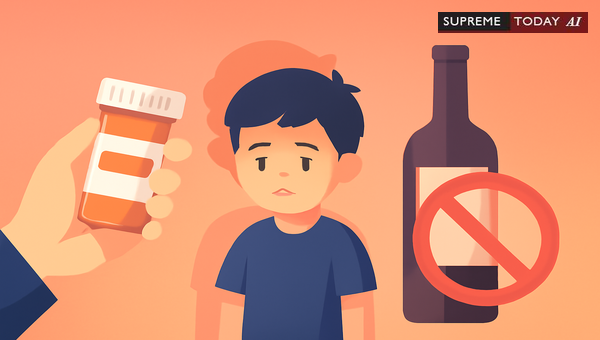
Understanding : Key Ingredients
In India, safeguarding children from harmful substances is a critical aspect of child protection laws. Parents, guardians, educators, and even strangers have a legal duty to prevent minors from accessing intoxicating liquor, narcotic drugs, tobacco products, or psychotropic substances. A common legal query arises: What are the ingredients of Section 77 of the JJ Act? This provision under the (JJ Act), criminalizes giving or causing such substances to be given to a child, imposing strict penalties to deter such acts. 2018 0 Supreme(Del) 44
This blog post breaks down the core elements (or ingredients) of this offence, exceptions, penalties, and practical implications. Whether you're a legal professional, parent, or concerned citizen, understanding Section 77 helps promote child safety. Note: This is general information and not specific legal advice; consult a qualified lawyer for your situation.
What Does Section 77 of the JJ Act Prohibit?
Section 77 explicitly targets actions that expose children to dangerous substances. It states: Whoever gives, or causes to be given, to any child any intoxicating liquor or any narcotic drug or tobacco products or psychotropic substance, except on the order of a , shall be punishable...2018 0 Supreme(Del) 44
The provision aims to prevent harm to children by regulating the supply of intoxicants and narcotics. Violations carry severe consequences, underscoring the law's protective intent. 2018 0 Supreme(Del) 44
Core Ingredients of the Offence
To establish a violation under Section 77, prosecutors must typically prove these essential elements:
- The Act of Giving or Causing to be Given: This includes direct administration or indirect facilitation, such as procuring or enabling access to the substance for a child. The law does not specify the manner, focusing on the act itself. 2018 0 Supreme(Del) 44
- The Prohibited Substance: Covers intoxicating liquor, narcotic drugs, tobacco products, or psychotropic substances. These are defined under related laws like the (NDPS Act). 2018 0 Supreme(Del) 44
- The Recipient is a Child: Under the JJ Act, a child means a person below 18 years. Proof of age is crucial, often via birth certificates, school records, or medical exams. 2018 0 Supreme(Del) 44
- Absence of Medical Authorization: The act must not be on the order of a , implying no valid prescription or supervision. 2018 0 Supreme(Del) 44
These ingredients are straightforward, making the offence relatively easy to prosecute when evidence aligns. The emphasis is on protecting vulnerable minors from substances that impair development or cause immediate harm. 2018 0 Supreme(Del) 44
Penalties for Violating Section 77
Conviction under Section 77 may result in up to seven years and a fine up to one lakh rupees. This severity reflects the potential long-term damage to a child's health and well-being. 2018 0 Supreme(Del) 44
Authorities enforce this through investigations, often triggered by complaints from parents, schools, or . Proper documentation of the act, substance, and child's status strengthens cases.
Key Exceptions and Defences
The law carves out a clear exception: acts performed on the order of a . Defendants can typically defend by producing a valid prescription or medical records proving necessity, such as for treatment. 2018 0 Supreme(Del) 44
- Proof standards fall on the prosecution to establish the basic ingredients, while the defence may negate liability via the medical exception. 2018 0 Supreme(Del) 44
- No specific proof thresholds are outlined, but courts generally require reliable evidence like witness statements, lab tests, or CCTV footage.
This balance ensures medical treatments are not criminalized while closing loopholes for abuse.
Enforcement and Related Notifications
Enforcement extends to notifications addressing specific substances. For instance, the issued a notification on violations involving vulcanized solutions, which have stupefying effects akin to those prohibited under Section 77. Such measures illustrate the law's broad application to prevent harm from emerging threats.
The law has provisions for notifications and enforcement, such as the notification issued by the regarding violations involving vulcanized solutions, which also relate to substances with stupefying effects.
These notifications do not alter core ingredients but enhance scope, ensuring adaptability to new risks. Authorities must document violations meticulously for successful prosecutions.
Section 77 in Broader Legal Contexts
While Section 77 of the JJ Act focuses on child protection, similarly numbered provisions appear in other Indian laws, highlighting recurring themes of regulation and prohibition:
- In the , Section 77A addresses for land grants, rejecting claims exceeding limits. ...the could not have rejected the claim of the petitioners solely on the ground that, the land claimed by the petitioners if granted would exceed the ceiling limit as stated in .2025 Supreme(Online)(KAR) 10749
- (PTCL Act), links to land transfer prohibitions under related sections. 2025 Supreme(Online)(KAR) 10778
- In Tamil Nadu's amendments, Section 77-A (introduced via ) empowers to cancel fraudulent documents prospectively. - Introduced by , effective from , confers power on the District Registrar to cancel registered documents in cases of fraud or impersonation.2023 Supreme(Online)(MAD) 8831 2024 Supreme(Online)(MAD) 8835 2024 Supreme(Online)(MAD) 22223
These examples show how Section 77 motifs regulate land, registrations, and protections across statutes, but the JJ Act's version uniquely prioritizes child welfare. Proceedings under analogous provisions like TN's 77-A often face pending larger bench clarifications on . 2024 Supreme(Online)(MAD) 10106 2024 Supreme(Online)(MAD) 9519
Practical Recommendations for Compliance
To avoid liability:- Parents/Guardians: Supervise children's environments and educate on risks.- Medical Professionals: Issue clear, documented orders for any substance administration.- Businesses/Sellers: Verify ages strictly; train staff on JJ Act obligations.- Prosecutors: Gather comprehensive evidence covering all ingredients. 2018 0 Supreme(Del) 44
Defendants should promptly establish medical exceptions with records. Authorities benefit from robust age verification and substance testing protocols.
Key Takeaways
- Section 77 JJ Act criminalizes giving intoxicants to children absent medical orders, with clear ingredients: act, substance, child recipient, no prescription. 2018 0 Supreme(Del) 44
- Penalties are stringent (up to 7 years imprisonment, ₹1 lakh fine).
- Exceptions protect legitimate medical use; notifications broaden enforcement.
- Related provisions in other acts (e.g., land reforms, registrations) share numbering but differ in scope.
In conclusion, Section 77 fortifies India's child protection framework by targeting head-on. Its ingredients are precise, promoting accountability while allowing medical necessities. Stay informed, prioritize child safety, and seek professional advice for specific cases. For more on Indian laws, explore our blog.
Word count: 1028. References: 2018 0 Supreme(Del) 44 2025 Supreme(Online)(KAR) 10749 2025 Supreme(Online)(KAR) 10778 2023 Supreme(Online)(MAD) 8831 2024 Supreme(Online)(MAD) 8835 2024 Supreme(Online)(MAD) 22223 2024 Supreme(Online)(MAD) 10106 2024 Supreme(Online)(MAD) 9519












