


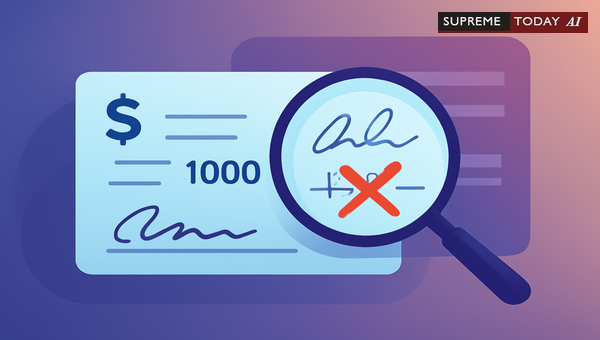
Cheque Signature Mismatch: Legal Implications Under
Imagine issuing a cheque to settle a business debt, only for it to bounce back due to a 'signature mismatch.' Panic sets in—does this trigger under ()? Many and face this dilemma daily. What are the legal implications of signature mismatch on cheques under or ?
This blog post breaks down the nuances, drawing from key judicial precedents. While signature discrepancies can lead to , they do not always result in penalties under Section 138. We'll explore when a mismatch is benign versus when it invalidates the cheque entirely. Note: This is general information, not legal advice. Consult a lawyer for your specific case.
Main Legal Finding on Signature Mismatch
A signature mismatch on a cheque does not attract criminal penalties under Section 138 of the if the cheque was issued by the and the signature is ultimately genuine. However, if the signature is forged or fails to match the bank's , the cheque loses validity as an instrument for discharging debt, making Section 138 prosecution unsustainable. 2012 8 Supreme 274
Courts emphasize that the presumes signature authenticity and debt existence under Section 139, but this is rebuttable with evidence of or mismatch. The core requirement: a cheque must bear the 's genuine signature to qualify as a valid . 2018 0 Supreme(P&H) 2318
Key Points to Understand
- Genuine but differing signatures: Minor variations (e.g., due to handwriting changes) typically do not invoke Section 138 liability.
- Forged or non-matching signatures: Renders the cheque invalid; no offence under Section 138.
- Presumption under Section 139: Can be rebutted by proof of mismatch or .
- Dishonour reasons matter: If due to 'insufficient funds' alongside mismatch, focus shifts to primary cause.
Detailed Analysis: When Does Mismatch Matter?
Signature Matching and Presumption of Validity
Banks compare cheque signatures against specimen records. A mismatch often leads to dishonour, but courts scrutinize intent and genuineness. In 2012 8 Supreme 274, the court held that 'Non-matching of signature on cheque attracts section 138, N.I. Act.' This underscores that significant mismatches, especially against bank specimens, can ground dishonour claims. 2025 Supreme(Online)(HP) 8684 reinforces: 'the dishonour of a cheque due to signature mismatch attracts the provision of Section 138 of the .'
Yet, nuance exists.
notes scenarios where ' would be an offence under Section 138 brought about by the changing his .' If the updates signatures without informing the bank, liability may arise despite no foul play.
Cases Where Mismatch Does Not Constitute an Offence
Not all mismatches spell doom. If genuine but slightly varied, courts often acquit. For instance, 2022 0 Supreme(Chh) 560 involved a 'cheque in dispute was lost or stolen' with —mismatch was secondary, not the offence trigger. Similarly, 2023 0 Supreme(Chh) 324 stresses fair trials via 'comparison of signatures should be based on , not bald allegations.'
Dishonour for 'insufficient funds' or 'account dormant' alongside mismatch shifts focus away from signatures. Courts reject premature claims without evidence. 2002 0 Supreme(Del) 1314 clarified that signature authenticity is to be decided at trial, denying early handwriting expert opinions.
Forged Signatures: Invalidating the Cheque
changes everything. A forged signature means no valid issuance, nullifying Section 138. 2018 0 Supreme(P&H) 2318 explicitly states: 'Cheque was not returned due to insufficient funds but due to incomplete/differ signatures – No offence u/s 138 N.I Act made out – Acquittal upheld.' cannot prosecute if is proven. 2024 Supreme(Online)(AP) 20760 acknowledges: 'There may indeed be situations where a mismatch... may result in dishonour... even when the never intended to invite such a dishonour.'
Evidence and Court's Approach
Courts rely on expert opinions, specimen comparisons, or . At the complaint stage, magistrates need only satisfaction—detailed probes await trial. 2025 Supreme(Online)(Bom) 4293 upholds: 'at the issuance of process stage under Section 138, a standard of satisfaction is required without delving into detailed evidence.' Factual disputes, like jurisdiction or dishonour reasons, are reserved for trial.
echoes that ''s signature not as per mandate' alone doesn't negate liability without full context.
Exceptions and Limitations
- Proven : Bars Section 138 entirely.
- Minor discrepancies: Rarely lead to conviction if genuineness is established.
- Expert evidence: Courts may order it if mismatch is disputed.
- Unintentional mismatches: Possible defenses if bank records are outdated. 2024 Supreme(Online)(AP) 20760
Practical Recommendations
Facing a signature mismatch? Here's how to navigate:- Verify genuineness: Compare with known samples; seek expert opinion if doubtful.- For drawers: Update bank specimens promptly to avoid unintended dishonours.
- For : Ensure cheque issuance proof; don't rely solely on bank memos.- Legal strategy: If genuine, highlight other dishonour reasons like funds. If forged, rebut Section 139 presumption early.- Prevention: Use digital signatures or ECS for high-value transactions.
Summary of Judicial Principles
- Signature mismatch, if not forged, does not per se attract Section 138. 2022 0 Supreme(Chh) 560 2012 8 Supreme 274
- or specimen mismatch invalidates the cheque. 2018 0 Supreme(P&H) 2318
- Section 139 presumption is rebuttable with evidence.
- Focus remains on genuine issuance for enforceable debt.
Conclusion and Key Takeaways
Signature mismatch on cheques is a common pitfall but rarely a standalone criminal offence under the . Courts balance banker vigilance with intent, prioritizing genuine signatures. While precedents like 2012 8 Supreme 274 affirm liability in clear mismatches, cases such as 2018 0 Supreme(P&H) 2318 protect against overreach.
Key Takeaways:- Genuine variations? Likely no liability.- ? Cheque invalid—no Section 138.- Always gather evidence; trial decides authenticity.
Stay informed, act prudently, and consult professionals. Cheque disputes can escalate, but understanding these principles empowers better outcomes.
Disclaimer: This article provides general insights based on reported cases. Laws evolve, and outcomes vary. Seek tailored legal counsel.
#ChequeBounce, #NIAct138, #SignatureMismatch












