


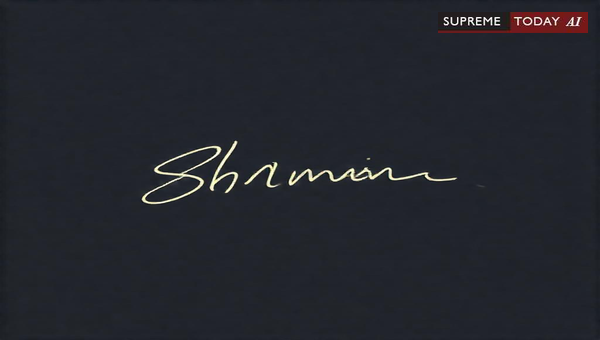
Whether an Accused Person Can Be Forced to Provide a While Police Investigate an Offence
A question that frequently arises in forgery, cheating, and document-based criminal cases is whether an accused can be compelled to give a or handwriting while the case is still at the investigation stage. The issue sits at the intersection of criminal procedure, evidence law, and the constitutional protection against . The short answer is that, before the 2006 amendment to the , neither a Magistrate nor a police officer had the power to compel such specimens during investigation; today, fills that gap, but only if specific conditions are satisfied.
The Traditional Position Under Section 73 of the Indian Evidence Act
The second paragraph of empowers a Court to direct any person present in Court to write words or figures so that the Court can compare them with disputed writing. However, the Supreme Court has consistently held that this power depends on a proceeding already pending before the Court. As observed in the judgment on the scope of Section 73:
The obvious implication of the words 'for the purpose of enabling the court to compare' is that there is some proceeding pending before the court in which or as a consequence of which it is necessary for the court to compare such writings. 2026 0 Supreme(MP) 124
The Court in reinforced this, holding:
If the case is still under investigation there is no present proceeding before the Court in which or as a consequence of which it might be necessary to compare the writings. 2026 0 Supreme(MP) 124
Accordingly, a Magistrate could not direct an accused to give a at the request of the police merely because a trial might be instituted later 2026 0 Supreme(MP) 124. The Kerala High Court took the same view, quashing a Magistrate's order directing an accused to appear before the police and observing:
There is no provision under the or under the Indian Evidence Act which enables a Magistrate to direct or compel an accused person to give his sample signature and handwriting to the Police for the purpose of investigation. 1979 0 Supreme(Ker) 206
A contributing reason was that the , which allows a Magistrate to order measurements such as finger impressions and footprints, deliberately excluded signature and handwriting from its scope 2026 0 Supreme(MP) 124.
Article 20(3): Does Compelling a Specimen Amount to ?
Separately, courts have clarified that obtaining specimen handwriting or signatures does not violate , which protects an accused from being compelled to be a witness against himself. In , the Supreme Court reasoned:
When an accused person is called upon by the court or any other authority holding an investigation to give his finger impression or signature or a specimen of his handwriting, he is not giving any testimony of the nature of a 'personal testimony'. 2023 0 Supreme(Ker) 485
Later decisions echo this reasoning, noting that specimen handwriting or signature by themselves are no testimony at all being wholly innocuous because they are unchangeable materials used only for comparison 2021 0 Supreme(Kar) 454. The same logic has been extended to voice samples, which are taken purely for comparison and do not involve conveying information based on personal knowledge 2021 0 Supreme(MP) 392.
Importantly, this constitutional clarification does not by itself confer procedural authority. The power to compel a specimen is a matter of statute, and until 2006 that statutory power was missing at the investigation stage 2026 0 Supreme(MP) 124.
: The Post-2006 Route
The gap identified in Ram Babu Misra was filled by , inserted by with effect from . The provision empowers a Magistrate of the first class, if satisfied that it is expedient for the purposes of any investigation or proceeding, to direct any person, including an accused, to give specimen signatures or handwriting. Two safeguards apply:
- The person must have, at some time, been arrested in connection with that investigation or proceeding 2024 0 Supreme(MP) 455.
- The Magistrate must pass a speaking, judicial order after ; a mechanical order on the mere filing of an application is unsustainable and liable to be set aside 2023 0 Supreme(Ker) 694.
Courts have also interpreted the arrest proviso harmoniously rather than literally. The requirement of arrest applies specifically to accused persons and can be satisfied where the individual has been arrayed as an accused and subjected to legal process, including release on court bail, even if no formal arrest was effected 2026 Supreme(Online)(Del) 117. Where the Magistrate's jurisdiction under Section 311A was challenged on the ground of absence of formal arrest, courts have upheld orders properly passed under the provision 2023 Supreme(Online)(KER) 7976.
Specimens Collected During Investigation Without an Order
What happens where the investigating agency obtains specimens during investigation without any Magistrate's order? In one case before the Supreme Court, handwriting and signature specimens were obtained during investigation at a time when no specific provision regulated or prohibited the practice, and the Court held that the resulting FSL report could not be discarded merely because it was not collected under a Section 73 order 2026 0 Supreme(MP) 124. Subsequent decisions have similarly held that when a police officer obtains specimen signatures and handwritings from a suspect or accused, no statutory provision or constitutional guarantee is violated 2015 0 Supreme(Mad) 2032. With Section 311A now in force, however, the proper and safest course for investigators is to obtain a Magistrate's under that provision before compelling specimens 2026 0 Supreme(MP) 124.
Key Distinctions and Limitations
- Section 73 of the Evidence Act remains confined to comparison during inquiry or trial; it cannot be used to collect specimens during investigation 2026 0 Supreme(MP) 124.
- Section 311A operates prospectively and does not validate specimens taken before without compliance with the then-existing framework 2026 0 Supreme(MP) 124.
- Fingerprints stand on a different footing: under , a police officer may take measurements without a Magistrate's order, though following the statutory procedure is desirable 2002 0 Supreme(AP) 1298.
- An may be drawn where a person refuses a lawful direction to give specimen handwriting during proceedings before a Court 2001 0 Supreme(All) 910.
Key Takeaways
- Generally, an accused cannot be compelled to give a during investigation under Section 73 of the Evidence Act, which applies only when a proceeding is pending before a Court 2026 0 Supreme(MP) 124.
- After , a Magistrate of the first class may direct specimen signatures or handwriting under , provided the person has been arrested in connection with the case and the Magistrate records a reasoned, 2024 0 Supreme(MP) 455 and 2023 0 Supreme(Ker) 694.
- Providing a specimen does not violate Article 20(3), as it is not under Kathi Kalu Oghad 2023 0 Supreme(Ker) 485.
- Admissibility of specimens collected without a Magistrate's order before the amendment may depend on the law as it stood at the time 2026 0 Supreme(MP) 124.
This article is general information based on judicial precedents and may not cover the specifics of any individual case; outcomes typically depend on the facts and the stage of proceedings.
#SpecimenSignature #Section311A #CrPC #IndianEvidenceAct #CriminalLaw












