


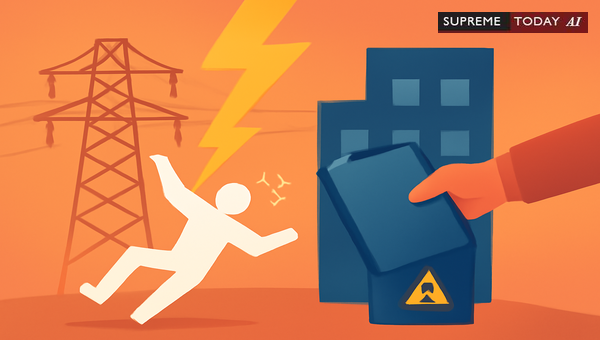
Electrocution Due to Negligence of Electricity Department: Understanding Liability
Electrocution incidents caused by faulty electrical infrastructure can lead to devastating injuries or deaths, often raising questions about the responsibility of electricity departments or boards. If you've been affected by such a tragedy or are seeking clarity on legal recourse, this post delves into the key legal principles governing these cases under Indian law. Electrocution Due to Negligence of Electricity Department is a common query, and courts have addressed it through claims and potential criminal proceedings.
In this comprehensive guide, we break down the main legal findings, principles like and , and the distinction between civil and . Drawing from landmark judgments, we'll explore how victims or families can seek justice while emphasizing that this is general information—not specific legal advice. Always consult a qualified lawyer for your situation.
Civil Liability: Compensation Under Article 226
Electrocution cases are typically maintainable under , allowing to entertain for compensation. This pathway is particularly useful when negligence by electricity authorities leads to harm. Courts have consistently held that electricity boards or departments bear for injuries from like electricity distribution, even without proving fault. 2016 0 Supreme(Ori) 180 2016 0 Supreme(Ori) 181 2016 0 Supreme(Ori) 234 2016 0 Supreme(Ori) 177 2016 0 Supreme(Ori) 299 2016 0 Supreme(Ori) 448 2016 0 Supreme(Ori) 450
For instance, in one key ruling, The court discussed the maintainability of a writ application for compensation in cases of electrocution, the doctrine of , and the principle of .2016 0 Supreme(Ori) 180 This underscores that victims don't always need to prove negligence; the inherent danger of electricity suffices.
Similarly, The court relied on the principle of and the doctrine of to establish the liability of the opposite parties for the death caused by electrocution.2016 0 Supreme(Ori) 181 (the thing speaks for itself) applies when the accident wouldn't occur without negligence, shifting the burden to the defendant.
Additional sources reinforce this. The doctrine originates from , an English common law case adopted in India, imposing liability for escapes from hazardous substances like electricity.
In , the awarded compensation for an electrocution death, highlighting electric supply companies' duty to prevent mishaps on public roads or due to live wires. 2025 Supreme(Online)(MAD) 8290 2025 Supreme(Online)(Mad) 60017
Key Duties of Electricity Authorities
- Maintain safe infrastructure to prevent leaks or exposed wires.
- Conduct regular inspections, especially in public areas.
- Respond promptly to reported hazards.
Failure in these duties triggers liability, as courts emphasize the foreseeable risks of electrical activities. 2025 Supreme(Online)(Mad) 53780 2025 Supreme(Online)(CHH) 602
in Electrocution Cases
is central here: parties handling electricity are liable for harm from their operations, regardless of care taken. This applies to electricity departments undertaking inherently dangerous tasks. Multiple judgments affirm this:
- Liability arises for deaths from live wires or leakages, even on public roads. 2025 Supreme(Online)(MAD) 8290 2025 Supreme(Online)(Mad) 60017 2025 Supreme(Online)(MAD) 8579
- No need for negligence proof; the activity's nature imposes responsibility. 2016 0 Supreme(Ori) 234 2016 0 Supreme(Ori) 177
This is a proved case of plaintiffs where their son died due to electrocution because of liability.
Courts like in Parvati Devi have applied this alongside for departmental negligence.
: When Does It Apply?
While civil claims focus on compensation, criminal responsibility requires proving or . The provided documents don't explicitly detail criminal cases but note that negligence or breach of statutory duty can lead to charges under:
- : Causing death by negligence.
- : Penalties for safety violations.
However, courts have clarified that mere accidents without criminal intent don't warrant prosecution. For example, officials may escape if no is shown, though persists. 2024 Supreme(Online)(KER) 14525 2025 Supreme(Online)(CHH) 602 2025 Supreme(Online)(Tel) 16075
In cases of unauthorized wiring or third-party interference, might shift, but electricity departments remain civilly accountable for oversight failures.
Civil vs. : Key Differences
| Aspect | Civil Liability | ||---------------------|------------------------------------------|-----------------------------------------|| Basis | or negligence | or intent || Remedy | Compensation via Article 226 | Punishment (fine/jail) || Proof Standard | Balance of probabilities | Beyond reasonable doubt || Examples | Electrocution from leaky wires 2016 0 Supreme(Ori) 448 | Willful safety breaches |
These proceed independently; a civil win doesn't bar criminal action, and vice versa.
Exceptions and Limitations
- or Third Parties: Liability may not attach if natural calamities or sabotage caused the incident.
- No Criminal Charges Without Evidence: Courts dismiss prosecutions lacking proof of intent. 2024 Supreme(Online)(KER) 14525
- doesn't absolve all responsibility; by victims can reduce awards.
Recommendations for Victims and Authorities
- For Families: File under Article 226 promptly for compensation; gather evidence like post-mortem reports. Consider FIR for criminal probe if evident.
- For Electricity Departments: Implement rigorous safety protocols, training, and audits to mitigate risks and liabilities.
- Preventive Measures: Public awareness campaigns on electrical hazards.
Authorities must prioritize safety to avoid both civil payouts and criminal scrutiny. 2016 0 Supreme(Ori) 450
Conclusion and Key Takeaways
Electrocution due to electricity department negligence typically triggers for under Article 226, with hinging on proven culpable acts. Landmark cases like those cited emphasize the duty to prevent foreseeable harms from hazardous electrical activities. While courts award remedies generously in civil matters, criminal outcomes depend on case specifics.
Key Takeaways:- Pursue writs for quick compensation. 2016 0 Supreme(Ori) 180- applies broadly. 2025 Supreme(Online)(Mad) 60017- Consult professionals; outcomes vary.
This post provides general insights based on judicial precedents and is not legal advice. Laws evolve, so verify with experts.
References
- 2016 0 Supreme(Ori) 180: Writ maintainability and .
- 2016 0 Supreme(Ori) 181: and .
- 2016 0 Supreme(Ori) 234, 2016 0 Supreme(Ori) 177, 2016 0 Supreme(Ori) 299, 2016 0 Supreme(Ori) 448, 2016 0 Supreme(Ori) 450: Liability in .
,
: Rylands doctrine.
- 2025 Supreme(Online)(MAD) 8290, 2025 Supreme(Online)(Mad) 60017, etc.: Modern applications.












