


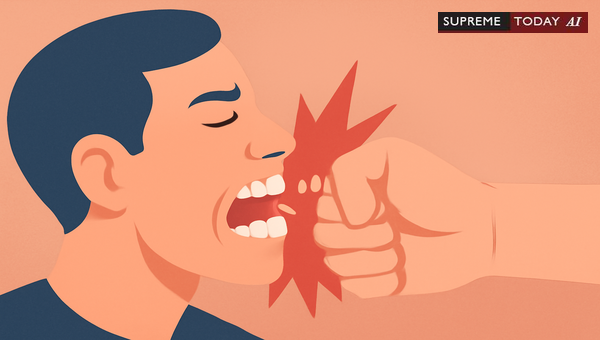
Are Teeth a Under IPC Section 324?
In heated altercations, bites can escalate quickly, leaving victims with painful injuries and perpetrators facing serious charges. But does a human bite—using teeth—count as using a under ? The question Teeth is Not a under 324 often arises in legal debates, reflecting confusion over whether natural body parts like teeth fall under this provision.
This blog post breaks down the legal principles, judicial precedents, and key factors courts consider. Note: This is general information based on case laws and not specific legal advice. Consult a qualified lawyer for your situation.
Understanding Section 324 IPC: The Basics
Section 324 IPC punishes by dangerous weapons or means. It covers:- Instruments for shooting, stabbing, or cutting.- Any instrument which, used as a weapon of offence, is likely to cause death.- Other means like fire, poison, or explosives.
The pivotal question is: Does instrument include human teeth? Courts emphasize that classification hinges on the nature of the weapon, not just the injury caused. As held, The determination of whether a particular instrument qualifies as a under Section 324 IPC depends primarily on the nature of the weapon used, not solely on the injury caused 1967 0 Supreme(SC) 386.
Factors like size, sharpness, and potential for grievous harm are assessed case-by-case: The expression any instrument which, used as a weapon of offence, is likely to cause death must be assessed based on facts of each case, considering factors such as size, sharpness, and potential to cause grievous harm 2008 8 Supreme 366.
Teeth as a Weapon: Judicial Perspectives
Indian courts have not uniformly labeled teeth as a . There's no blanket rule declaring teeth dangerous. Instead, the manner of use and injury severity decide.
Cases Where Teeth Were Deemed Dangerous
- In severe instances, like biting off part of an ear, courts have upheld charges under Sections 324 or 326 IPC. Human teeth can be considered an instrument for cutting, and an injury caused by a teeth bite can be an offence under sections 324 and 326, IPC, depending on the nature of the injury 1990 0 Supreme(Raj) 575. Here, the petitioner bit off the victim's ear; conviction under 326 was upheld, though sentence modified.
- Bite force supports this: Human adult's maximum biting force ranges from 520-1178 newtons... biting through a finger requires so much force that attempts often lead to . Even if not severing completely, bites to vital areas causing bleeding or could be deadly 2020 0 Supreme(Ker) 998. The court rejected arguments that bites never attract Section 324.
Cases Where Teeth Were Not Classified as Dangerous
- Contrarily, some rulings exclude teeth: A hurt caused voluntarily by means of teeth bite cannot be said to have been caused by any instrument for shooting stabbing or cutting or any instrument which used as a weapon of offence is likely to cause death 1970 0 Supreme(Guj) 132. The accused was convicted under milder instead.
- Body parts generally aren't instruments: body part cannot be treated as instrument -- instrument has to be outside means/weapon -- hence, expression any instrument does not include Kick, fist or any other body part 2015 0 Supreme(MP) 677.
- In another, teeth weren't seen as capable of causing death: holding that teeth was used as weapon to cause death to attract an offence under section 324... cannot be sustained at all
.
This split highlights context matters. Minor bites? Likely Section 323 (simple hurt). Grievous wounds to vital parts? Potentially 324 or 326.
Key Factors Courts Consider
Judges evaluate:1. Severity of Injury: Fractures, amputations, or life-threatening wounds tilt toward dangerous. In cases where injuries caused by teeth are severe, such as biting vital parts or causing grievous wounds, courts have acknowledged that teeth can be considered a . For example, injuries that result in fractures or injuries classified as dangerous to life 2017 0 Supreme(SC) 1037.2. Location of Bite: Vital areas (neck, face) increase risk.3. Intent and Circumstances: Intent gathered from nature of the weapon used, the part of the body chosen for assault and other attending circumstances 2018 0 Supreme(P&H) 3444.4. Comparison to Other 'Weapons': Even everyday objects like motorbikes qualify if used harmfully: Motorbike can be classified as a under IPC Section 324 when intentionally used to cause harm 2025 0 Supreme(Ker) 1818. Nails, weaker than teeth, were rejected: hurt caused by human nails may not qualify as an injury caused by instrument for purpose of section 324 of IPC 2015 0 Supreme(MP) 765.
The courts have clarified that the classification of a weapon as dangerous depends on its potential to cause or death, not just on its physical form 1967 0 Supreme(SC) 386 2008 8 Supreme 366.
Practical Implications for Legal Proceedings
If facing or defending a bite-related charge:- Prosecution: Prove () and teeth's deadly potential in context.- Defense: Argue teeth aren't an instrument, citing precedents like 1970 0 Supreme(Guj) 132, or injury was simple.
Medical evidence is crucial—doctor opinions on weapon nature matter, as in cases distinguishing 1990 0 Supreme(Raj) 575. Prolonged bites or infections can elevate charges.
Conclusion and Key Takeaways
Teeth are not automatically a under Section 324 IPC. Status depends on use and injury: minor bites typically fall under Section 323; severe, vital-area attacks may invoke 324/326 1967 0 Supreme(SC) 386 2008 8 Supreme 366 2017 0 Supreme(SC) 1037.
Key Takeaways:- Assess case facts: injury nature, body part, intent.- Precedents vary—teeth can be instruments for cutting if grievous 1990 0 Supreme(Raj) 575 2020 0 Supreme(Ker) 998, but often not 1970 0 Supreme(Guj) 132 2015 0 Supreme(MP) 677.- Everyday objects become weapons contextually, per courts.- Always gather medical reports and witness statements.
In claims or assaults, understanding these nuances can sway outcomes. For tailored advice, reach out to a criminal law expert. Stay informed, stay safe.
References:- 1967 0 Supreme(SC) 386 2008 8 Supreme 366 2017 0 Supreme(SC) 1037 1990 0 Supreme(Raj) 575 2020 0 Supreme(Ker) 998 1970 0 Supreme(Guj) 132 2015 0 Supreme(MP) 765
2015 0 Supreme(MP) 677 2018 0 Supreme(P&H) 3444 #IPC324, #DangerousWeapon, #TeethBiteLaw












