


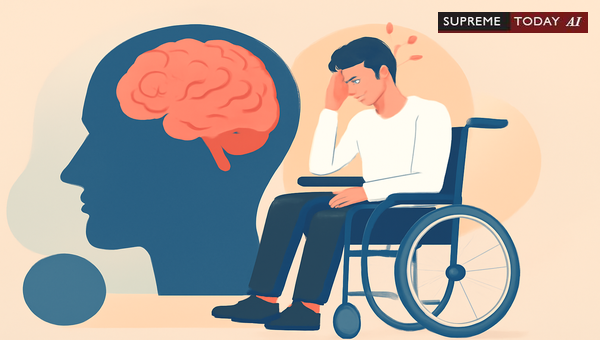
TBI Disability: Legal Claims and Compensation Guide
Traumatic brain injuries (TBIs) can profoundly alter lives, leading to lasting disabilities that impact everything from daily activities to long-term earning potential. If you've been affected by a TBI due to someone else's —such as in a motor vehicle accident—you may wonder: What is the Disability in Traumatic Brain Injury? This question lies at the heart of many , where establishing the nature and extent of disability is crucial for securing fair compensation. In this guide, we'll break down the definition, key legal considerations, common arguments, and real-world court insights to help you navigate this complex area.
Note: This article provides general information and is not legal advice. Consult a qualified attorney for advice tailored to your situation.
Understanding Disability in Traumatic Brain Injury
Disability in traumatic brain injury (TBI) refers to the impairments and limitations that result from damage to the brain due to an external force. These disabilities can be cognitive, physical, emotional, or behavioral, and their severity can vary widely depending on the extent of the injury. 2025 Supreme(Online)(Mad) 39939
For instance, a discharge summary might detail severe TBI with brain stem contusion, tentorial haemorrhage, and multiple craniofacial fractures, as seen in one case where the claimant was admitted post-accident. 2025 Supreme(Online)(Mad) 39939 Common effects include memory loss, difficulty concentrating, motor skill deficits, mood swings, and even coma in severe cases. 2020 0 Supreme(Mad) 1735
In legal contexts, particularly under laws like the (Sections 166, 168), proving TBI-related disability often hinges on medical evidence, expert testimony, and discharge summaries. Courts typically assess how these impairments affect the victim's avocation, quality of life, and finances. 2025 0 Supreme(Mad) 3266
Key Legal Arguments for Plaintiffs in TBI Cases
When pursuing compensation, plaintiffs focus on building a strong case linking the TBI disability directly to the incident. Here are the primary arguments:
: Establishing a direct link between the TBI and the negligent act, such as reckless driving. Medical records and timelines are vital.
Severity of Disability: Detailed evidence showing daily life disruptions, work incapacity, and quality-of-life decline. For example, courts have awarded based on 90% disability certificates tied to head injuries, rejecting claims of congenital causes. 2024 0 Supreme(AP) 789
Long-term Impact: Highlighting chronic issues like cognitive deficits and emotional disturbances to justify .
: Covering medical bills, lost wages, and reduced earning capacity. often use multipliers, though this may be adjusted if evidence lacks. 2025 0 Supreme(Mad) 3266
: Pain, suffering, and loss of enjoyment, supported by personal testimonies.
In one ruling, the court upheld compensation for a 13-year-old's severe head injuries and from a car accident, affirming despite insurer defenses. 2024 0 Supreme(AP) 789 The court reinforced that compensation for injuries in motor vehicle accidents is warranted when is established, regardless of . 2024 0 Supreme(AP) 789
Counterarguments from the Defense
Defendants, often insurers, challenge TBI claims to limit liability. Prosecuting lawyers might raise:
: Arguing prior issues like cerebral palsy caused the disability. However, courts have dismissed this when evidence links symptoms to the accident: He categorically denied the suggestion that the disability mentioned by him is not due to the injury to the brain sustained in the accident. 2024 0 Supreme(AP) 789
Alternative Causes: Blaming lifestyle or unrelated health issues.
Exaggeration of Symptoms: Questioning subjective complaints like pain or amnesia.
Mitigation Failure: Claiming the plaintiff ignored rehab.
Defense lawyers add:
Not Proven: Insufficient proof of fault.
Disability Not Established: Challenging severity, as in cases where recovery from was noted without avocation impact. 2025 0 Supreme(Mad) 3266
Subjective Symptoms: Hard-to-quantify effects.
: Shared blame reducing awards.
In a fraud allegation case, the court re-assessed disability at 45% for a pillion rider's TBI and fractures, dismissing unsubstantiated claims. 2020 0 Supreme(Kar) 1595
Court Insights and Case Examples
Indian courts have addressed TBI disabilities extensively in motor accident claims, emphasizing evidence-based assessments.
Pre-existing vs. Accident-Caused Disability: In multiple appeals, awarded for head injuries despite congenital palsy defenses, as PW1 testified obtaining disability certificates post-accident. 2024 0 Supreme(AP) 584 The : The evidence clearly established the claimant's disability was a direct result of the accident. 2024 0 Supreme(AP) 584
Compensation Quantum: One tribunal fixed Rs.5,000 per percentage of disability (50% assessed), totaling Rs.2,50,000, but courts modify for lack of impairment proof. 2025 0 Supreme(Mad) 3266 Compensation for personal injury must be supported by evidence of impairment affecting avocation; lack of such evidence justifies modification of awarded amounts. 2025 0 Supreme(Mad) 3266
Assessment: For head injuries, whole-body disability isn't always limb-based; evidence of normal demeanor can influence. 2020 0 Supreme(Kar) 1595
Guardianship for Incapacitated Victims: In coma cases from and fractures, courts appoint guardians under Article 226 and for property management. 2020 0 Supreme(Mad) 1735
Criminal Contexts: TBI history factored into insanity defenses, leading to acquittals and mental health detention. 2019 0 Supreme(Ker) 1065
These cases underscore that while TBI claims succeed with robust proof, defenses scrutinize and extent.
Factors Influencing TBI Disability Compensation
Medical Board Assessments: Certificates like 90% or 25-50% guide awards. 2024 0 Supreme(AP) 789 2020 0 Supreme(Kar) 1595
Interest Rates: Courts set 6-8% on awards. 2020 0 Supreme(Kar) 1595
Multiplier Method: Used cautiously without work-loss evidence. 2025 0 Supreme(Mad) 3266
Victims should gather discharge summaries (e.g., Ex.P5 for severe TBI), expert reports, and witness statements early. 2025 Supreme(Online)(Mad) 39939
Key Takeaways for TBI Disability Claims
- TBI disabilities encompass broad impairments; link them clearly to for success.
- Counter pre-existing condition arguments with accident-specific evidence.
- Courts prioritize medical proof over subjective claims.
- Compensation covers economic/non-economic losses, often modified on appeal.
If facing a TBI from an accident, document everything and seek professional guidance promptly. Understanding these dynamics can empower stronger claims and fairer outcomes.
This is general information based on precedents; outcomes vary by facts. Always consult a lawyer.
#TBIDisability, #BrainInjuryClaims, #InjuryCompensation












