SupremeToday Landscape Ad

AI Overview

AI Overview...

  • There is no Divorce between them but - The phrase indicates a situation where a formal divorce has not been finalized or recognized, despite attempts or claims to that effect. Several sources discuss the complexities surrounding divorce proceedings, emphasizing that a divorce may not be legally valid or recognized without proper procedures, mutual consent, or valid grounds ["2023 0 Supreme(Mad) 924"], ["2023 0 Supreme(Ker) 691"], ["2023 0 Supreme(Pat) 749"].

  • Legal grounds and procedures for divorce - Divorce laws vary across communities and statutes. For example, under Muslim law, a wife can only obtain a divorce through her husband's action or judicial decree, with methods like khula or judicial divorce being applicable ["

    KING v. MISKIN UMMA et al.

    "]. Under Hindu law, mutual consent is essential, and divorce can be granted only if both parties agree and continue to do so until the decree is passed ["2023 0 Supreme(Ker) 281"], ["2024 0 Supreme(MP) 3"].
  • Mutual Consent and Validity of Divorce Deeds - Several sources highlight that mutual consent is a critical requirement for divorce under Section 13B of the Hindu Marriage Act. If mutual consent is not maintained or the divorce deed is disputed, the divorce may not be legally valid ["2023 0 Supreme(Ker) 281"], ["2023 0 Supreme(Mad) 812"]. Disputes over the execution or validity of divorce deeds, especially in customary or community-specific contexts, further complicate recognition ["2024 0 Supreme(Guj) 135"], ["2023 0 Supreme(Mad) 812"].

  • Procedural and Jurisdictional Issues - The filing of divorce petitions in different courts or jurisdictions, sometimes without proper notice or due process, can lead to orders that are not recognized or are challenged legally. For instance, proceeding with divorce in violation of injunction orders or filing in courts lacking jurisdiction can result in erroneous or non-recognized decrees ["2023 0 Supreme(Mad) 924"].

  • Refusal or Delay in Filing Divorce - Courts may refuse to grant divorce if the grounds are not substantiated, mutual consent is withdrawn, or procedural requirements are not met. For example, refusal to file a mutual consent petition or the husband's attempt to seek divorce on grounds like cruelty or desertion, which are contested, can result in the divorce not being granted or recognized ["2023 0 Supreme(Ker) 691"], ["2023 0 Supreme(Pat) 749"].

  • Conclusion - The phrase There is no Divorce between them but underscores the importance of proper legal procedures, mutual consent, and valid grounds for divorce. Without adherence to these legal requirements, a divorce may not be recognized legally, leading to ongoing disputes and unresolved marital status ["2023 0 Supreme(Mad) 924"], ["2023 0 Supreme(Ker) 281"], ["2024 0 Supreme(MP) 3"].


Summary:The sources collectively emphasize that a divorce must follow legal procedures, including mutual consent where applicable, proper jurisdiction, and valid grounds. Disputes over the execution or recognition of divorce deeds, especially in community or religious contexts, can lead to situations where there is no divorce legally despite claims or attempts to dissolve the marriage. Proper adherence to procedural laws is essential for the divorce to be valid and recognized.

Establishing Marriage Validity: Are Customary Divorces Effective Without Court Decrees?

Is Your Marriage Still Valid Without a Formal Divorce Decree?

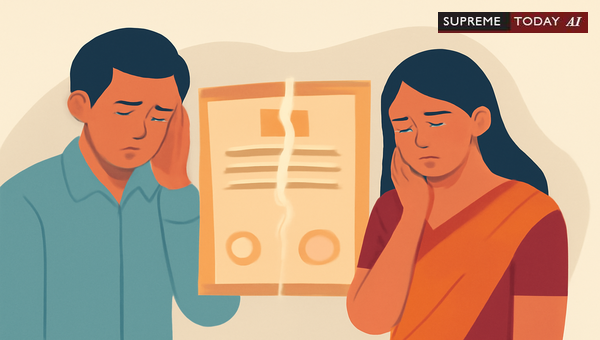
In the realm of family law, one common concern arises: There is no Divorce between them but – does that mean the marriage is automatically dissolved? Many couples in India, particularly under Hindu personal law, grapple with this question. Without a court decree, registered deed, or recognized customary practice, is the marital bond truly severed? This blog post delves into the legal nuances, drawing from key judgments and statutory provisions to clarify when a marriage remains legally intact.

Note: This article provides general information based on legal precedents and is not a substitute for professional legal advice. Consult a qualified lawyer for your specific situation.

Validity of Divorce: Formal vs. Informal Methods

Under Indian law, particularly the Hindu Marriage Act, 1955 (HMA), a marriage is not dissolved merely by mutual agreement or separation. It requires a valid legal mechanism. Here's a breakdown:

1. Court Decrees Under Section 13 HMA

A decree of divorce passed by a matrimonial court under Section 13 of the Hindu Marriage Act is binding and conclusively dissolves the marriage. For instance, such a decree terminates the marital status definitively 1993 0 Supreme(P&H) 237.

Ex parte decrees also hold weight if proper service of summons occurred. In one case, the court dismissed an application to set aside an ex parte divorce decree, holding that the appellant was aware of the petition and had notice of the hearing date, with sufficient time to appear. Thus, the decree stood, and the respondent's second marriage was lawful as no timely appeal was filed 2023 0 Supreme(Del) 624.

2. Customary Divorce and Registered Deeds

Not all divorces need court intervention. Customary practices in certain communities are recognized:- A registered divorce deed executed by both parties, recognized under community customs (e.g., Kadva Patidar community), is valid and effectively terminates the marriage 2010 0 Supreme(Guj) 409.- Customary divorce, performed with mutual consent and not against the wife’s wishes, is legally effective 1945 0 Supreme(Mad) 49.

These methods highlight that informal instruments can sever ties if they meet legal recognition criteria.

Judicial Separation: Not the Same as Divorce

A common misconception is confusing judicial separation with divorce. Judicial separation under HMA does not dissolve the marriage; it only suspends cohabitation rights while maintaining marital status 1975 0 Supreme(AP) 43. Parties remain legally married unless a formal divorce decree follows.

For example, in cases of prolonged separation due to desertion, courts may grant divorce if there's a complete breakdown. One judgment upheld a divorce decree on grounds of desertion under Section 13(1)(ib) HMA, noting separation since 2008 without resumption of cohabitation post a restitution decree. The High Court erred in setting it aside, confirming the marriage's irretrievable breakdown 2024 5 Supreme 459.

Implications When There Is No Recognized Divorce

If there is no divorce between them – no court decree, valid deed, or customary rite – the marriage subsists legally:- The absence of formal proceedings does not imply dissolution; the union remains valid.- To prove no divorce exists, evidence like absence of deeds, decrees, or customs is crucial.

This has ripple effects:- Remarriage Risks: Entering a second marriage without dissolving the first can attract bigamy charges under Section 494 IPC. One case involved conspiracy for a second marriage while the first subsisted, with no divorce 2013 0 Supreme(MP) 634.- Residing Together Post-Divorce: Even after informal divorce, cohabitation for children's sake doesn't revive the marriage, as clarified in a complaint where parties lived together post-2007 divorce 2017 0 Supreme(Bom) 1107 2017 0 Supreme(Bom) 120.

Ex Parte and Procedural Challenges

Applications to set aside ex parte decrees fail if defendants had knowledge. Courts emphasize: an ex parte decree cannot be set aside on the ground of irregularity in the service of summons if the defendant had notice of the date of hearing 2023 0 Supreme(Del) 624.

Mutual Consent Divorce: A Harmonious Exit

Section 13B HMA allows divorce by mutual consent, but procedural lapses matter. In a case, parties filed a second motion assuming the first was allowed, but it was dismissed for non-prosecution. The court remanded for fresh hearing, recognizing bona fide mistakes 2012 0 Supreme(Del) 642.

Compromise resolves disputes effectively. Courts quash related FIRs (e.g., under IPC Sections 498A, 354) when parties divorce mutually: they have decided to part happily... their dispute has been resolved and they have obtained divorce by mutual consent 2018 0 Supreme(Bom) 2393.

Key Case Insights from Precedents

| Case ID | Key Holding ||---------|-------------|| 1993 0 Supreme(P&H) 237 | Court decree under Sec 13 HMA conclusively dissolves marriage. || 2010 0 Supreme(Guj) 409 | Registered customary deed valid in communities like Kadva Patidar. || 1945 0 Supreme(Mad) 49 | Customary divorce valid with consent. || 1975 0 Supreme(AP) 43 | Judicial separation ≠ divorce. || 2023 0 Supreme(Del) 624 | Ex parte decree upheld if notice given. || 2024 5 Supreme 459 | Divorce on desertion grounds for breakdown. || 2018 0 Supreme(Bom) 2393 | Quash FIRs post-mutual consent divorce. |

These rulings underscore that validity hinges on form and recognition.

Practical Recommendations

If facing uncertainty:1. Verify Status: Collect evidence of any proceedings, deeds, or customs.2. Seek Declaration: Approach court for marital status confirmation.3. Avoid Risks: Refrain from remarriage without clarity.4. Mutual Consent Option: Consider Sec 13B if amicable.

Gather documents like marriage certificates, prior petitions, or community proofs.

Conclusion: Don't Assume – Verify Your Marital Status

A marriage endures until validly dissolved via court decree, registered deed, or custom. The phrase there is no Divorce between them but signals a subsisting union, with profound implications for rights, remarriage, and disputes. Cases affirm: separation alone isn't enough; legal finality is key.

Key Takeaways:- No formal divorce? Marriage likely intact.- Customary deeds/court orders can validate dissolution.- Always substantiate claims with evidence.

Stay informed, but for tailored guidance, consult a family law expert. Share your thoughts below!

#DivorceLawIndia, #HinduMarriageAct, #FamilyLaw
Chat Download
Chat Print
Chat R ALL
Landmark
Strategy
Argument
Risk
Chat Voice Bottom Icon
Chat Sent Bottom Icon
SupremeToday Portrait Ad
logo-black

An indispensable Tool for Legal Professionals, Endorsed by Various High Court and Judicial Officers

Please visit our Training & Support
Center or Contact Us for assistance

qr

Scan Me!

India’s Legal research and Law Firm App, Download now!

For Daily Legal Updates, Join us on :

whatsapp-icon Back to top