


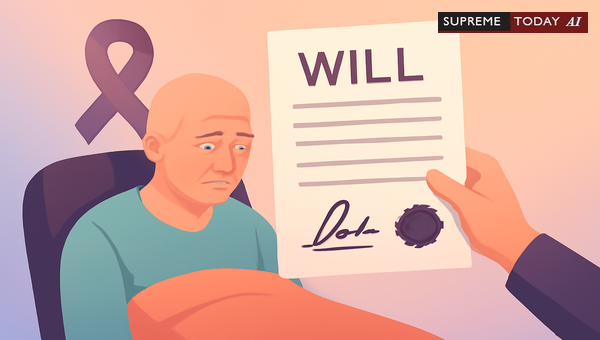
Is a Will Valid if the Testator Suffers from Cancer?
In , few issues spark as much contention as the validity of a will executed by a testator battling a serious illness like cancer. The question arises: Testator Suffering from Cancer Executed Will which is Valid or Not? This is a common concern in , where family members challenge the document based on the testator's health. While cancer alone does not invalidate a will, the testator's mental state at execution is crucial. This post examines key legal principles under Indian law, analyzes landmark cases, and offers practical insights—remember, this is general information, not specific legal advice. Consult a qualified lawyer for your situation.
Key Legal Principles for Will Validity
For a will to hold up in court, it must meet strict standards, especially when the testator is ill. The cornerstone is the —the testator must comprehend the will's nature, effects, and dispositions, executing it voluntarily without . This stems from .
The rests on the (usually the executor or beneficiary) to establish:1. The testator signed the will.2. The testator was of sound and disposing mind. 2013 0 Supreme(Bom) 11413. The testator understood the dispositions' nature and effect.4. Execution occurred before two attesting witnesses, who signed in each other's and the testator's presence. 2013 0 Supreme(Bom) 1141
heighten this burden. These include the testator's frail health, influential beneficiaries, or execution irregularities. Cancer, particularly advanced stages, often raises red flags, as it may impair cognition. For instance, courts scrutinize if the testator was bedridden or medicated heavily. 2013 0 Supreme(Bom) 1141 2016 0 Supreme(Tri) 360
When Cancer Does Not Invalidate the Will: Case Analysis
Indian courts assess each case individually, focusing on evidence of mental alertness despite illness. Several precedents illustrate this nuance.
In the E. Madhavi Pollikkaramma case, the ruled that cancer alone does not negate a sound disposing mind. Even though the testator was suffering from cancer, it could not be concluded that she was not in a sound disposing state of mind at the time of the will's execution. 2014 0 Supreme(Bom) 1121 2008 0 Supreme(Raj) 958
Similarly, in the Chitta Ram Bin case, evidence proved the testator, despite cancer, was mentally alert and capable of discussing matters. The court upheld the will, stressing comprehension of dispositions. 2006 0 Supreme(Cal) 28 2021 0 Supreme(Mad) 3623
A case echoed this: The executant, suffering from throat cancer, expressed, his apprehension that he may not survive for long. Yet, witnesses confirmed his capacity, and the will was deemed valid despite hospitalization shortly before death.
In another instance under probate proceedings, the court granted for a will executed by Manivannan Naicker, a railway employee with throat cancer. Despite claims he was bedridden and cared for only by daughters, evidence showed execution in a sound state before two witnesses. The court found that the Will dated was executed... in a and it is valid and genuine. 2011 0 Supreme(Mad) 2159
These cases highlight that medical records, witness testimonies, and the testator's conduct can affirm validity.
When Cancer Leads to Will Invalidity: Red Flags and Challenges
Conversely, insufficient proof of capacity often dooms the will. In the Naranbhai Bhagwanbhai case, the testator was bedridden with cancer, but no evidence—from plaintiff or witnesses—proved mental soundness. The court invalidated it. 1988 0 Supreme(Guj) 94
The Smt. Chandori case involved advanced cancer post-surgery, with evidence of mental decline. prevailed, nullifying the will. 2015 0 Supreme(P&H) 1004
In a mouth cancer scenario, the testator died 15 days post-execution. It is an admitted position that the testator was suffering from mouth cancer and was under treatment. He died on ... a suspicion is caused on the soundness of disposition of mind. The appellants failed to discharge the onus. 2010 0 Supreme(Del) 1138
Another dispute saw a testator with cancer execute a will days before death in favor of a niece, challenged by wife and children as fabricated. Courts emphasized proving under and . 2009 0 Supreme(Mad) 3127
Even in non-will contexts, like bail applications, courts note cancer's severity: The applicant is reported to be suffering from Prostrate Cancer and is, presently, hospitalized. This underscores how illness invites scrutiny. 2022 0 Supreme(Guj) 100
: What Triggers Heightened Scrutiny?
Courts list common red flags:- Health at execution: Bedridden state or recent surgery. 2011 0 Supreme(Mad) 2159- Beneficiary involvement: Active roles by heirs who gain disproportionately. 2016 0 Supreme(Tri) 360- Process discrepancies: Unregistered wills or absent witnesses. 2013 0 Supreme(Bom) 1141
The burden of proving the validity and genuineness of a Will lies on the , and when there are , it is on the to explain them. 2011 0 Supreme(Mad) 2159
Practical Recommendations for Securing a Valid Will
To mitigate challenges:- Document mental capacity: Obtain medical certificates affirming alertness at execution.- Secure robust witnesses: Choose independent attesting witnesses who can testify to voluntary execution and comprehension.- Address suspicions proactively: Video record execution if feasible, or note health details transparently.- Register the will: Though not mandatory, it adds credibility.
Gather evidence like doctor notes or contemporaneous accounts. In disputes, prepare for cross-examination on these points.
Conclusion: Context is King
Ultimately, a will by a cancer-afflicted testator may be valid if sound mind is proven, but typically faces challenges under . Cases like E. Madhavi affirm illness ≠ incapacity, while others like Naranbhai show proof's necessity. Propounders must robustly evidence compliance.
Key Takeaways:- Cancer does not automatically invalidate a will.- Focus on sound disposing mind and clear execution.- Anticipate and rebut suspicions with strong proof.
This analysis draws from precedents including 2013 0 Supreme(Bom) 1141, 2006 0 Supreme(Cal) 28, 1988 0 Supreme(Guj) 94, 2008 0 Supreme(Raj) 958, 2021 0 Supreme(Mad) 3623, 2015 0 Supreme(P&H) 1004, 2014 0 Supreme(Bom) 1121,
, 2022 0 Supreme(Guj) 100, 2011 0 Supreme(Mad) 2159, 2010 0 Supreme(Del) 1138, 2009 0 Supreme(Mad) 3127. For personalized guidance, seek professional legal counsel to navigate probate effectively. #WillValidity #TestatorCancer #ProbateLaw















