
 Back
Back





IN THE HIGH COURT OF KARNATAKA, DHARWAD BENCH
S.R. KRISHNA KUMAR, C.M. POONACHA, JJ.
Kumar, S/o. Basappa Olekar and Anr. – Appellants
Versus
State Of Karnataka, BY PSI Of Haunsbhavi Police Station, Represented By SPP, High Court Of Karnataka – Respondent
Criminal Appeal No. 100320 of 2020 (374(Cr.PC)/415(BNSS)-)
Decided On : 11-08-2025
JUDGMENT :
S.R. KRISHNA KUMAR, J.
This appeal by the appellants/accused No.2 and 3 in S.C.No.76/2014 on the file of the II-Additional District and Sessions Judge at Haveri (Sitting at Ranebennur), [Hereinafter referred to as ‘Trial Court’] is directed against the impugned judgment dated 09.10.2020 whereby the appellants/accused No.2 and 3 were convicted along with accused No.1-Satish for offences punishable under Sections 302 , 397 and 120(B) read with Section 34 of the Indian Penal Code, 1860, [Hereinafter referred to as ‘ IPC ’]
2. Heard the learned counsel for the appellants/accused No.2 and 3 and the learned Additional SPP for respondent-State and perused the material on record.
3. A perusal of the material on record would indicate that on 24.08.2014, PW2 (CW1), the son of one Channabasappa Gokavi filed a complaint, which was registered as an FIR in Crime No.106/2014 against the appellants/accused No.2 and 3 and one Satish-accused No.1. The respondent- police authorities conducted investigation and filed a charge sheet against appellants herein as well as the aforesaid accused No.1 for the offences punishable under Sections 302 , 397 and 120(B) read with Section 34 of IPC .
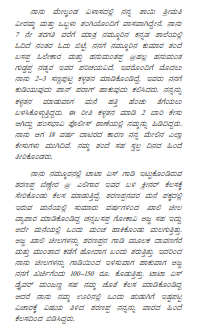
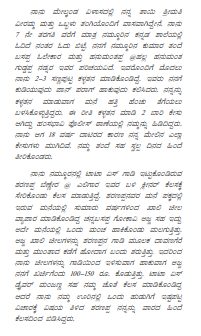
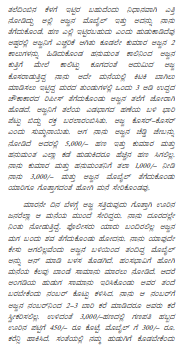
4. According to the case of the prosecution, on 21.08.2014, the accused persons entered the house/godown of aforesaid Channabasappa Gokavi, [Hereinafter referred to as ‘deceased’] at about 9.00 p.m., and all of them assaulted him and took away ₹5,000/- and a mobile phone. It is alleged that on 22.08.2014, the complainant received a phone call from CW2 at around 8.30 p.m. that the father of the complainant had expired and went to the spot only to find the dead body of his father and on enquiry, he was told that his father might have fallen down during the night. Thereafter, on 24.08.2014, the grand-nephew of the deceased makes a phone call to the complainant, who comes back to the same spot and upon enquiry, the accused No.1 as well as accused No.2 and 3 are apprehended and the aforesaid FIR/complaint is registered against them.
5. Pursuant to the Trial Court framing of charges as against the appellants and the accused No.1-Satish, the prosecution examined the complainant/CW1 as PW2 and the grand-nephew of the deceased (CW2) as PW1 and other witnesses as PW3 to PW30. The prosecution marked Exs.P1 to 49 by way of documentary evidence and M.O.1 to 6 in support of their case. The appellants/accused did not adduce any oral or documentary evidence. By the impugned judgment, the Trial Court proceeded to convict the appellants as well as accused No.1. Aggrieved by the impugned judgment of conviction and sentence passed by the Trial Court, the appellants/accused No.2 and 3 are before this Court by way of present appeal.
6. Heard learned counsel for the appellants and learned Additional SPP for the respondent-State and perused the material on record.
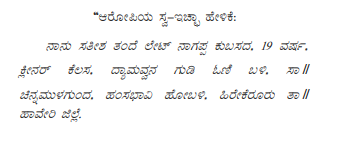
7. In addition to reiterating the various contentions urged in the memorandum of appeal and referring to the material on record, the learned counsel for the appellants invited our attention to the impugned judgment in order to point out that despite the fact that there are no eyewitnesses to the incident in question involving the appellants/accused No.2 and 3 or any evidence as regards their role in the incident in question, the Trial Court committed an error in convicting the appellants/accused No.2 and 3 based on the sole alleged confession statement by accused No.1. In this context, our attention is invited to the complaint in order to point out that even according to PW2 (complainant), he made allegations against the appellants/accused No.2 and 3 only based on the sole confession statement of accused No.1 and upon accused No.2 and 3 allegedly admitting their guilt in the presence of the villagers. It is also submitted that apart from the fact that there is no circumstantial evidence to incriminate the appellants for the alleged offences, the mobile phone of the deceased was not recovered from the custody or the possessio
The court established that a sole confessional statement from a co-accused cannot be the basis for a conviction without corroborating evidence; the absence of eyewitnesses and substantial proof resul....

Reliance can be based on solitary statement of a witness if court comes to conclusion that said statement is true and correct version of case of prosecution.

The court established that mere suspicion cannot replace proof beyond reasonable doubt, especially in circumstantial evidence cases.


Conviction based on circumstantial evidence requires a complete and cogent chain of circumstances; extra-judicial confessions must be corroborated by reliable evidence.
For a conviction based on circumstantial evidence, every link in the chain must be established beyond reasonable doubt; mere confessions are inadequate without corroborative evidence.


In murder cases based on circumstantial evidence, each link must be established beyond reasonable doubt, with all evidence consistently pointing to the guilt of the accused.



An indispensable Tool for Legal Professionals, Endorsed by Various High Court and Judicial Officers
Please visit our Training & Support
Center or Contact Us for assistance

Scan Me!
India’s Legal research and Law Firm App, Download now!


For Daily Legal Updates, Join us on :



 Back to top


