
 Back
Back





IN THE HIGH COURT OF BOMBAY
Ravindra V.Ghuge, R.G.Avachat, Sandipkumar C.More, JJ.
Sunanda Ashok Sonawane - Appellant
Versus
District Judge - Respondent
Writ Petition No. 2394 of 2015
Decided On : 12-04-2024
| Table of Content |
|---|
| 1. eligibility criteria for receiving aps benefits. (Para 2 , 3 , 10) |
| 2. legal observations regarding existing administrative policies on promotion and benefits. (Para 4 , 8 , 9) |
| 3. the impact of performance criteria on eligibility for promotion. (Para 5 , 6 , 7) |
JUDGMENT/ORDER
RAVINDRA V.GHUGE, J. - The Division Bench of this Court (Coram : Dr. Manjula Chellur, CJ and R.M. Borde, J.) passed an order on 29/6/2017, recording in paragraphs 2 to 9 as under:-
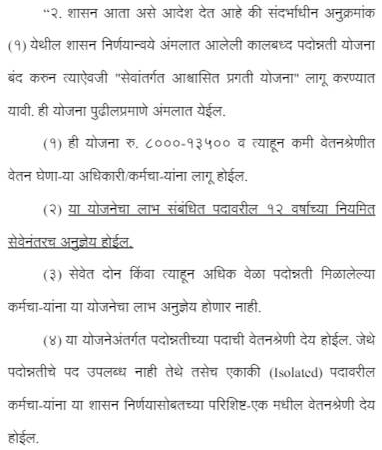
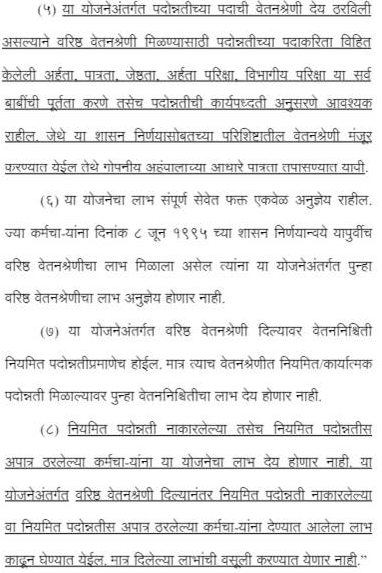
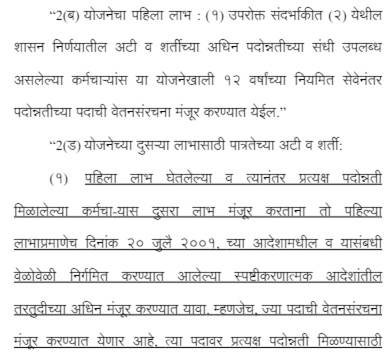
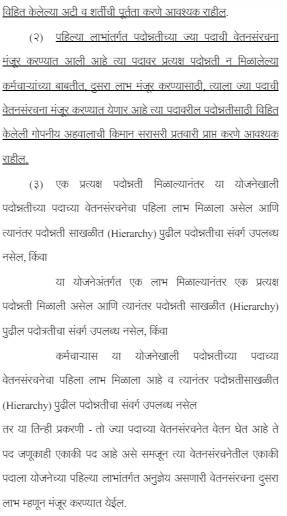
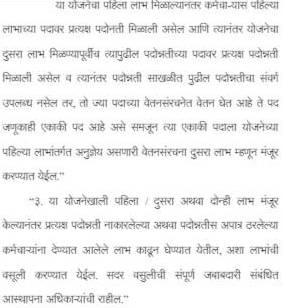
"2] The petitioner entered the Department as a Junior Clerk and it is also not in dispute that she was given the benefit of Assured Progress Scheme (APS) benefit after completion of 12 years of service when she did not have the opportunity of getting promoted. Apparently, she appeared for a test conducted in terms of Subrule (b) of Rule 580 of the Civil Manual and failed to get bench mark of 40 marks in the said test. Therefore, the Department ultimately directed her to refund all the amount, which was paid to her under Assured Progress Scheme. Aggrieved by the same, the petitioner is before this Court. 3] Learned counsel for the petitioner places reliance upon two Division Bench judgments of this Court reported in 2005 (3) Maharashtra Law Journal, 245 in the case of Shrirang Atmaram Nikam v. District and Sessions Judge, Thane and others so also 2007 (6) Maharashtra Law Journal, 426 in the case of Ramesh Samhari More v. Registrar, District Court, Solapur and others.
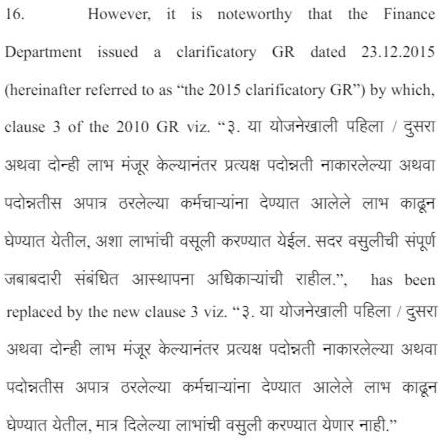
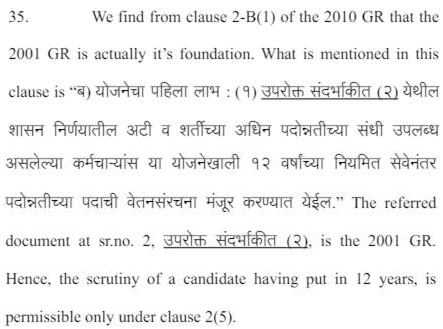
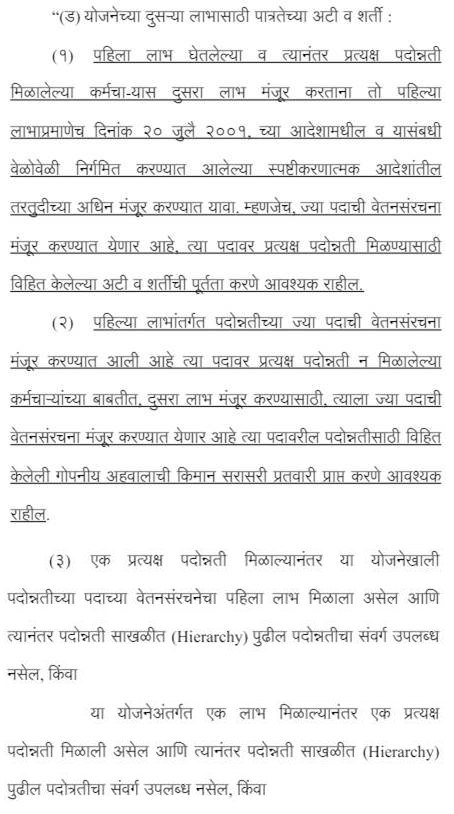
4] The petitioner has placed on record two Government resolutions (GRs); one is of the year 2001 and another one is of 2010 wherein it is laid down, under what circumstances Assured Progress Scheme benefit should be extended and when and how it should be withdrawn and under what circumstances. According to the petitioner, GR of 2001 alone would apply since she was given the benefit of APS when GR of 2001 was in existence and force. However, it cannot be disputed that by the time she appeared for the test for the promotion as Senior Clerk, GR of 2010 was in existence. 5] So far as the facts of the present case are concerned, in the test prescribed by the committee in the process of selection so far as Senior Clerks are concerned, the petitioner did not get the qualifying marks to be considered for the post of Senior Clerk. Therefore, apart from not being promoted, she was issued with an intimation lateron for withdrawal of APS benefits so also directing her to refund the amount. At page no.32 of the petition, in the decision of Shrirang Atmaram Nikam v. District and Sessions Judge, Thane and others at page no.247, paragraph no.8 of GR of 2001 is reproduced. The GRs of 2001 and 2010 are same in verbatim so far as withdrawal of the APS benefit is concerned.
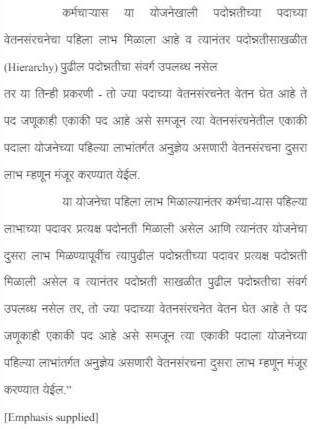
6] In the case of Shrirang, based on the average grading in annual confidential report, promotion was refused on the ground that it is a disqualification. Their Lordships were of the opinion that average grading in annual confidential report cannot by itself be adverse or a ground for disqualifying an employee for consideration. Illustration was given saying that if between the three candidates who fell in the zone of consideration against one post in terms of GR, the one securing the highest marks would alone be considered, therefore, other two candidates cannot be held as disqualified or ineligible. 7] In the second case, the main controversy was not allowing the candidates to appear for the test prescribed by the committee if such candidate failed in three attempts or if they had already appeared for three times in the similar test. Since it was against the Rule 580 which had no statutory force to sustain it, Their Lordships opined that there was no justification to disallow the candidates to appear for the examination since such procedure was beyond the scope of Rule concerned. However, while discussing in general with regard to the eligibility, ineligibility, qualification and disqualification, they referred to the case of Shrirang and then opined
AI
Benefits under the Assured Career Progression Scheme cannot be withdrawn retroactively due to later-found ineligibility if originally granted after meeting eligibility criteria.

Promotion – An employee who has opted to remain in existing grade, by refusing offer of promotion, forfeits rights to ACP benefits and such employee, on account of refusal, can be considered for regu....

ACP financial upgradation not subject to departmental exam for held post; eligible on completing regular service years. No ACP during post-superannuation extension limited to last pay and allowances.


Recovery of excess payment in factual scenario of case would be iniquitous and harsh upon the petitioner, who stood superannuated from service about nine months prior to issuance of impugned order.

The entitlement to benefits under the ACP Scheme was not automatic and was subject to review and consideration by the employer. The nature of benefits under the MACP Scheme was considered as incentiv....

(1) Promotion – Modified Assured Career Progression Scheme – Date of operation of new pay scales cannot be per se the same when operation of another scheme (which may also involve pay benefits) need ....

Upon absorption into government service due to organizational closure, past service recognized for pension and pay fixation must be counted for career progression schemes. Retrospective recovery of s....



An indispensable Tool for Legal Professionals, Endorsed by Various High Court and Judicial Officers
Please visit our Training & Support
Center or Contact Us for assistance

Scan Me!
India’s Legal research and Law Firm App, Download now!


For Daily Legal Updates, Join us on :



 Back to top


