
 Back
Back





IN THE HIGH COURT OF JUDICATURE AT BOMBAY
M.S. SONAK, JITENDRA JAIN, JJ.
Principal Commissioner of Income-tax - 14 - Appellant
Versus
M/s Buniyad Chemicals Ltd. - Respondents
Income Tax Appeal No.1796 of 2018
Decided on : 17-03-2025
(A) Income-tax Act, 1961 - Section 68 - Appeal against the order of the Income-tax Appellate Tribunal regarding unexplained cash credits. The Tribunal restricted the addition to 0.15%, which the court found unjustified as the respondent-assessee failed to provide details of the credits. The court emphasized that unexplained cash credits should be fully taxable unless identified beneficiaries are provided. (Paras 1, 10, 20, 50)
(B) Burden of Proof - The responsibility lies with the assessee to explain the source of credits in their accounts. Failure to do so justifies the addition of the entire amount as income. (Paras 17, 19)
(C) Accommodation Entries - Engaging in the business of providing accommodation entries does not absolve the assessee from tax liabilities on unexplained credits. (Paras 21, 39)
Facts of the case:
The respondent-assessee, a company, was assessed with unexplained cash credits amounting to Rs.10,73,52,553/- due to failure to identify the source of deposits in its bank accounts. The Tribunal's reduction of the addition to 0.15% was challenged by the revenue.
Findings of Court:
The court found that the Tribunal did not properly assess the evidence and confirmed the addition under Section 68, stating that the entire unexplained amount should be taxed.
Issues: The main issues were whether the Tribunal was justified in limiting the addition to 0.15% and the burden of proof regarding the identification of beneficiaries.
Ratio Decidendi: The court ruled that the respondent-assessee's admission of being an accommodation entry provider does not exempt it from tax obligations, and the failure to provide beneficiary details justifies the full addition of unexplained cash credits.
Result: Appeal allowed in favor of the revenue.
JUDGMENT :
Jitendra Jain, J.
1. This appeal filed by the appellant-revenue for the assessment year (AY) 2009-10 challenges an order of the Income-tax Appellate Tribunal dated 30 May 2017 and same was admitted under Section 260A of the Income-tax Act, 1961 vide our order dated 5 February 2025 on the following substantial questions of law :
“(a) Whether, on the facts and in the circumstances of the case and in law, the Hon’ble Tribunal was justified in restricting the addition made on account of unexplained cash credits u/s. 68 of the Act to 0.15% without appreciating that the assessee had failed to furnish satisfactory explanation with regard to the identity of the parties and the sources and genuineness of the transaction ?
(b) Whether, on the facts and in the circumstances of the case and in law, the Hon’ble Tribunal was justified in restricting the addition to the commission income at 0.15% without considering that the material found during the course of search clearly established that the net commission charged by the assessee group of companies varied between 1.5% and 3.5% ?”
Brief Facts :
2. The petitioner is a company formed and registered under the Companies Act, 1956.
3. On 29 August 2009, return of income was filed by the respondent-assessee declaring 'NIL' income. The said return of income was selected for scrutiny assessment by issuing notice under Section 142(1) of the Income-tax Act, 1961 (hereinafter referred to as 'the Act').
4. On 28 December 2011, an assessment order under Section 143(3) was passed assessing the income of the respondent-assessee at Rs.10,73,52,550/-. In the said order it is stated that the respondent had prepared profit and loss account and filed tax audit report. In the assessment order, an addition under Section 68 of the Act was made amounting to Rs.10,73,52,553/- under the head 'Income from other sources'. The said addition was made on the ground that the credits appearing in the disclosed and undisclosed bank accounts of the respondent-assessee are unexplained, and since no details or explanation regarding the identity, source and genuineness of such deposits were submitted, the same were treated as unexplained cash credits.
5. During the assessment proceedings, the respondent-assessee admitted that he is merely an accommodation entry provider, and the receipts and payments appearing in the bank accounts are of the customers from whom amounts were received for giving accommodation entries. However, from the assessment order, it is evident that no details of such customers were ever provided to the Assessing Officer.
6. The respondent-assessee challenged the assessment order by filing an appeal to the Commissioner of Income-tax (Appeals) [hereinafter referred to as 'the CIT(A)']. On 4 October 2012, the CIT(A) disposed of the appeal, and the operative part of the order reads as follows:
4.3 I have considered the facts of the case. In view of the decision of my predecessor, if the beneficiaries are identified by the appellant, the A.O. would adopt the rate of commission @ 0.37% for A.Y.2009-10 as it is in the earlier assessment year. In case the appellant fails to identify the beneficiaries in that case the amounts credited in the bank account of the appellant would stand confirmed as unexplained cash credit u/s.68 of the I. T. Act. In the result, this ground of appeal is partly allowed.[emphasis supplied]
7. Aggrieved by the CIT(A)'s order, the respondent-assessee filed an appeal to the Tribunal being Appeal No.7447/M/2012. The relevant grounds raised before the Tribunal in form No.36 reads as follows:
1. On the facts and circumstances of the case the learned Commissioner of Income Tax (Appeals) has erred in law and in facts in passing the order u/s. 250 of the Act.
2. The learned Commissioner of Income Tax (Appeals) has erred in law and in facts in passing the order without complying with the principles of natural justice.
3. On the facts and circumstances of the case and in law the learned Commissioner
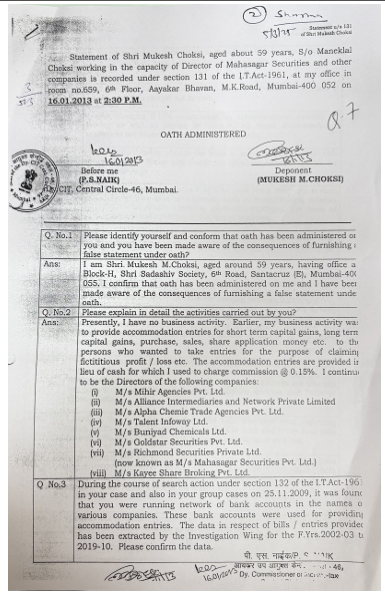
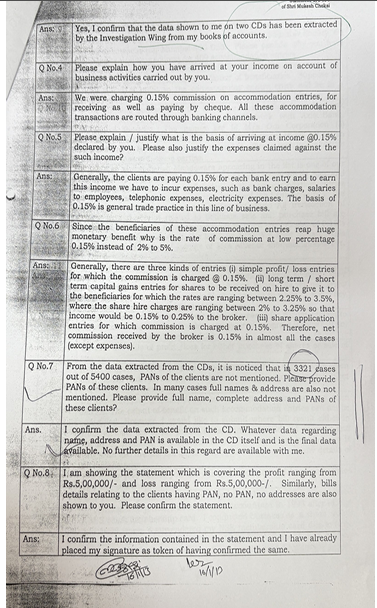
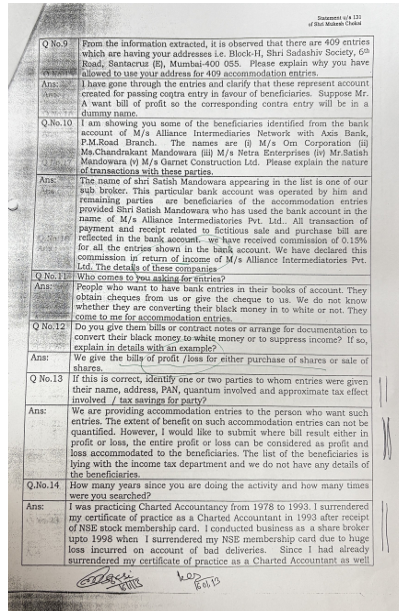
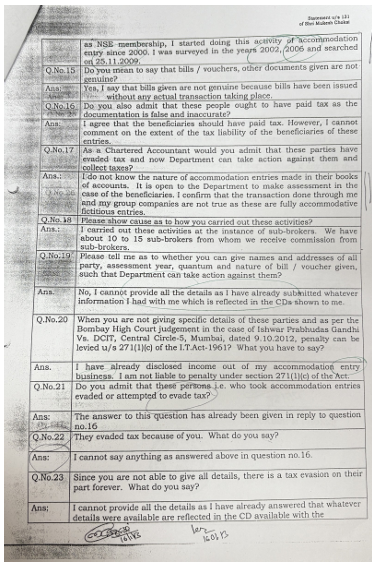
The court established that unexplained cash credits must be fully taxable under Section 68 unless the assessee identifies beneficiaries, emphasizing the burden of proof lies with the assessee.


Rejection of books upheld for lack of genuineness evidences, but no addition for estimated profits sustainable absent proof of unaccounted income beyond disclosed book profits in circular trading cas....

The Income Tax Appellate Tribunal improperly applied a higher burden of proof under Section 68 than the law requires, affecting the validity of its reversal of the lower authority's findings.



An indispensable Tool for Legal Professionals, Endorsed by Various High Court and Judicial Officers
Please visit our Training & Support
Center or Contact Us for assistance

Scan Me!
India’s Legal research and Law Firm App, Download now!


For Daily Legal Updates, Join us on :



 Back to top


