
 Back
Back





IN THE HIGH COURT OF JUDICATURE AT BOMBAY
SANDIP KUMAR C.MORE, Y.G.KHOBRAGADE, JJ.
Dhanraj S/o Narhari Yedale – Appellant
Versus
State of Maharashtra – Respondent
Criminal Appeal No. 500 Of 2003
Decided On : 19-12-2025
| Table of Content |
|---|
| 1. marriage and subsequent domestic violence leading to death (Para 3 , 4 , 5 , 6 , 7 , 8 , 26) |
| 2. challenge to the credibility of dying declaration (Para 18 , 19 , 22) |
| 3. evidence of witnesses supporting the prosecution's case (Para 27 , 30 , 35) |
| 4. principles governing admissibility of dying declarations (Para 32) |
| 5. dismissal of the criminal appeal (Para 38 , 39 , 40) |
Judgment :
Y. G. Khobragade, J.
1. By the present appeal under section 374(2) of the Criminal Procedure Code, the appellants-original accused takes exception to the judgment and order dated 26.03.2023 passed by the learned 2nd Ad- Additional Sessions Judge, Osmanabad, in Sessions Case No. 55 of 2002, whereby, the appellants/accused are convicted for the offences punishable under sections 498-A, 302 read with section 34 of the Indian Penal Code and sentenced to suffer rigorous imprisonment for three years and to pay fine of Rs.500/- each for the offence punishable under Section 498A and imprisonment for life with fine of Rs.1000/- each for the offence punishable under Section 302 of Indian Penal Code and ordered the sentences to run concurrently.
2. During the course of pendency of the present appeal, Accused/Appellant No.3 Narhari died on 16.09.2009, therefore, this court passed an order on 01.10.2025 and abated the appeal as against accused/appellant No.3.
3. The facts giving rise to the prosecution’s case in brief are that on 03.06.2011 marriage of deceased Sangita, daughter of Das Maroti Thombre and Vatchhalabai Das Thombre, was solemnized with accused No.1 Dhanraj. Accused No. 3 Narhari and Accused No. 2 Chhaya are father and mother of the accused No.1 Dhanraj. At the time of marriage, amount of Rs.15,000/- and other household articles were given by the deceased's parents. After marriage, deceased Sangita cohabited with accused No.1 at Tuljapur. On 06.06.2001, Sangita visited her parental house alongwith her husband and at that time, accused No.1 Dhanraj demanded Rs.20,000/- from the parents of deceased for construction of house, but Sangita’s parents could not fulfill said demand because of recently incurring marriage expenses of their daughter. Thereafter, on 07.06.2001, accused No.1 Dhanraj with deceased Sangita left house of Sangita’s parents on motorcycle towards Tuljapur, however, while proceeding on motorcycle, the accused No.1 Dhanraj caused Sangita to fall from his motorcycle on the road and proceeded ahead. Thereafter, on the information passed by a truck driver, accused No.1 Dhanraj returned back and took Sangita to Tuljapur and admitted her in the Hospital. Subsequently, Sangita’s parents took her at Barshi for further medical treatment. Thereafter they sent Sangita at her matrimonial house. On the eve of Panchami festival, the brother of Sangita namely Suraj visited the house of the accused to take Sangita at her parental house but accused did not permit. Thereafter, mother of deceased Sangita had brought her at the parental house and then she had disclosed about her ill-treatment at the hands of accused on account of money. Further, on 02.08.2001, Vatchala, the mother of Sangita visited the house of accused to bring Sangita for the Rakhi Pournima festival and at that time also, the accused told Sangita to bring money from her parents and threatened that she would be allowed to enter in their house only if she brings the money. Accused Nos. 2 and 3 also abused her parents, but the parents of Sangita left their daughter in the house of the accused and returned to their village.
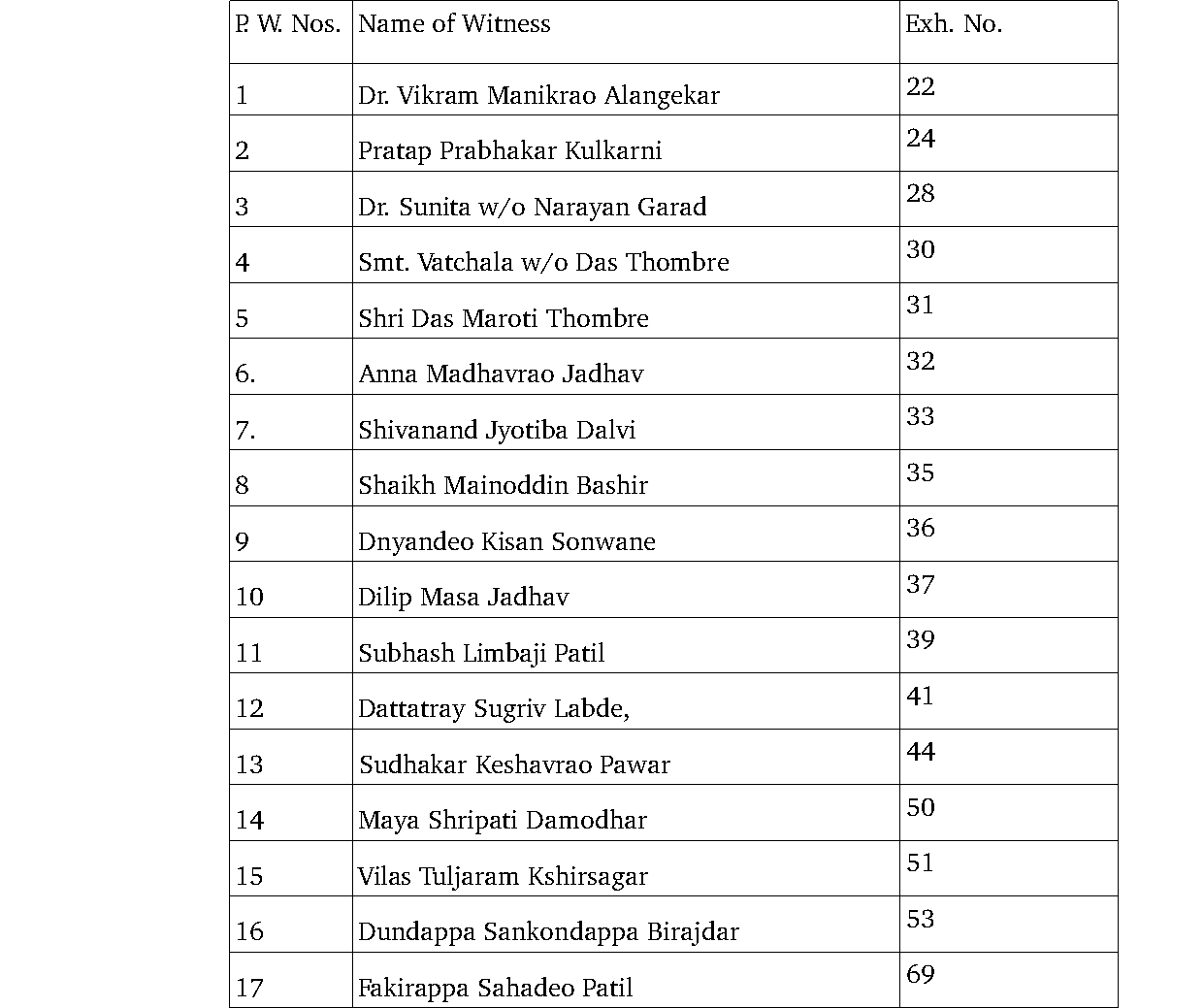
4. On 12.08.2001, at about 7.00 to 7.30 a.m., accused set Sangita on fire by pouring kerosene on her person, due to which she made hue and cry and at that time, neighbouring persons namely Anna Madhavrao Jadhav (PW6), Moinoddin Bashir Shaik (PW8), Satyabhama Dalvi, Shivanand Dalvi and Najma Shaikh saw Sangita while burning. Thereafter, the accused No. 1 Dhanraj and other persons extinguished the fire and brought her to Rural Hospital, Tuljapur in auto rickshaw. O
AI
A dying declaration, if proven voluntary and coherent, may be the sole basis for conviction, even if the declarant suffers from severe injuries, provided it inspires confidence in the court.


The Dying Declaration must be credible and corroborated; in this case, it was deemed unreliable due to contradictions and lack of supporting evidence.

Oral dying declaration is admissible in evidence and there is no legal bar – There is no requirement of law that a dying declaration must necessarily be made to a Magistrate with certification of doc....
Murder of wife - Conviction upheld - Where an accused is alleged to have committed the murder of his wife and the prosecution succeeds in leading evidence to show that shortly before the commission o....

The admissibility and reliability of dying declarations in establishing guilt in criminal cases.

Dying declarations must be coherent and trustworthy, free from influence to be valid for conviction; inconsistencies lead to benefit of doubt.



An indispensable Tool for Legal Professionals, Endorsed by Various High Court and Judicial Officers
Please visit our Training & Support
Center or Contact Us for assistance

Scan Me!
India’s Legal research and Law Firm App, Download now!


For Daily Legal Updates, Join us on :



 Back to top


