
 Back
Back





IN THE HIGH COURT OF DELHI AT NEW DELHI
TEJAS KARIA, J.
Shri Ved Prakash Garg Trading As M/S Parul Food Products - Petitioner
Versus
Mr. Dhruv Singh And Anr. – Respondents
C.O. (COMM.IPD-TM) 80 of 2021, C.O. (COMM.IPD-TM) 121 of 2022
Decided On : 31-07-2025
| Table of Content |
|---|
| 1. petition for rectification of trademarks. (Para 1 , 2) |
| 2. petitioner has proprietary rights over trademark 'funfine'. (Para 3 , 4 , 5 , 6 , 7 , 8 , 9 , 10) |
| 3. proceedings and notices for the present petitions. (Para 12 , 13) |
| 4. petitioner's argument on trademark ownership and infringement. (Para 14 , 15 , 16 , 17 , 18 , 19 , 20 , 21 , 22) |
| 5. respondents' absence and lack of defense. (Para 24 , 25) |
| 6. uncontested evidence by petitioner establishing trademark ownership. (Para 26 , 27 , 28 , 29) |
| 7. similarity between 'funfine' and 'funshine'. (Para 30 , 31 , 32 , 33 , 34) |
| 8. legal standards for deceptive similarity in trademarks. (Para 35 , 36 , 37 , 38 , 39) |
| 9. impugned marks found in violation of trademark laws. (Para 40) |
| 10. court's order to cancel impugned trademarks. (Para 41 , 42) |
JUDGMENT :
TEJAS KARIA, J.
1. The present Petitions have been filed seeking rectification of the Register of Trade Marks by cancellation/removal of the Trade Mark and the Device Mark registered in favour of Mr. Dhruv Singh i.e. Respondent No. 1, which are “FUNSHINE” and  (“Impugned Marks”) bearing Application number 3583213 and 3583212 respectively in Class 30, on account of being deceptively and identically similar to Petitioner's Trade Mark, i.e., “FUNFINE”, and other allied Trade Marks.
2. The present Petitions have been transferred from the Intellectual Property Appellate Board (“IPAB”) consequent upon the abolition of IPAB, and upon promulgation of the Tribunals Reforms (Rationalization and Conditions of Service) Ordinance, 2021.
FACTUAL BACKGROUND
3. The Petitioner is the sole proprietor of M/s Parul Food Products. The Petitioner is engaged in the business of manufacturing and marketing of Puffs, Namkeen, Biscuits, Rusk, Chips and Confectionery goods falling in Class 30 since the year 2005. The first registration obtained by the Petitioner with respect to “FUNFINE” was the “FUN FINE (LABEL)” 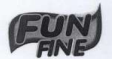 which was obtained through an Application bearing no.1743394 dated 14.10.2008.
4. The Petitioner holds the proprietorship of the Trade Mark, Label and Artistic Work “FUNFINE”, in respect of the said goods falling under Class 30 and started using the Trade Mark, Label and Artistic Work “FUNFINE” since 01.04.2005.
5. In order to distinguish its goods from those of its competitors and to establish and secure its statutory rights under the Trade Marks Act, 1999 (“Trade Marks Act”), the Petitioner has filed multiple Trade Mark applications, several of which have been duly registered, while others are pending. In particular, the Petitioner is the registered proprietor of the following Trade Marks in Class 30:
| S. No. | Trade Mark | Class | Application Number |
| 1. | FUNFINE | 30 | 2523520 |
| 2. | FUN FINE (LABEL) | 30 | 1743394 |
| 3. | FUN FINE HUNDER CHOIC | 30 | 3304607 |
| 4. | FUN FINE MOON CHIPS | 30 | 3467514 |
| 5. | FUN FINE TWINY WITH DEVICE | 30 | 3648914 |
| 6. | FEP FUNFINE | 30 | 2523519 |
| 7. | WAH FUN (L) | 30 | 2981984 |
6. The Petitioner is also the original conceiver, adopter and user of the artistic work “FUNFINE” and it has been continuously, extensively and openly using the distinctive artistic work “FUNFINE” having unique colour combinations, layout and lettering style in relation to the said goods since the year 2005. The aforesaid artistic work used by the Petitioner is an original artistic work within the meaning of Section 2(c) of the Copyright Act, 1957 (“Copyright Act”).
7. The Petitioner is the registered proprietor of the original artistic works “FUNFINE” under Copyright Registration bearing nos. A-96975/2013, A-108162/2013, A-108161/2013, A-108163/2013, A-108160/2013, A-114602/2015, A-117482/2017, A-117481/2017, A-115976/2017, A-115980/2017, A-118692/2017, A-118695/2017, A-126473/2018, A-146471/2018, A-126472/2018, A-126470/2018, A-125487/2018, A-126468/2018, A-126464-2018, A-126467/2018, A- 126469/2018.
8. Since its adoption by the Petitioner, the Trade Mark and Artistic Work 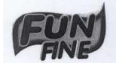 consist of the term “FUNFINE” as its prominent feature, which not only forms part of the Trade Name of the Petitioner but is also distinctively associated with


AI
Deceptive similarity of trade marks can lead to cancellation of registrations under the Trade Marks Act, prioritizing the rights of prior users over subsequent registrations.

Prior use and distinctiveness of a trademark override subsequent registrations, establishing a likelihood of consumer confusion in trademark disputes.

The central legal point established in the judgment is the application of Section 11(1)(b) of the Trademarks Act to determine the likelihood of confusion based on phonetic similarity and the priority....
Prior adoption and user rights establish entitlement to trademark protection, and their absence undermines claims for rectification, regardless of phonetic similarity.
The central legal point established in the judgment is that for a trade mark to be ineligible for registration under Section 11(1)(b) of the Trade Marks Act, there must be a cumulative satisfaction o....
Trademark registrations must be based on bona fide use; deceptive similarity can lead to cancellation of marks.
The impugned mark was ineligible for registration due to similarity with an earlier trade mark, as per Section 11(1)(b) of the Trade Marks Act.

The main legal point established in the judgment is that a rectification petition seeking removal of a device mark from the register of trade marks must establish a fresh cause of action for rectific....
The registration of a trade mark that is identical or similar to an existing mark is liable to be cancelled if it is likely to cause confusion among consumers.



An indispensable Tool for Legal Professionals, Endorsed by Various High Court and Judicial Officers
Please visit our Training & Support
Center or Contact Us for assistance

Scan Me!
India’s Legal research and Law Firm App, Download now!


For Daily Legal Updates, Join us on :



 Back to top


