


 Back
Back





2024 Supreme(Del) 997
2024 DHC 7989
IN THE HIGH COURT OF DELHI AT NEW DELHI
Chandra Dhari Singh, J.
Ramesh Kumar Yadav & Ors. - Petitioners
Versus
Manan Yadav - Respondent
C.R.P. 154 of 2024 & CM APPL. 29036 of 2024
Decided On : 16-10-2024
Advocates Appeared :
For the Petitioner : Mr. Pawan Bindra Sr. Advocate with Mr. Manish Gandhi, Mr. Rohit Goel, and Ms. Pratishtha Singh, Advocates
For the Respondent : Mr. Vinay Kumar Garg, Sr. Advocate with Mr. Ankur Yadav, and Mr. Karandeep Singh, Advocates.
The court affirmed that the existence of a cause of action must be determined from the plaint's averments, and issues regarding property nature and necessary parties are triable matters.
Headnote:(A) Code of Civil Procedure, 1908 - Section 115 - Court Fees Act, 1870 - Section 7(iv)(c) - Civil revision petition challenging dismissal of application under Order VII Rule 11 - Petitioners contended that the suit properties were personal and self-owned, not ancestral - The learned Trial Court found sufficient cause of action in the plaint, dismissing the application for rejection - The issues of property nature and necessary parties are triable matters requiring evidence - The court emphasized that the correctness of averments is not to be determined at this stage. (Paras 18, 19, 36, 46)
(B) Order VII Rule 11 - The court must only assess whether the plaint discloses a cause of action, not the merits of the case - The existence of a Hindu Undivided Family and the nature of properties are matters for trial. (Paras 20, 21, 22, 24)
Facts of the case:
The minor plaintiff filed a suit for declaration of properties as Joint Hindu Undivided Coparcenary Ancestral properties, challenging agreements as null and void. The petitioners sought rejection of the plaint, claiming lack of cause of action and non-joinder of necessary parties.
Findings of Court:
The learned Trial Court found that the plaint disclosed a cause of action and dismissed the petitioners' application under Order VII Rule 11.
Issues: The main issues were whether the plaint disclosed a cause of action and if the learned Trial Court erred in dismissing the application under Order VII Rule 11.
Ratio Decidendi: The court ruled that the existence of a cause of action must be determined based on the plaint's averments, and issues regarding the nature of properties and necessary parties are triable matters.
Result: Revision petition dismissed.
ORDER :
CHANDRA DHARI SINGH, J.
1. The instant civil revision petition under Section 115 of the Code of Civil Procedure, 1908 (“CPC” hereinafter) has been filed on behalf of the petitioners seeking setting aside of the order dated 25th January, 2024, ('impugned order' hereinafter), passed by the learned Civil Judge- N/W District, Rohini Courts, Delhi in CS SCJ no.1318/2019.
2. The brief facts that led to the filing of the instant revision petition are as follow:
a. The family chart defining the relation among the parties is as under:
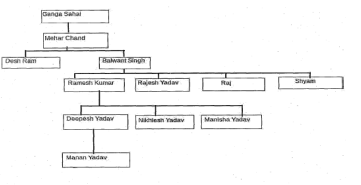
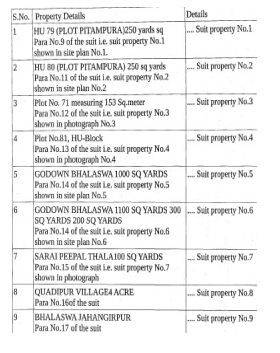
b. The minor respondent herein/plainitff, through his mother, filed the aforesaid civil suit for declaration against all the petitioners/defendants seeking declaration of the suit properties as Joint Hindu Undivided Coparcenery Ancestral family properties with further declaring the plaintiff as a coparcener-cp-owner in the said suit properties. Vide the said suit, it has also been prayed that a decree of declaration be passed against the defendants/petitioners herein, thereby, declaring the agreement to sell dated 9th January, 1987 and conveyance deed dated 12th May, 2000 as null and void. The details of the suit property as per the record are as follows:
c. In the aforesaid civil suit, the petitioners herein filed applications for rejection of the plaint under Order VII Rule 11 of the CPC. The learned Trial Court dismissed the said application vide order dated 25th January, 2024.
d. Being aggrieved by the same, the petitioners have filed the present revision petition seeking setting aside of the same.
3. Mr. Pawan Bindra, learned senior counsel appearing on behalf of the petitioners submitted that the learned Trial Court failed to appreciate the arguments and contentions made in the application filed under Order VII Rule 11 of the CPC while passing the impugned order, and thus, the same is liable to be set aside.
4. It is submitted that the learned Trial Court erred by not appreciating that the estate of the petitioners stood apportioned, divided and devolved upon the respective coparceners and thus, the estate ipso-facto changed the alleged character from ancestral/Hindu Undivided Family property to personal and self-owned property of the coparceners due to which the plaint of the respondent is liable to be rejected under Order VII Rule 11 of the CPC and the same is apparent from the bare reading of paragraph no. 6 of the plaint where the respondent has categorically stated that the properties were inherited and represented by the sons in equal share.
5. It is submitted that the learned Trial Court also failed to appreciate that the respondent had not substantiated the allegations regarding the suit properties being ancestral/Hindu Undivided Family with any material evidence and thus, the plaint is vexatious.
6. It is submitted that the learned Trial Court further failed to take into consideration the fact that plaint suffers from non-joinder of necessary parties and thus, the same is bad in law as the allegations made in the said plaint is that the suit properties are ancestral properties, and therefore, other coparceners were mandatorily required to be impleaded.
7. It is further submitted that the learned Trial Court erred in holding that the estate was put in common hotchpotch prior to the year 1956, though there is no material on record to buttress the same, thereby, barring the only self-serving statement of the respondent in its plaint. The learned Trial court further erred in holding that the non-joinder of the necessary party is not covered by the provision of Order VII Rule 11 of the CPC, which is perverse and baseless and the provision of Order 1 Rule 9 of the CPC specifically bars a suit bad for non-joinder of necessary party.
8. It is submitted that the learned Trial Court erred in not appreciating that the plaint is barred by the law and erroneously held that the respondent is seeking the declaratory decree and praying for consequential relief, hence the court fee paid by the respondent is in a












