
 Back
Back





IN THE GAUHATI HIGH COURT (HIGH COURT OF ASSAM, NAGALAND, MIZORAM AND ARUNACHAL PRADESH)
KALYAN RAI SURANA, SUSMITA PHUKAN KHAUND, JJ.
Md. Ali Hussain @ Md. Ali Hussain S/o Late Abdul Jabbar – Appellant
Versus
The Union of India, Rep. by the Secretary, New Delhi – Respondent
W.P. (C) No. 8824 of 2019
Decided On : 12-03-2026
| Table of Content |
|---|
| 1. petitioner's claim of indian citizenship based on voter lists. (Para 1 , 2 , 3 , 4 , 5) |
| 2. arguments regarding evidence and petitioner's claims. (Para 6 , 7 , 8 , 11 , 12) |
| 3. court's analysis of evidence and documentation. (Para 10 , 16 , 18 , 20 , 26) |
| 4. legal standards for proving citizenship and evidentiary requirements. (Para 17 , 19 , 22) |
| 5. final ruling dismissing the petition based on findings. (Para 29 , 30 , 31) |
JUDGMENT :
SUSMITA PHUKAN KHAUND, J.
1. The petitioner in this case is Md. Ali Hussain @ Md. Ali Hussain, who is aggrieved by the opinion dated 29.04.2019 passed by the learned Member, Foreigners’ Tribunal Morigaon 3rd in Case No. F.T. (C) 259/2015 and Reference I.M. (D) T. Case No. 90/2002, declaring the petitioner to be a foreigner, who entered into India (Assam) after 25.03.1971.
2. It is contended that the petitioner is an Indian citizen and his father Abdul Jabbar @ Jabbar was a permanent resident of Village - Goroimari, P.S. – Laharighat, Laharighat LAC, District – Nagaon.
3. After 1984, the petitioner’s father shifted base to Thanagara Revenue village – Charabari, Mouza – Dhadua, P.S. – Morigaon, which is a village adjacent to Khatarbari and both the villages Charabari and Khatarbari, after demarcation falls under Charabari village.
4. It is submitted that the petitioner was born at village – Thanagara (Charabari) under Morigaon Police Station. From the Voter ID issued by the Election Commission of India, the petitioner’s address is recorded as Khatarbari Charabari, Morigaon.
5. It is submitted that the petitioner’s name figures in the voters’ list of 1997, 2005, 2010 and 2019 in the village – Khatarbari, P.S. – Morigaon in the district of Morigaon. The petitioner’s mother’s name figures in the voters’ list of 1997 along with the petitioner. It is submitted that after shifting, the petitioner’s father’s name appeared in the voters’ list of 1985 at village – Khatarbari. The petitioner’s father’s name was also enrolled in the voters’ list of 1966 and 1970 but the petitioner could not exhibit the voters’ lists of 1985, 1993, 2005, 2010, 2019 and the elector photo identity card (EPIC for short)
6. The petitioner is highly aggrieved by the opinion of the learned Tribunal as, the learned Tribunal held the petitioner to be a foreigner, despite the pleadings and evidence that he is an Indian. It is contended that the learned Tribunal overlooked the fact that special provision has been brought under Section 6 A of the Citizenship Act, 1955. As per the said provision, if a person comes to Assam after 01.01.1966 but before 25.03.1971, he shall have to register himself in accordance with the rule and if such person is registered from the date on which he has been detected to be a foreigner and till the expiry period of 10 (ten) years from the date, he shall have the same rights and obligation as a citizen of India except inclusion of his name in the electoral roll.It is further submitted that the learned Member has thus committed a serious error in declaring the petitioner to be a foreigner.
7. Per contra, the learned Standing Counsel Mr. G. Sarma for the FT, Border and NRC matters, laid stress in his argument that the petitioner produced voters’ lists of different villages. The petitioner never disclosed his mother’s case in the written statement and now, through an additional affidavit the petitioner has introduced his mother’s case as his projected mother Musstt. Hajera Khatun @ Hazara Khatun, whose case was pending since 2016 and whose case was referred in the year 2002, has been declared to be an Indian citizen.
8. Heard Mr. J. Ahmed, learned counsel for the petitioner. Also heard Ms. A. Gayan, learned CGC; Mr. A.I. Ali, learned Standing Counsel for the ECI; Mr. G. Sarma, learned Standing Counsel for the FT, Border and NRC matters and Mr. P. Sarmah, learned Additional Senior Government Advocate for State respondents.
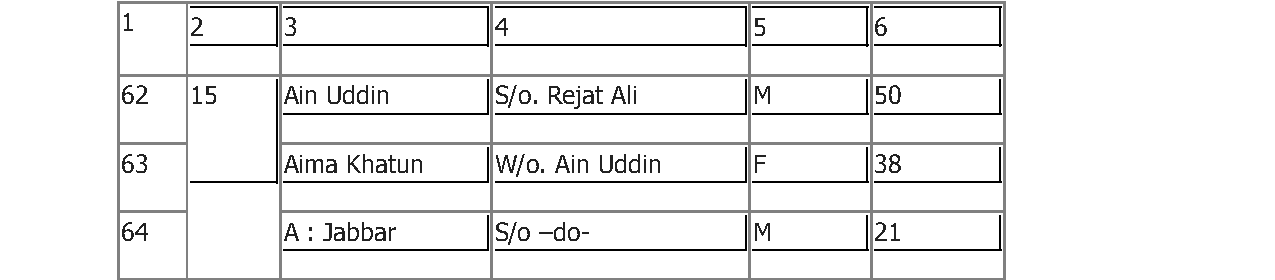
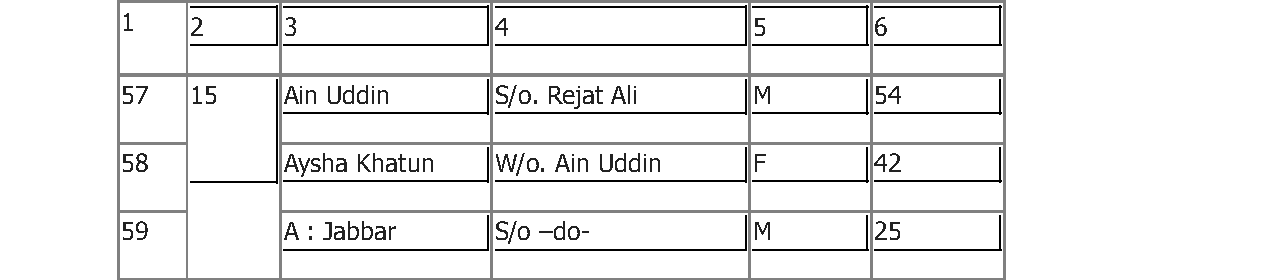
9. The petitioner examined the following witnesses and exhibited the following documents

AI
The burden lies on the petitioner to provide reliable evidence establishing citizenship, which was not met, leading to the declaration of foreign status.
In citizenship determination proceedings, the burden of proof lies on the individual to establish ancestral linkage through consistent, corroborated documentary evidence. Mere production of documents....

The burden of proof for citizenship lies with the petitioner, who failed to establish lineage and continuous residency prior to the cutoff date, resulting in the declaration as a foreigner.

Citizenship requires establishing a direct, consistent bloodline linkage to an ancestor present before the specified cut-off date. Documentary evidence, such as voters' lists and residential certific....
Point of Law : 12, 16. Under Section 9 of Foreigners' Act, 1946, burden is on proceedee to prove that she is not a foreigner, but a citizen of India and this burden never shifts.
The burden of proof lies on the petitioner to establish citizenship, which was not met due to insufficient evidence linking her to her claimed lineage.
The judgment reinforces the necessity of adequate evidence in citizenship claims and the implications of procedural lapses in legal proceedings.



An indispensable Tool for Legal Professionals, Endorsed by Various High Court and Judicial Officers
Please visit our Training & Support
Center or Contact Us for assistance

Scan Me!
India’s Legal research and Law Firm App, Download now!


For Daily Legal Updates, Join us on :



 Back to top


