
 Back
Back


IN THE HIGH COURT OF KERALA AT ERNAKULAM
SATHISH NINAN, P.KRISHNA KUMAR
K. Sandhya W/o Babuprasad – Appellant
Versus
K.K. Sivakumar S/o Late K.S. Krishnan – Respondent
| Table of Content |
|---|
| 1. background of the partition suit. (Para 1 , 2) |
| 2. claims of fraud and misrepresentation. (Para 3 , 4) |
| 3. arguments supporting the plaintiff's claims. (Para 5 , 9 , 10) |
| 4. court's evaluation of evidentiary standards. (Para 6 , 8 , 13 , 14) |
| 5. conclusion on the validity of ext.a1. (Para 15 , 16 , 17 , 18 , 19) |
JUDGMENT :
1. The suit for partition of various items of properties was decreed only with regard to two items in the plaint A schedule. The plaintiffs are in appeal. The third defendant has also preferred a separate appeal challenging the said decree.
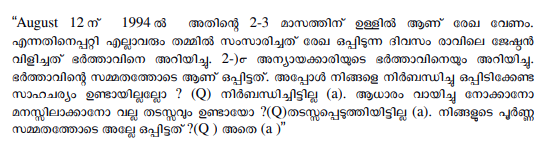
3. It is contended by the plaintiffs that their elder brother, the first defendant, obtained their signatures in the said registered deed by making them believe that it was a Power of Attorney authorising him to manage the business run by their father. Believing him, they signed it without reading its contents, and thereby Ext.A1 came to be registered. The plaintiffs assert that all the plaint schedule properties continued to remain in their joint possession and ownership notwithstanding the creation of the said document. On 12.06.2012, when the plaintiffs demanded partition of their shares, the first defendant declare




The main legal point established in the judgment is the binding effect of the settlement between the parties, the waiver of the right to seek re-employment by the workmen, and the entitlement of the ....

A lockout is justified if it is declared in response to an illegal strike or a strike that is in breach of a settlement or award.

The combination of eyewitness testimonies, recovery of the weapon used, and forensic examination results can establish guilt in criminal cases, even based on circumstantial evidence.


The conviction of an accused person under Section 27(3) of the Arms Act is not permissible in law if the accused is also charged with committing murder under Section 302 of the Indian Penal Code.

The court can enhance compensation based on the deceased's income and family dependency, and adjust the multiplier used by the Tribunal if found unjustified.



An indispensable Tool for Legal Professionals, Endorsed by Various High Court and Judicial Officers
Please visit our Training & Support
Center or Contact Us for assistance

Scan Me!
India’s Legal research and Law Firm App, Download now!


For Daily Legal Updates, Join us on :

 Back to top


