Back





2026 Supreme(Ker) 395
IN THE HIGH COURT OF KERALA AT ERNAKULAM
SOUMEN SEN, CJ, SYAM KUMAR V.M., J.
N. Prakash – Appellant
Versus
State of Kerala – Respondent
W.P. (C) Nos. 11107, 18749 of 2024
Decided On : 31-03-2026
Important Points
Subject
Constitutional Law - Judicial Independence
Act Referred
LOKPAL AND LOKAYUKTAS ACT : S.24, S.32, S.48, S.63
CONSTITUTION OF INDIA : Art.163(1), Art.164, Art.164(1), Art.190, Art.191, Art.191(1)(e), Art.192, Art.193
Headnote
(B) Public Interest Litigation - Challenge to constitutional validity - The petitions argue that amendments dilute the Lok Ayukta’s authority and violate the independence of the judiciary. Legal principles assert that no judicial body should have its findings subject to administrative review. (Paras 9, 10, 12, 16)
Facts of the case:
Writ petitions filed by an elected member and a citizen of Kerala against amendments to the KLAA, arguing these changes reduce the authority of the Lok Ayukta and interfere with judicial functions. The amendment’s overhaul of the Lok Ayukta’s powers was evaluated against the backdrop of legislative authority and executive accountability.
Findings of Court:
The court dismissed the petitions, affirming that the amendments do not violate separation of powers and have legislative backing, asserting that the Lok Ayukta’s role is not strictly judicial.
Issues: The primary concern addressed was whether the amendments to Section 14 dilute Lok Ayukta’s findings, transitioning from a 'declaration' to a 'recommendation', therefore infringing on judicial independence.
Ratio Decidendi: The court ruled that while the amendments change the Lok Ayukta's findings from mandatory to recommendatory, they do not infringe upon the separation of powers principle, nor undermine the judiciary's independence.
Result: Petitions dismissed.
For the Appellant : N. Prakash (Party-in-Person)
For the Respondents: K. Gopalakrishna Kurup, V. Manu
| Table of Content |
|---|
| 1. writ petitions overview and parties involved. (Para 1 , 2) |
| 2. challenge to amendments to klaa. (Para 3 , 4 , 5 , 6) |
| 3. katayukta's role and independence upheld. (Para 7 , 8 , 9 , 10) |
| 4. effect on rule of law due to amendments. (Para 11 , 12 , 13) |
| 5. arguments against impugned amendments. (Para 14 , 15) |
| 6. state's legislative competence. (Para 18 , 19 , 20 , 21) |
| 7. vires of legislation challenged. (Para 22 , 23 , 24) |
| 8. nature of lok ayukta functions. (Para 25 , 26 , 27) |
| 9. legislative creation of the lok ayukta. (Para 39 , 40 , 41) |
| 10. definition of competent authority. (Para 42 , 43) |
| 11. amendments and their implications. (Para 44 , 46 , 47) |
| 12. constitutionality and judicial function of lok ayukta. (Para 50 , 51 , 52) |
| 13. conclusion on amendments to klaa. (Para 59 , 60 , 61) |
JUDGMENT :
SOUMEN SEN, C.J.
1. These writ petitions filed as Public Interest Litigations involving the common questions of law and facts are taken up together and disposed of by this common judgment.
2. The writ petitioner in W.P. (C) No. 18749/2024 is an elected member of the Kerala Legislative Assembly, presently from Haripad assembly. The petitioner in W.P.(C) No. 11107/2024 is an Indian citizen and presently residing in the State of Kerala. The 1st petitioner is represented by Senior Counsel Mr. George Poonthottam, assisted by Ms. Kavya Verma. The 2nd petitioner is appearing in person.
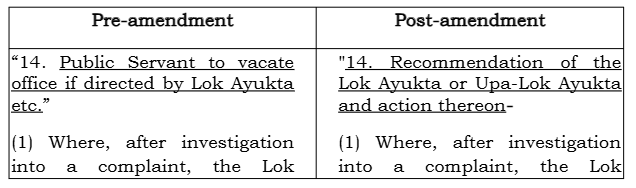
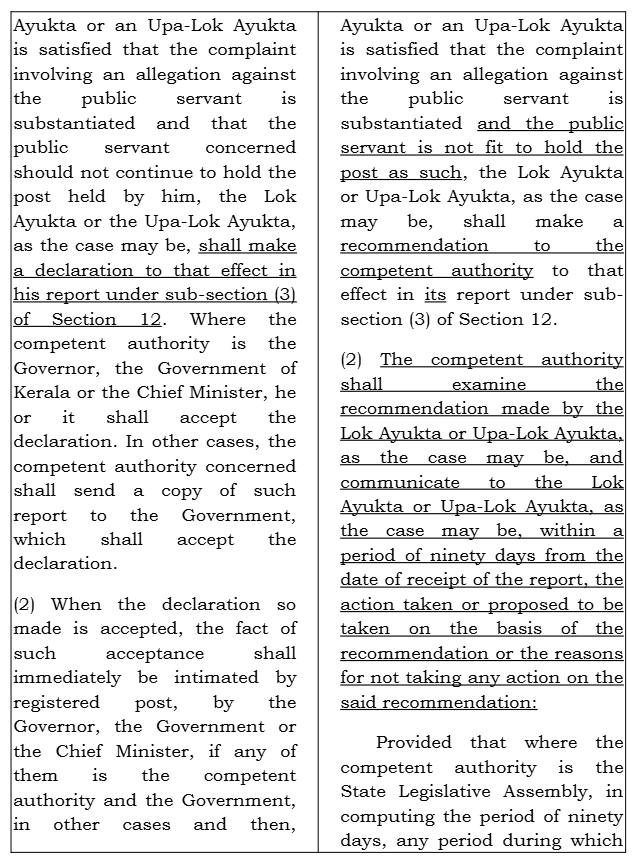
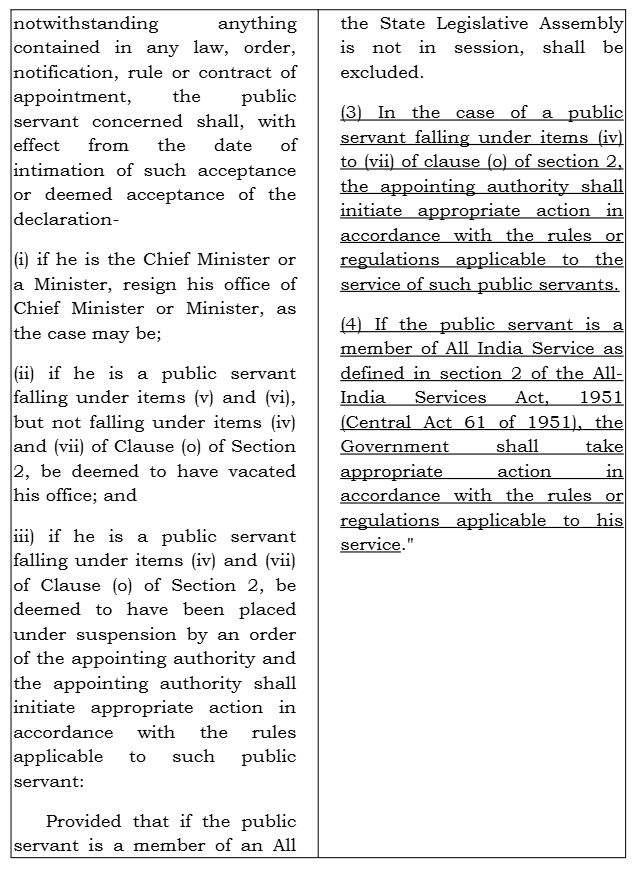
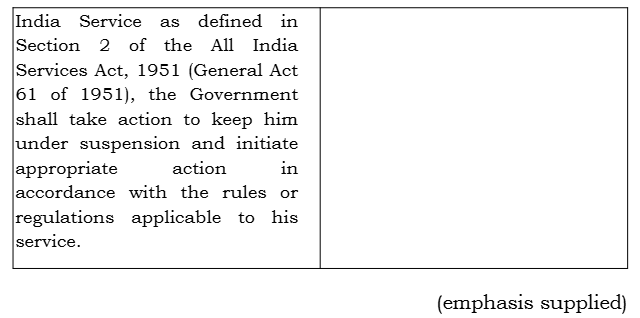
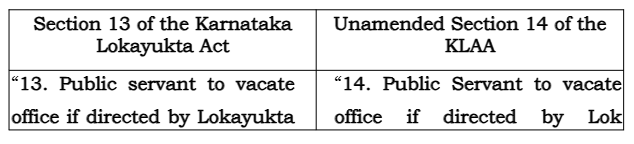
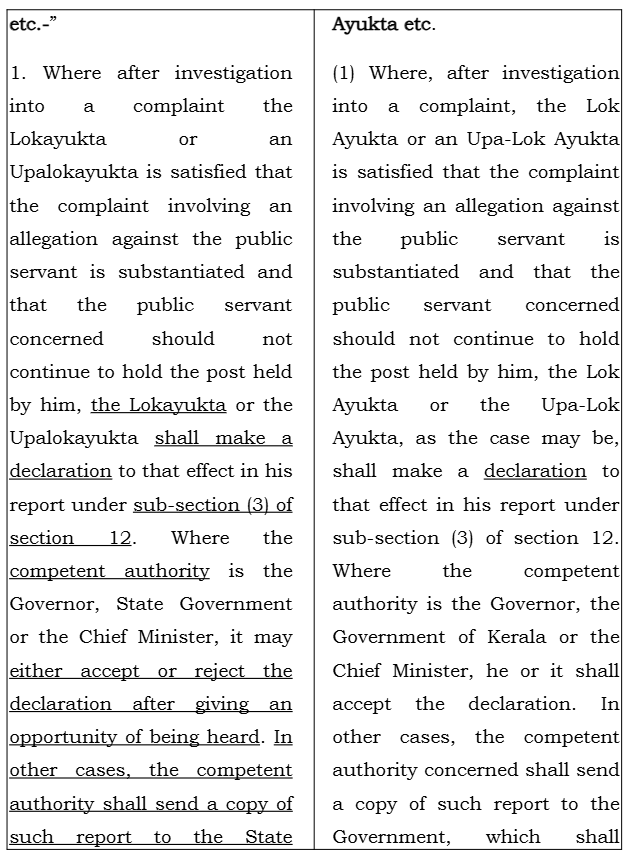
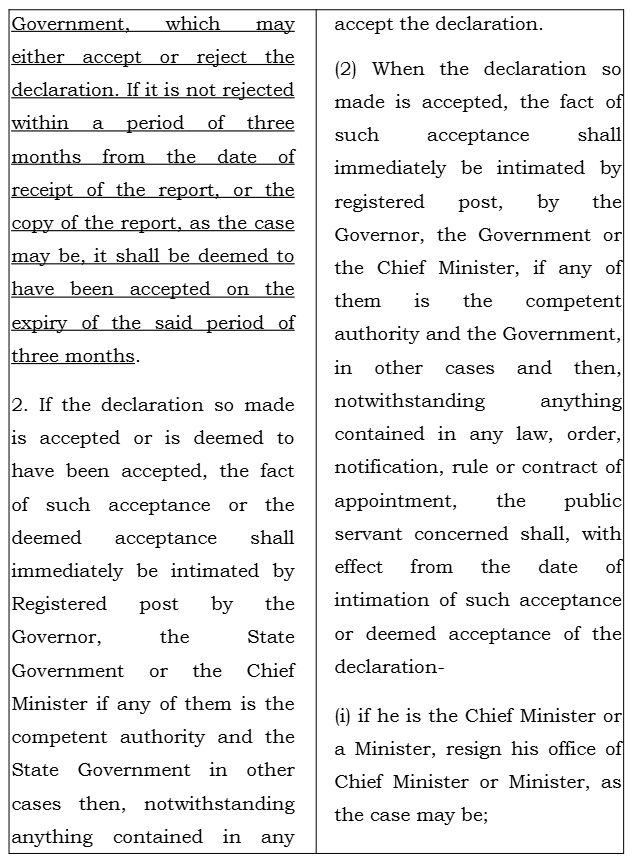
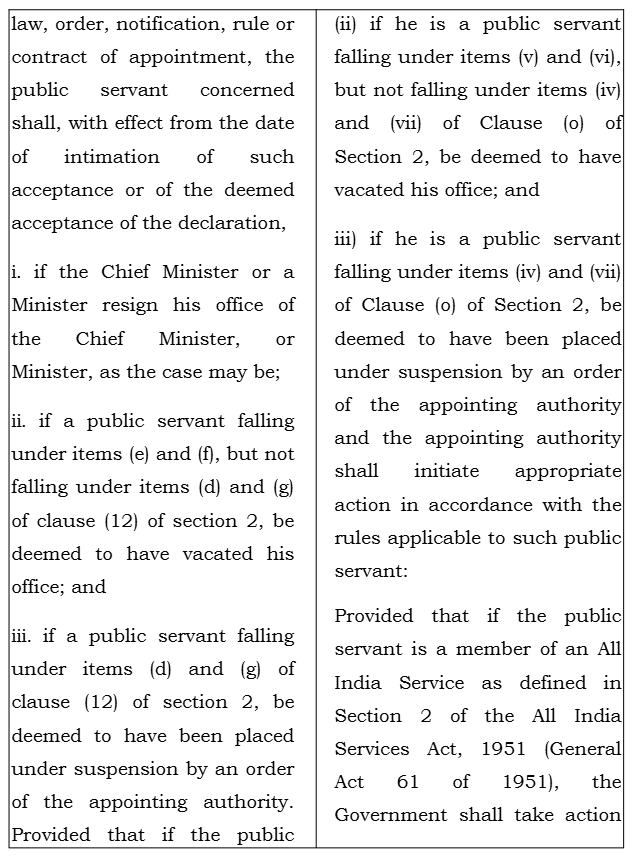
3. The common thread of challenge in these writ petitions is the amendment to the definition of the “competent authority” and Section 14 of the Kerala Lok Ayukta Act, 1999 whereby the declaration of the Lok Ayukta or the Upa Lok Ayukta has been made as recommendation.
4. Mr. George Poonthottam, the learned Senior Counsel, has submitted that the object of the Kerala Lok Ayukta Act, 1999 (for short, the ‘KLAA’) stands defeated by replacing the "declaration" with a “recommendation", whereby the executive authority would now be required to review a decision rendered by a retired Judge of the Hon’ble Supreme Court or by a retired Chief Justice of the High Court, as the case may be.
5. It is submitted that the amendment, in effect, amounts to an administrative review of a decision taken by a judicial or quasi-judicial authority, as it cannot be disputed that the functions discharged by the Lok Ayukta or the Upa Lok Ayukta, as the case may be, are judicial or quasi-judicial in nature, as recognised in Chandrashekaraiah (Retd) v. Janekere C. Krishna and Others, (2013) 3 SCC 117. In this regard, the learned Senior Counsel has referred to paragraphs 107 and 108 of the decision in Chandrashekaraiah (supra) to argue that, having regard to the broad spectrum of functions, powers, duties and responsibilities of the Lok Ayukta as prescribed under the KLAA it would be evident that he is not merely performing a quasi- judicial function, as contrasted with a purely administrative or executive function, but is more than an investigator or an enquiry officer.
6. The significance of the unamended provision was to give due importance and enforcement to the declaration made by the Lok Ayukta in respect of the Chief Minister, a Minister and a Member of the Legislative Assembly of the State of Kerala. However, the same has now been reduced and watered down to practically nothing, as the State Legislature is now required to consider and treat the report of Lok Ayukta as the recommendation of the Lok Ayukta. This was not what was intended when the KLAA was enacted. It is submitted that, though in Chandrashekaraiah (supra) it was stated that the position of the Lok Ayukta was sui generis, meaning thereby that it is one of its own kind, the effectiveness of the declaration contemplated in the is nowhere diluted in the said judgment, notwithstanding the fact that it may not be strictly considered to be a judicial order.
7. The very purpose of appointing a Judge to investigate in the manner prescribed under Sections 9 to 12 of the KLAA clearly demonstrates that the Legislature intended to obtain a neu