
 Back
Back





IN THE HIGH COURT OF KERALA AT ERNAKULAM
GOPINATH P., J.
Bindu Dileep, W/o. Dileep Kumar – Appellant
Versus
State Of Kerala, Represented By Its Secretary, Department Of Co-Operation – Respondent
Wp(C) No. 6719 of 2026
Decided On : 18-05-2026
| Table of Content |
|---|
| 1. summary of procedural history leading to the challenge against sale confirmation. (Para 1 , 2 , 3 , 4) |
| 2. parties' arguments regarding the validity of the auction sale proceedings. (Para 5 , 6 , 7) |
| 3. application of the henderson principle and abuse of process in preventing re-litigation of the auction sale. (Para 8 , 9 , 10 , 11 , 12 , 13 , 14) |
| 4. final order dismissing the petition due to lack of merit and excessive delay. (Para 15) |
JUDGMENT :
GOPINATH P., J.
1.The petitioners are before this Court challenging Ext.P13 order of the 3rd respondent confirming the sale of certain property mortgaged by the petitioners for availing financial assistance from the 6th Respondent (the Bank), and also Ext.P20 order of the 1st respondent confirming Ext.P13 order and rejecting an appeal filed by the petitioners.
The essential facts to be noted for an effective adjudication of this Writ Petition are as follows:
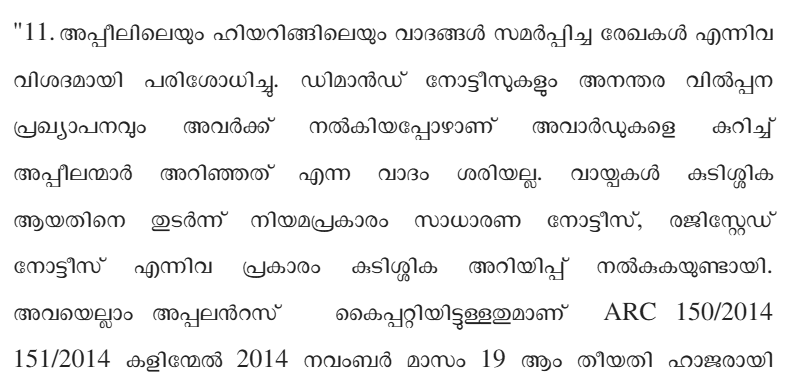
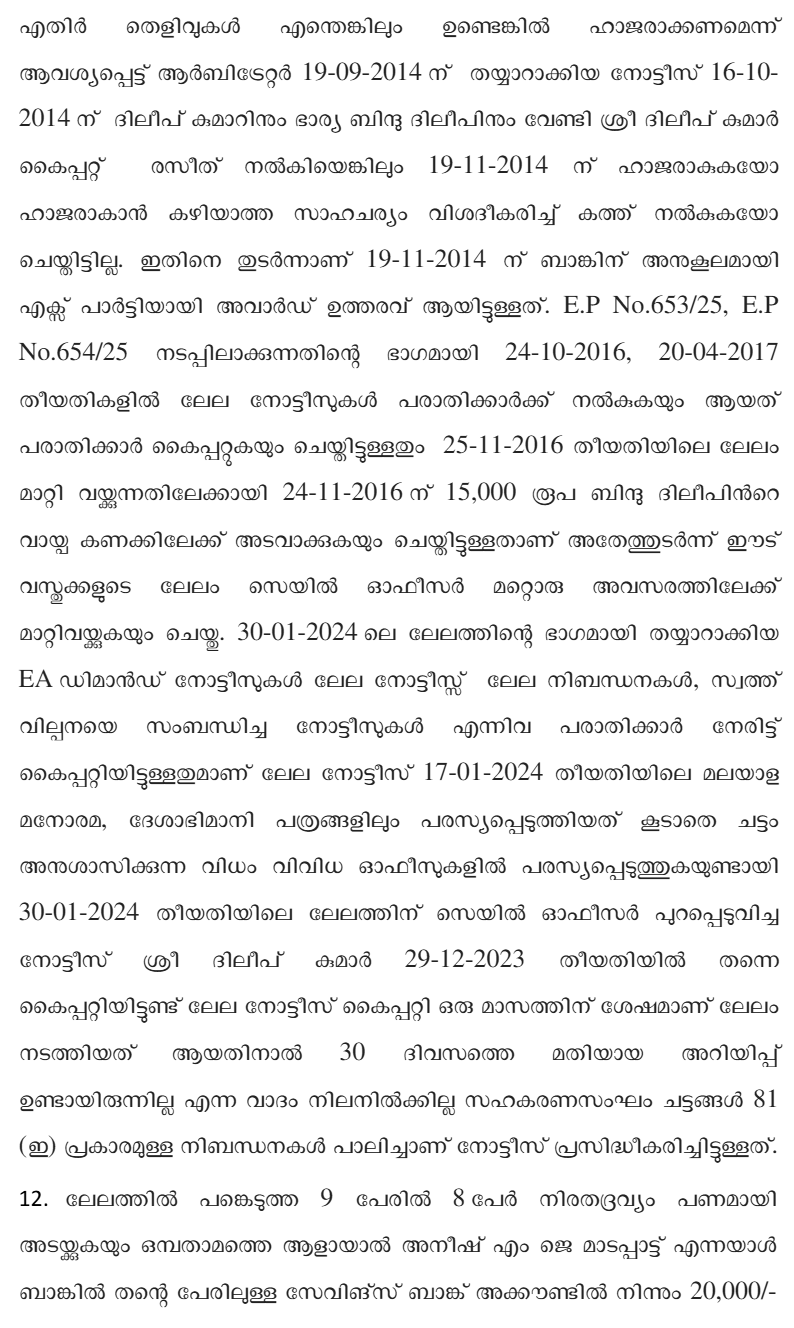
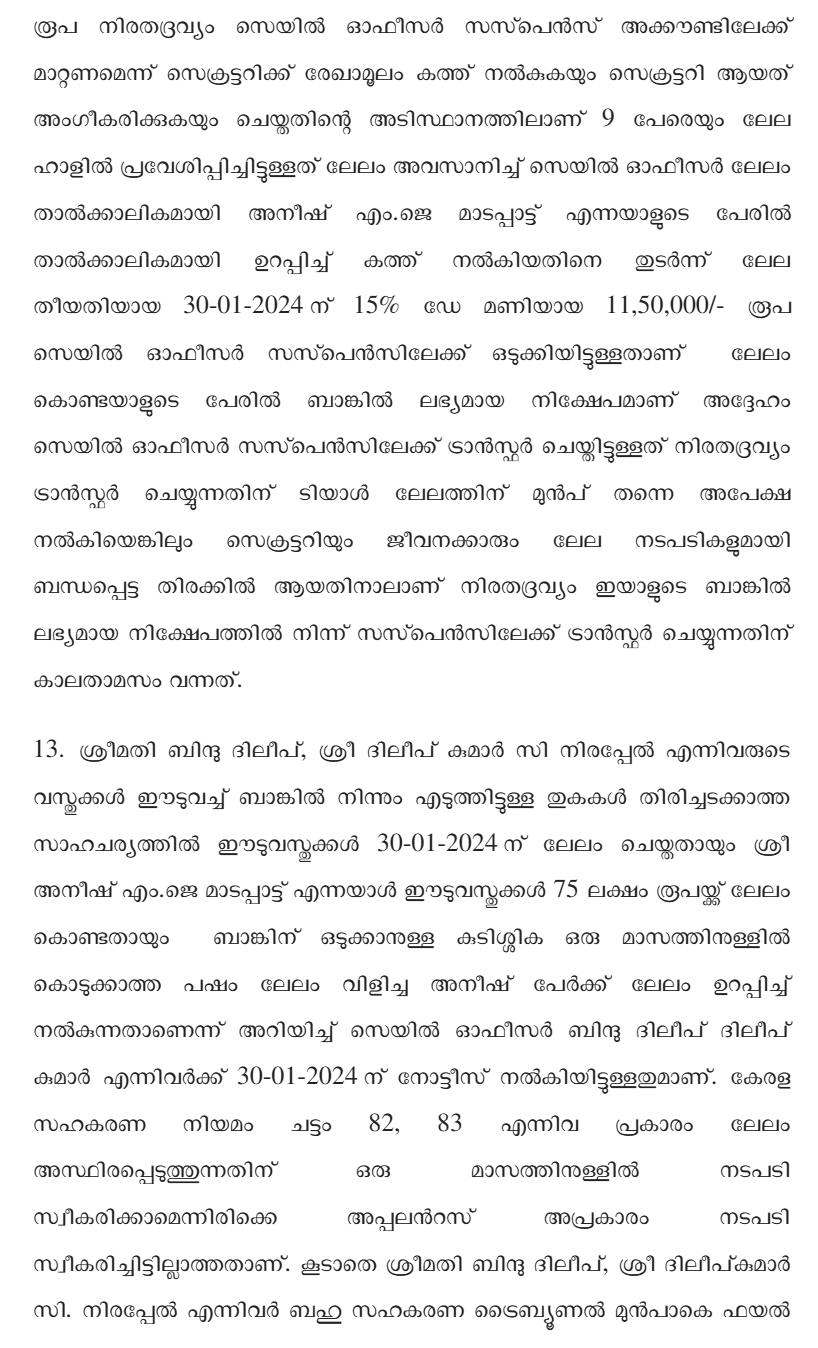
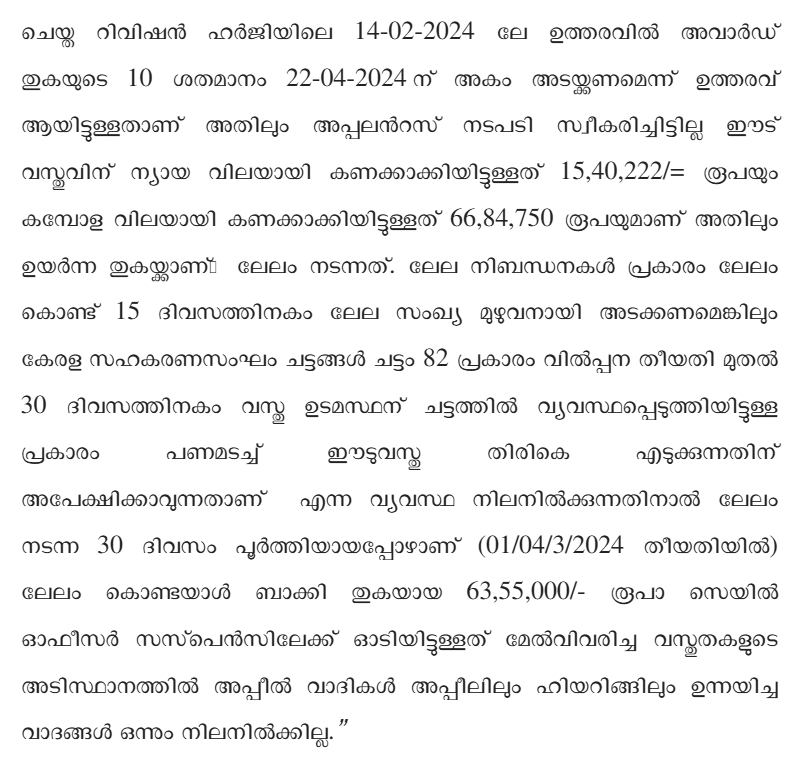
2. The petitioners availed of two separate loans from the 6th respondent Bank in the year 2013. According to the petitioners, for reasons beyond their control, the loans could not be serviced after 2014. The Bank initiated proceedings (as A.R.C Nos. 150 & 151/2014) under Section 69 of the Kerala Co-operative Societies Act, 1969 (hereinafter referred to as 'the 1969 Act') and obtained two separate awards determining the liability of the petitioners. Both these awards (Exts. P1 & P2) are dated 19.11.2014. The petitioners alleged that they never received a summons in the arbitration proceedings and challenged the awards by filing Revision Petition Nos. 33 & 34 of 2024 before the Kerala Co-operative Tribunal, Thiruvananthapuram. The Revision Petitions were filed nearly 10 years after the awards. The Tribunal, while considering the Revision Petitions, found that the petitioners received summons in both the cases filed by the 6th respondent Bank and failed to appear before the Arbitrator. The Tribunal found no reason to entertain the Revision Petitions owing to the inordinate delay. The common order of the Tribunal is on record as Ext.P9. The petitioners challenged the award in ARC No. 150 of 2014 and Ext. P9 common order by filing W.P (C) No.33019/2024. In the meantime, the properties were put up for sale and were purchased by the 8th respondent. The 8th respondent filed W.P (C) No.39576/2024 complaining of inordinate delay in confirming the auction sale and registration of the sale deed in favour of the 8th respondent. Much after the filing of W.P (C) No.33019/2024 (by the petitioners) and W.P (C) No.39576/2024 (by the auction purchaser), the petitioners filed another Writ Petition numbered as W.P (C) No.26659/2025, challenging the award in ARC No. 151 of 2014 and Ext. P9 common order.
3. The two Writ Petitions filed by the petitioners and the Writ Petition filed by the 8th respondent were heard together. W.P (C) Nos. 33019/2024 and W.P (C) No.26659/2025 filed by the petitioners were dismissed, finding that the Writ Petitions filed by the petitioners smack of calculated delay, and the maxim vigilantibus non dormientibus jura subveniunt squarely applies to the conduct of the petitioners. It was held that the petitioners were not only sleeping over their rights, but were doing so, being fully aware of the consequences of their actions. This Court also disposed of W.P (C) No.39576/2024 filed by the 8th respondent (auction purchaser), directing respondents 1 to 3 therein to complete the process of sale, register the sale deed and deliver the possession of the property to the 8th respondent (auction purchaser). Ext.P12 is the common judgment in W.P (C) No.33019/2024 and connected cases. The petitioners sought a review of Ext.P12 judgment. However, by Ext.P14 common order dated 21.10.2025, the Review Petitions were dismissed. While dismissing Review Petitions, this court also found that at the close of the hearing of the Writ Petitions, the court had specifically asked the petitioners herein (review petitioners in Ext.P14) whether
The 'Henderson Principle', as a component of the abuse of process doctrine, bars parties from raising grounds of attack in subsequent litigation that could and should have been raised in earlier proc....

The importance of disclosing material facts and complying with the time limits for filing applications to set aside auction sales under the Kerala Revenue Recovery Act.
The principle of 'vigilantibus et non dormientibus jura subveniunt' was applied, emphasizing that the law assists those who are vigilant and not those who are indolent.

The judgment emphasizes the finality of sale transactions, the need to balance the interests of defaulters and creditors, and the importance of following the statutory provisions for challenging the ....

Court upheld the validity of bank's actions under cooperative law, ruling that delayed challenges based on fraud were insufficient; commercial agreements should be honored.

It is mandatory for the Secured Creditor/Bank to effect personal service of the sale notice, apart from publication as provided under Rule 8 & 9 of the Security Interest (Enforcement) Rules, 2002.

Procedural compliance in auction sales is mandatory, and non-compliance renders such sales void.

The court established that adherence to statutory processes for property sale was observed, and petitioners failed to pursue available legal remedies, justifying dismissal.

The court upheld the dismissal of a writ petition due to the availability of an alternative remedy under the Recovery of Debts and Bankruptcy Act, emphasizing the need for statutory compliance in auc....

The court emphasized the importance of following the procedure under the SARFAESI Act for the sale of property and upheld the applicability of the limitation period.



An indispensable Tool for Legal Professionals, Endorsed by Various High Court and Judicial Officers
Please visit our Training & Support
Center or Contact Us for assistance

Scan Me!
India’s Legal research and Law Firm App, Download now!


For Daily Legal Updates, Join us on :



 Back to top


