Back
Back





2026 Supreme(Ker) 800
IN THE HIGH COURT OF KERALA AT ERNAKULAM
SATHISH NINAN, P. KRISHNA KUMAR, JJ.
Brus Foods B.V., Represented By Its Managing Director Mr.Hendrik Jacobus Cornelis Brus – Appellant
Versus
K.L.Constantine – Respondent
Rfa No. 76 of 2017
Decided On : 29-05-2026
For the Appellant : Shri.Litto Varghese Palathinkal Sri.K.A.Salil Narayanan
For the Respondent: Sri.A.T.Anilkumar Shri.Abraham Joseph Markos Sri.Haran Thomas George Sri.Isaac Thomas
Procedural technicalities regarding representation and minor notice defects should not override the requirement for a substantive trial when there is prima facie evidence of a commercial claim. Courts must ensure the production of best available evidence rather than dismissing suits on narrow evidentiary exclusions.
Headnote:(A) Code of Civil Procedure, 1908 - Order XXIX Rule 1 - Section 80 - Competency of signatory to represent corporation and requirement of notice against statutory bodies - Managing Director of an international company is competent to represent it where trade register extracts attest to such authority - Section 80 notice is mandatory only against the Government and not against statutory authorities - Dismissal of suit on ground of procedural technicality regarding representation and non-issuance of notice set aside. (Paras 8, 9)
(B) Evidence Act, 1872 - Section 65B - Admissibility of electronic copies and secondary evidence - Parties in possession of best evidence are not entitled to withhold such evidence relying on abstract burden of proof - Court should afford parties opportunity to produce relevant records to ensure justice, rather than dismissing on technical grounds of inadmissibility. (Paras 12, 17)
Facts of the case:
An appeal was filed by a foreign-based trading company against the dismissal of its money suit for recovery of unpaid commission. The trial court dismissed the suit on grounds that the signatory was not competent to represent the company, that mandatory notice was not given to a statutory body, and that the purchase contracts were inadmissible.
Findings of Court:
The Appellate Court found that the signatory’s authority was sufficiently proven via documented extracts and that Section 80 of the Code of Civil Procedure did not require notice to the statutory authority involved. It further held that customs records and shipping bills suggesting the defendant’s liability for commission warrant a de novo trial to prevent a miscarriage of justice.
Issues: The main issues were the competency of the person signing the plaint for a foreign entity, the necessity of mandatory statutory notice, and the admissibility and probative value of copy documents in proving a commercial contract.
Ratio Decidendi: The court ruled that technical procedural hurdles should not defeat substantive claims when there is prima facie evidence of a transaction. A party holding the best evidence cannot hide behind the burden of proof to withhold documents, and cases should be remanded for full production of evidence where trial court conclusions are based on formalistic exclusions.
Result: Appeal allowed. The decree and judgment of the trial court are set aside. The suit is remanded for disposal de novo.
| Table of Content |
|---|
| 1. overview of parties, claims, and the trial court's dismissal reasoning. (Para 1 , 2 , 3 , 4 , 5) |
| 2. determination of plaintiff's representative competency and section 80 cpc notice requirements. (Para 6 , 7 , 8 , 9) |
| 3. evidence analysis regarding commission agreements and the necessity of further discovery. (Para 10 , 11 , 12 , 13 , 14 , 15 , 16 , 17) |
Judgment :
Sathish Ninan, J.
This appeal is by the plaintiff in a suit for money. The suit was dismissed by the trial court.
2. The plaintiff is a company registered in Netherlands. It is engaged in the business of trading in seafood. Defendants 1 and 2 are companies engaged in the processing and export of seafood. The first defendant is the major shareholder of the second defendant Company. The third defendant is a statutory body which regulates marine export activities in India, and is a formal party. Defendants 1 and 2 are hereinafter referred to as “the defendants”.
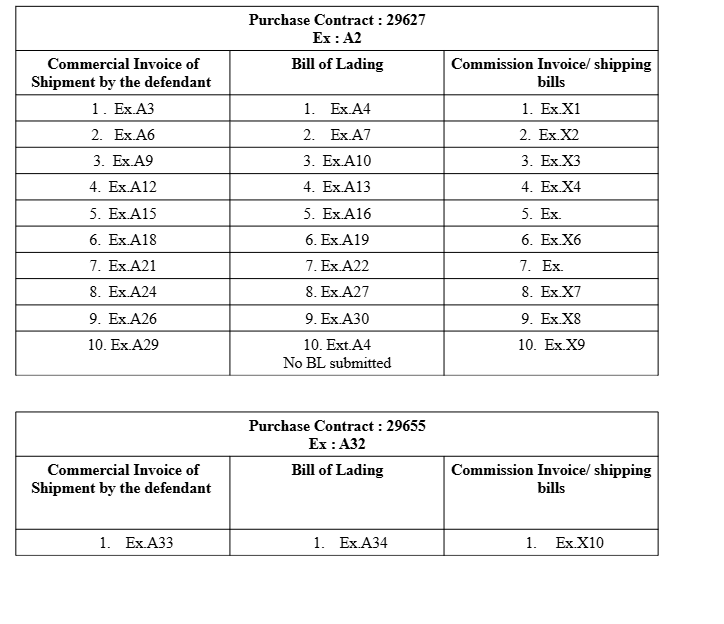
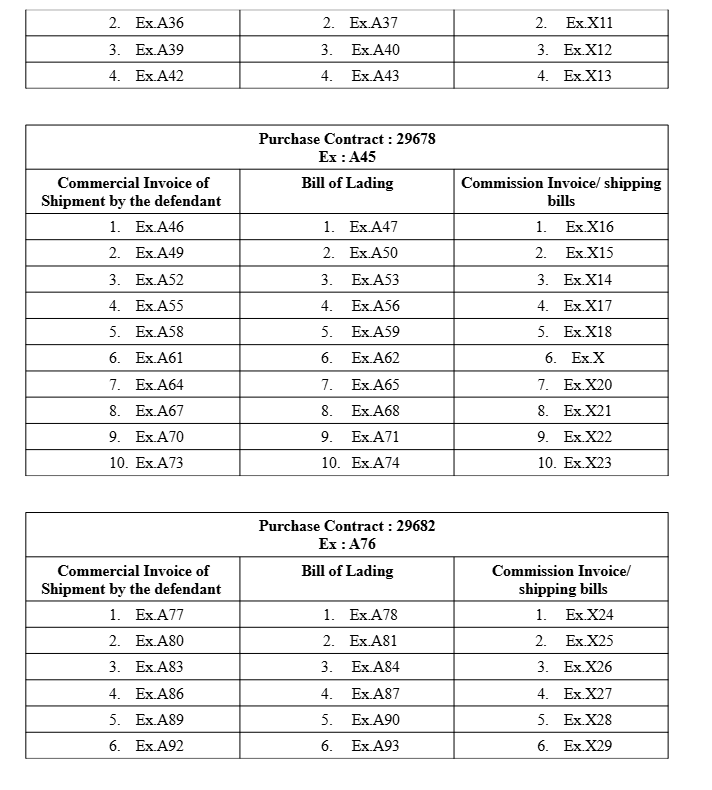
3. It is the plaintiff’s case that the plaintiff acted as a Commission Agent in respect of four purchase contracts viz. Exts.A2, A32, A45 and A76 between the plaintiff and the defendants, for supply of frozen tuna to “CONSERVAS ISABEL DE GALICIA, S.L.”, a Company in Spain, the defendants being the sellers. As per the agreement between the plaintiff and the defendants the plaintiff was entitled for 5% commission on the sale price. The commission was payable in lieu of the plaintiff having secured business for the defendants. The plaintiff alleges that, though the purchase contracts were executed by the defendants, the commission payable to the plaintiff was not. The suit is laid for realisation of the same.
4. The defendants filed a joint written statement. They denied of having any agreement with the plaintiff and also the plaintiff's involvement in its business transactions with the company at Spain. The genuineness of the purchase orders was denied.
5. The trial court held that the signatory to the plaint failed to prove his competency to represent the plaintiff. It was also held that the suit is bad for want of notice under Section 80 of the Code of Civil Procedure(CPC). On the merits, it was held that the plaintiff has failed to prove the existence of any agreement with the defendants. Accordingly the suit was dismissed.
6. We have heard Sri.K.A.Salil Narayanan, the learned counsel for the appellant-plaintiff, Sri.A.T.Anil Kumar, learned counsel for defendants 1 and 2 and Sri.Abraham Joseph Markos, the learned counsel for the third respondent.
7. The points that arise for determination in this appeal are :-
(i) Is the signatory to the plaint is competent to represent the plaintiff ?
(ii) Is the suit bad for want of notice under Section 80 CPC ?
(iii) Has the plaintiff established an agreement with the defendants entitling him for 5% commission ?
(iv) Does the decree and judgment of the trial court warrant any interference ?
8. The plaintiff company is represented by its Managing Director. The plaint is signed by him under the seal of the Company. Ext.A1 is the English translation of the extract of trade register of the Chamber of Commerce, Netherlands. The same evidences that the signatory to the plaint is the sole shareholder and Director of the plaintiff Company. The document is attested at the Indian Embassy at Hague. We do not find any reason to doubt the genuineness of the document. Ext.A24 is an invoice which is admittedly issued by the defendant to the plaintiff Company. The defendants do not have a case that the transaction with the plaintiff Company was through someone else other than the present signatory of the plaintiff. We find that there is sufficient material to find that the signatory to the plaint is competent to represent the plaintiff Company. The finding of the trial court to the contrary is liable to be set aside and we do so. Point (i) is answered accordingly.
9. The third defendant is a statutory authority. Section 80 CPC mandates issuance of a notice preceding the suit only against th