
 Back
Back





IN THE HIGH COURT OF JUDICATURE FOR RAJASTHAN BENCH AT JAIPUR
SANJEEV PRAKASH SHARMA, ACJ, BALJINDER SINGH SANDHU, J.
Sunil Samdaria S/o Late Shri B.L. Samdaria – Appellant
Versus
State of Rajasthan – Respondent
D.B. Civil Special Appeal No. 151 of 2025, S.B. Civil Writ Petition No. 14130 of 2024
Decided On : 02-12-2025
Key Points: - The Rajasthan State Litigation Policy, 2018, is not enforceable as law and is regarded as advisory (!) (!) (!) . - The appointment of Additional Advocate General is a matter within the State’s discretion and does not attract rigid qualification requirements (!) (!) . - Courts exercise limited judicial review over policy decisions on appointments, focusing on arbitrariness or illegality, and generally defer to executive discretion (!) (!) (!) .
| Table of Content |
|---|
| 1. challenge based on qualifications for appointment. (Para 1 , 2 , 3) |
| 2. court's examination of qualifications under state litigation policy. (Para 4 , 5) |
| 3. policy decisions should not be interfered with by courts. (Para 6 , 8) |
| 4. state litigation policy lacks statutory character. (Para 9) |
| 5. criteria for issuing writ of quo warranto established. (Para 10 , 11) |
| 6. limited circumstances under which quo warranto can be issued. (Para 12 , 13 , 14) |
| 7. distinction between public posts and legal engagements. (Para 15 , 16 , 17 , 18) |
| 8. non-statutory nature of government policies. (Para 19 , 20 , 21) |
| 9. policy is merely a guideline without enforceability. (Para 22 , 23 , 24) |
| 10. enforceability of policy questioned. (Para 25 , 26 , 27) |
| 11. writ of quo warranto not applicable in this case. (Para 28) |
| 12. conclusion: appeal dismissed. (Para 29 , 30) |
JUDGMENT :
SANJEEV PRAKASH SHARMA, ACJ.
1. The appellant by way of this special appeal assails the order dated 04.02.2025 passed by the learned Single Judge whereby, the writ petition preferred by him was dismissed.
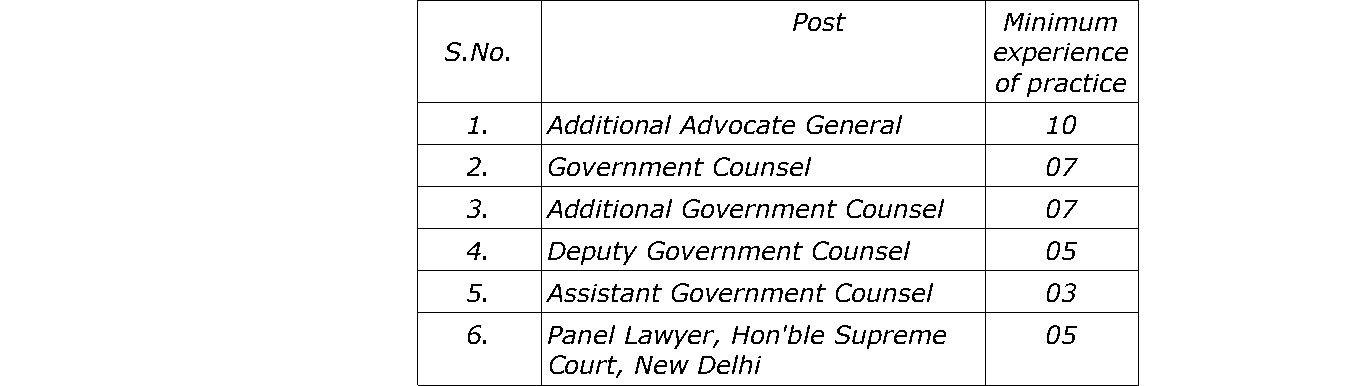
2. The appellant is a practicing Advocate and had moved writ petition before this Court in the nature of quo warranto as against the respondent No.2 on the ground that the respondent No.2 does not possess the minimum requisite experience of practice of ten years as an Advocate for being appointed as an Additional Advocate General.
3. The entire basis of challenge of qualification and eligibility of respondent No.2 is the State Litigation Policy, 2018 and therefore, in the writ petition the appellant/petitioner prays for setting aside the order dated 23.08.2024 whereby, respondent No.2 was appointed as the Additional Advocate General of Rajasthan for the cases to be taken up in the Supreme Court. Further, he challenges the Clause 14.8 incorporated in the Litigation Policy and prays to hold it to be arbitrary, illegal and invalid.
4. The learned Single Judge proceeded to examine the Clauses of the State Litigation Policy, 2018 and like on earlier judgments passed by the Court in the case of Ishwar Prasad Vs. State of Rajasthan in D.B. Civil Writ Petition No. 5313/2024 dated 03.12.2024 and the Supreme Court's order in the case of Dr. Abhinav Sharma Vs. Sunil Samdaria in Civil Appeal No. 4501/2015 and proceeded to hold that the post of the Additional Advocate General is not a public office. Secondly the learned Single Judge, on merits, held that the power existed with the State Government in terms of Clause 14.8 to appoint any counsel to any post after considering his experience in the respective field and the requirement of 10 years cannot be said to be inflexible.
5. On the challenge to Clause 14.8, the learned Single Judge held that there is no input for leveling allegations of arbitrariness and colourable exercise of power available with the appellant and the council of Ministers have taken a decision to introduce Clause 14.8 in the State Litigation Policy. Merely on account of sequence of events, the learned Single Judge held that it may be a coincidence, but inference cannot be drawn of arbitrariness or the colourable exercise of power by the State.
6. Learned Single Judge further proceeded to hold that it would not be advisable for the Court to interfere in policy decisions on the issue of it being vice or not as per the choice for the Court and therefore, rejected the contentions of Clause 14.8 of the Policy being illegal, arbitrary and unjustified. Further argument regarding the Additional Advocate General appointment without consultation of Advocate General raised by the appellant was also rejected and it was found to be designed by the State and therefore, not worth acceptance and dismissed the writ petition following the judgment passed in the case of Ishwar Prasad Vs. State of Rajasthan (supra).
7. In special appeal, the appellant-petitioner reiterated his arguments and vehemently argued that the learned Single Judge has erred in dismissing his writ petition.
8. At the out

AI
The Rajasthan State Litigation Policy, 2018, is not enforceable as law; thus, the appointment of public advocates is at the State's discretion without rigid qualification requirements.

The State Litigation Policy, lacking statutory character, does not establish enforceable rights, and a writ of quo warranto is not applicable unless statutory provisions are violated.

The court upheld the validity of the appointment of Additional Advocate General under the amended State Litigation Policy, emphasizing the discretion of the State in appointing counsel based on exper....
The court ruled that the appointment of Additional Advocate Generals is a professional engagement, not subject to employment laws, and the petitioner's claims lacked merit.

: action of the State, thus, must be judged with extreme care and circumspection. It must be borne in mind that the right of the public prosecutor or the district counsel do not flow under a statute.....



An indispensable Tool for Legal Professionals, Endorsed by Various High Court and Judicial Officers
Please visit our Training & Support
Center or Contact Us for assistance

Scan Me!
India’s Legal research and Law Firm App, Download now!


For Daily Legal Updates, Join us on :



 Back to top


