1. Warders appointed under prior rules challenge promotional rules altering seniority to circle basis, affecting promotion eligibility. (Para 1 , 2 , 3 )
 Back
Next 





2026 Supreme(Raj) 679
HIGH COURT OF JUDICATURE FOR RAJASTHAN, BENCH AT JAIPUR
INDERJEET SINGH, RAVI CHIRANIA, JJ.
Moti Lal Meena, S/o. Shri Kana Ram Meena – Petitioner
Versus
The State Of Rajasthan, Through Its Principal Secretary, Department Of Home And Jail, Government Of Rajasthan – Respondent
D.B. Civil Writ Petition No. 12449 of 2020 Connected With D.B. Civil Writ Petition No. 4665 of 2025
Decided On : 17-02-2026
Important Points
A party who accepts benefits under a statutory framework is estopped from later challenging its constitutional validity under the doctrine of approbate and reprobate, unless manifest arbitrariness or a violation of fundamental rights is clearly established.
Subject
Service Law - Seniority and Promotion
Act Referred
RAJASTHAN JAIL SUBORDINATE SERVICE RULES: R.23, R.35, R.36, R.39
CONSTITUTION OF INDIA: Art.14, Art.16, Art.226
CONSTITUTION OF INDIA: Art.14, Art.16, Art.226
Headnote
(A) Rajasthan Jails Subordinate Service Rules, 1998 - Rules 35, 36 and 39 - Seniority and Promotion - Constitution of India - Articles 14 and 16 - Challenge to transition from state-wide to circle-wise seniority - Petitioners accepted promotions under the impugned rules - Doctrine of approbate and reprobate applies - A litigant cannot accept benefits under a statutory framework and subsequently challenge its legality merely because it has become inconvenient at a later stage (Paras 26, 28, 29)
(B) Judicial Review of Subordinate Legislation - Presumption of constitutionality - Burden of proof lies on the challenger - Subordinate legislation can be invalidated only on grounds of lack of legislative competence, violation of fundamental rights, or manifest arbitrariness (Paras 31, 33, 34)
(C) Non-joinder of necessary parties - Challenge to a seniority list - Persons who have been promoted based on the impugned list must be impleaded as parties to the proceedings (Para 36)
Facts of the case:
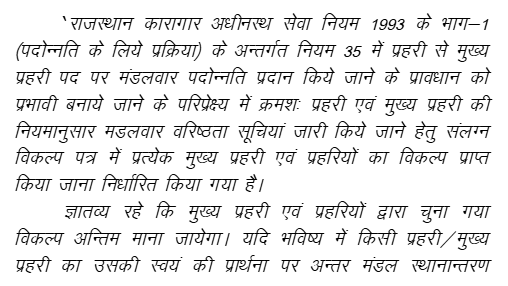
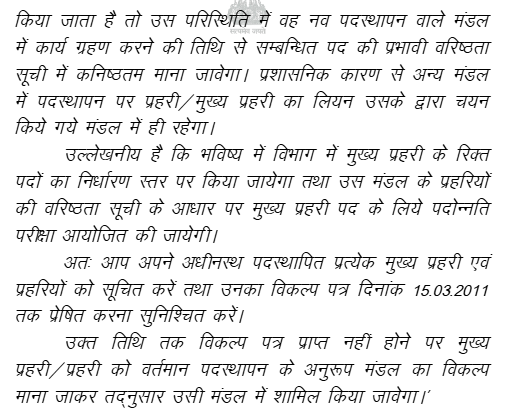
Petitioners were initially appointed as Warders under the 1976 Rules. Following the notification of the 1998 Rules, which shifted promotion criteria from a state-wide basis to a circle-wise basis, a circular was issued inviting options for the respective circles. The petitioners submitted their options and were subsequently promoted to the post of Head Warder between 2014 and 2019 under the 1998 Rules. In 2020, the petitioners challenged the constitutional validity of Rules 35, 36, and 39 of the 1998 Rules and the 2011 circular, seeking a reversal to state-wide seniority.
Findings of Court:
The petitioners, having consciously exercised their options and accepted promotions granted under the 1998 Rules, are estopped from questioning the validity of those rules. The court found that no grounds of manifest arbitrariness or unconstitutionality were established to justify declaring the subordinate legislation ultra vires. Additionally, the challenge to the seniority list was flawed due to the non-impleadment of affected promoted persons.
Issues: Whether the transition from state-wide to circle-wise seniority under the 1998 Rules is unconstitutional, and whether employees who accepted promotions under said rules can subsequently challenge their validity.
Ratio Decidendi: The doctrine of approbate and reprobate precludes a party from challenging an order or statutory instrument from which they have derived an advantage. Subordinate legislation carries a presumption of validity and can only be struck down if it is shown to be manifestly arbitrary or in violation of constitutional provisions.
Result: Writ petitions dismissed.
Legal Category Hierarchy
- constitutional law
- administrative law
- practice and procedure
- civil service law
Advocates Appeared:
For the Petitioner: Mr. Anshuman Saxena, Mr. Manish Bhardwaj for Mr. Nalin G. Narain.
For the Respondent: Mr. Vigyan Shah, AAG with Mr. Sankalp Vijay, Mr. Bhuwnesh Sharma, AAG with Mr. Samee Khan, AGC, Mr. Siddharth Sharma, AGC, Ms. Sunita Meena.
For the Petitioner: Mr. Anshuman Saxena, Mr. Manish Bhardwaj for Mr. Nalin G. Narain.
For the Respondent: Mr. Vigyan Shah, AAG with Mr. Sankalp Vijay, Mr. Bhuwnesh Sharma, AAG with Mr. Samee Khan, AGC, Mr. Siddharth Sharma, AGC, Ms. Sunita Meena.
Table of Contents
2. Petitioners argue rules are arbitrary and violate Articles 14 and 16; respondents cite acceptance and delay, arguing estoppel. (Para 2 , 3 , 4 , 5 , 6 , 7 , 8 , 9 , 10 , 11 , 12 , 13 , 14 )
3. Court finds petitioners voluntarily opted for circle under new rules, accepted promotions, and are estopped by approbate and reprobate; no constitutional violation shown. (Para 26 , 27 , 28 , 30 , 31 , 35 )
4. A litigant cannot approbate and reprobate; accepting benefits of rules bars later challenge. Unconstitutionality requires clear grounds of arbitrariness or incompetence. (Para 28 , 29 , 33 , 34 )
5. Writ petitions dismissed; challenge to rules, circular, and seniority list fails; no order as to costs. (Para 38 , 39 , 40 )
6. Can a person who has accepted benefits under a statutory rule later challenge its validity?
No. The doctrine of approbate and reprobate prevents a party from accepting benefits under a rule and subsequently challenging its validity, as it constitutes blowing hot and cold. (Para 28 , 29 )
7. What grounds are required to declare a statutory rule unconstitutional?
A rule can be invalidated only on grounds of legislative incompetence, violation of fundamental rights, breach of constitutional provisions, failure to conform to enabling act, repugnancy, or manifest arbitrariness. (Para 33 , 34 )
8. Is a challenge to rules barred by delay and acceptance of promotions without objection?
Yes. Petitioners who accepted promotions under the new rules and did not challenge them for years are deemed to have acquiesced, and a belated challenge is impermissible. (Para 26 , 27 , 31 )
9. Can seniority rules be framed to base promotion on circle-wise seniority instead of state-wide seniority?
Yes, unless shown to be manifestly arbitrary or violative of constitutional provisions; the court presumes validity and the burden is on the challenger to establish invalidity. (Para 34 , 35 )
Order :
Ravi Chirania, J.
1. By the instant writ petitions, jointly filed, by the petitioners who were initially appointed on the post of Warder under Rajasthan Jails Subordinate Service Rules 1976 (hereinafter referred to as ‘Rules of 1976’ for short) and were subsequently promoted by the respondents on the next promotional post of Head Warders, the petitioners have approached this Court to challenge the constitutional validity of Rule 35 , 36 and 39 of the Rajasthan Jails Subordinate Service Rules, 1998 (hereinafter referred to as ‘Rules of 1998’ for short) being aggrieved by the actions of the respondents of not considering their length of service for next promotional post, and further that the respondents are making promotion to the higher post on State basis instead of circle basis from the date of their initial appointment in the service. The petitioners have also challenged and prayed for quashing of the circular dated 28.02.2011 (Annexure-5 of the writ petition) and the seniority list of Head Warder prepared State wise, dated 28.07.2020, by which the petitioners have been placed below the persons who are junior to them in terms of date of appointment on the basis of initial appointment on the post of Warders under the Rules of 1976.
2. The brief facts of the case as stated by learned counsel Mr.Anshuman Saxena are that the petitioners herein were appointed on various dates under the Rules of 1976 on a substantive basis from 1987 onwards on the post of Warders. Under the Rules of 1976, they were eligible for promotion to the next promotional post of Head Warder, which is filled 100% by promotion, for which, the requirement is 7 years’ experience on the post of Warder, as mentioned in the Schedule appended to the Rules.
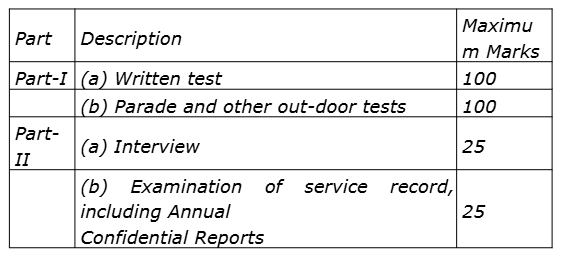
3. Learned counsel further submitted that under the Rules of 1976, the procedure for promotion to the next higher post, i.e. Head Warder is provided in Part-V of the Rules. Rule 23 of the Rules of 1976, as referred, is reproduced as under:-
“PROCEDURE FOR RECRUITMENT BY PROMOTION
23. Criteria, Eligibility and Procedure for promotion:-
(1) As soon as the Appointing Authority determines the number of vacancies under rule 9 and decides that a certain number of posts are required to be filled by promotion, it shall prepare a correct and complete list containing names up to five times the number of vacancies out of the senior-most persons who are qualified under these rules for promotion on the basis of seniority-cum-merit or on the basis of merit to the class of posts concerned.
(2) Selection for promotion from lowest post or category of posts in the Service to the next higher post or category of posts in the Service up to Scale No. 11 shall be made solely on the basis of seniority-cum-merit from amongst the persons who have put in at least five years' service, unless a different period is prescribed in these rules, on the first day of the month of April of the year of selection on the post or category of post from which selection is to be made:
Provided that in the event of non-availability of the persons with the requisite period of Service of five years, the Committee may consider the persons having less than the prescribed period of service, if they fulfill the qualifications for promotion prescribed in these rules and are found other-wise suitable for promotion on the basis of seniority-cum-merit.
(3) The persons enumerated in Col.5 of the Schedule shall be eligible for promotion to posts specified against them in Col. 2 thereof to the extent indicated in Column 3 subject to their possessing minimum qualifications and experience on the first day of the month of April of the year of selection as specified in Col. 6.
(4) No person shall be considered for promotion unless he is substantively appointed and confirmed, if no person substantive in the next lower post from which promotion is prescribed in these rules, is eligible for promotion, persons who have boon appointed in such posts after selection in accordance