
 Back
Back





BEFORE THE MADURAI BENCH OF MADRAS HIGH COURT
G.R.SWAMINATHAN, M.JOTHIRAMAN, JJ.
Shree Madurakavi Swamy Thiru Nanthavanam Trust - Appellant
Versus
The Idol of Shri Renganathaswamy Temple - Respondent
A.S.(MD)No.145 of 2015
Decided on : 14-03-2025
JUDGMENT :
M.JOTHIRAMAN, J.
The unsuccessful plaintiffs have preferred the present appeal. For the sake of convenience, the parties are referred to as their rank before the trial Court. The suit has been filed for recovery of the suit property from the defendants after removing superstructure thereon and directing the defendants to pay future mense profits and for cost.
2. Brief case of the plaintiffs is as follows:-
2.1. The first plaintiff is a Public Trust and the plaintiffs 2 to 9 and the 2nd defendant are the Trustees of the 1st plaintiff Trust. The 2nd defendant by virtue of its office had been co-opted as the Trustees in pursuance of the order passed in O.P.No.134 of 1921. The suit property and other properties originally belonged to one Madurakavi who have created an Endowment by virtue of a Will dated 25.08.1903. Under the said Will, he had endowed properties for the maintenance of Nanthavanam for the supply of flowers and garlands to Lord Renganathaswamy and other temples as well. He died shortly and thereafter, the Trust was administered in pursuance of the terms and conditions of the Will. One Krishnasamy Naidu and others have executed a settlement deed on 17.04. 1914 bringing in more properties into the Trust. There was a proceeding by the Deputy commissioner HR & CE and vide its order dated 21.11.1978, he had directed Thiruvenkata Ramanuja Dasar to hand over charge of the Trust and its properties. He took the matter Commissioner HR & CE in R.P.No. 2 of 1979 and the same was allowed on 09.01.1980.
2.2. The first defendant approached the plaintiff Trust for purchase of the suit property with a view to construct a Guest House, vide letter dated 21.08.2006. In pursuance of the same, the plaintiffs had submitted necessary documents of title and possession of the suit properties. The plaintiff delivered possession of the property only for putting up construction. The first defendant had hurriedly put up construction in the suit property and the defendants would not take steps for purchasing the suit property. The plaintiff was forced to issue a notice on 15.04.2009 to the second defendant stating that the permission was granted only for putting up construction and not to utilize the property by opening the building. The plaintiff had also issued a notice to Tamilnadu Electricity Board on 07.05.2009 desisting them from granting any service connection. Thereafter, the plaintiff issued a legal notice on 19.05.2009 on the ground that the permission granted was withdrawn and calling upon to stop construction work. The first defendant, who is also a party to the resolution passed by the trust of the plaintiff, is estopped from questioning the title of the first plaintiff over the suit property. The first defendant gave a reply on 19.06.2009 containing false allegations. The plaintiff had given a rejoinder notice on 26.06.2009. The first defendant by virtue of his office is one of the co-trustees and therefore, it is not open for the first defendant to question the title of the plaintiff. Under these circumstances, construction put up by the first defendant over the suit property is illegal and unlawful and the same have to be removed. Hence, the suit.
3. Brief case of the first defendant is as follows:-
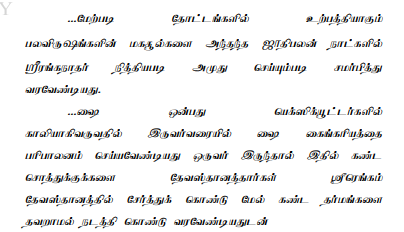
3.1. The plaintiffs herein have willfully and wantonly suppressed to aver clause 5 of the Will dated 25.08.1903 in the earlier proceedings in Trust O.P.No.134 of 1921. The charities mentioned in the Will are associated and connected with the defendant Idol and the 1st Plaintiff Trust is a Public Religious Trust. The first defendant Idol and the 2nd defendant were not made parties to the proceedings in O.P.No.134 of 1921 and in R.P.No.2 of 1979 and hence any order passed in the said proceedings will not bind the defendant Idol and will not operate as res- judicata. Under the Will dated 25.8.1903, the Founder himself has directed the defendant to take the properties on the demise of the 8th Executor the last but one and thus prescribe
The court affirmed that the will's intent was to dedicate property to a deity, not to create a trust, and the plaintiffs failed to prove ownership.

The judgment establishes that properties designated in a Compromise Decree as trust properties cannot be claimed as absolute ownership by trustees, emphasizing fiduciary duties.

Trust properties cannot be alienated by a trustee without specific authority, and mere revenue entries do not confer ownership rights against trust interests.


A deity, being a perpetual minor, holds title to its assets; a worshipper may institute a suit as a next friend to recover property when a trustee acts fraudulently or fails to protect the trust, all....

The main legal point established in the judgment is that the Civil Court had no jurisdiction to entertain the suit as the properties were registered as Trust property under the Bombay Public Trust Ac....
A dedication of property for religious purposes can be established through intent and conduct, even in the absence of formal documentation, and such dedication constitutes a public religious charity ....

A suit for possession must include a declaration of title when there is a dispute over ownership; mere possession cannot support recovery claims.



An indispensable Tool for Legal Professionals, Endorsed by Various High Court and Judicial Officers
Please visit our Training & Support
Center or Contact Us for assistance

Scan Me!
India’s Legal research and Law Firm App, Download now!


For Daily Legal Updates, Join us on :



 Back to top


