
 Back
Back





BEFORE THE MADURAI BENCH OF MADRAS HIGH COURT
S. SRIMATHY, J.
A. Samshiya Begam - Appellant
Versus
Raja Mohammed - Respondent
A.S. (MD) No. 112 of 2022, C.M.P. (MD) Nos. 3873 of 2022, 1666, 9825 of 2024
Decided On : 13-11-2024
| Table of Content |
|---|
| 1. background of the loan transaction including amounts and plaintiff's claims. (Para 1 , 3) |
| 2. loan execution and repayment disputes (Para 4 , 12) |
| 3. denial of claims by defendants and defensive arguments (Para 5 , 6) |
| 4. court’s analysis of contract modifications and enforceability of promissory notes. (Para 10) |
| 5. nature of promissory notes as security (Para 15 , 17 , 18) |
| 6. impact of contract modifications on enforcement (Para 20 , 21) |
| 7. judgment on loan repayment and interest (Para 23 , 24) |
JUDGMENT :
S. SRIMATHY, J.
1. The present First Appeal is filed by defendants against the Judgment and Decree dated 13.08.2019 passed in O.S.No.34 of 2009 on the file of the Additional District and Sessions Court, Theni at Periyakulam.
2. The plaintiff is the respondent herein and the defendants are the appellants herein. For the sake of convenience, the parties shall be referred as plaintiff and defendants as per the ranking in the suit.
3. The suit is filed for recovery of money in O.S.No.34 of 2009, and the suit was allowed as prayed for. Aggrieved over the same, the defendants/appellants herein have filed the present appeal suit.
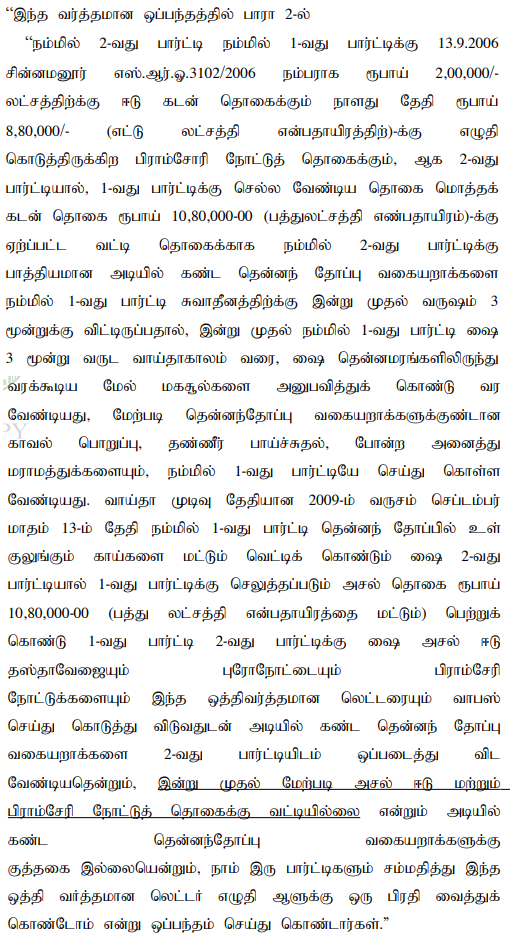
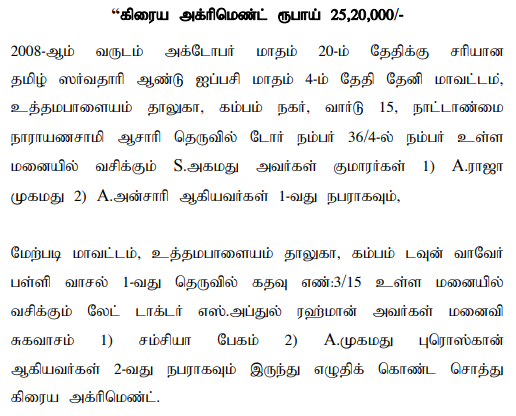
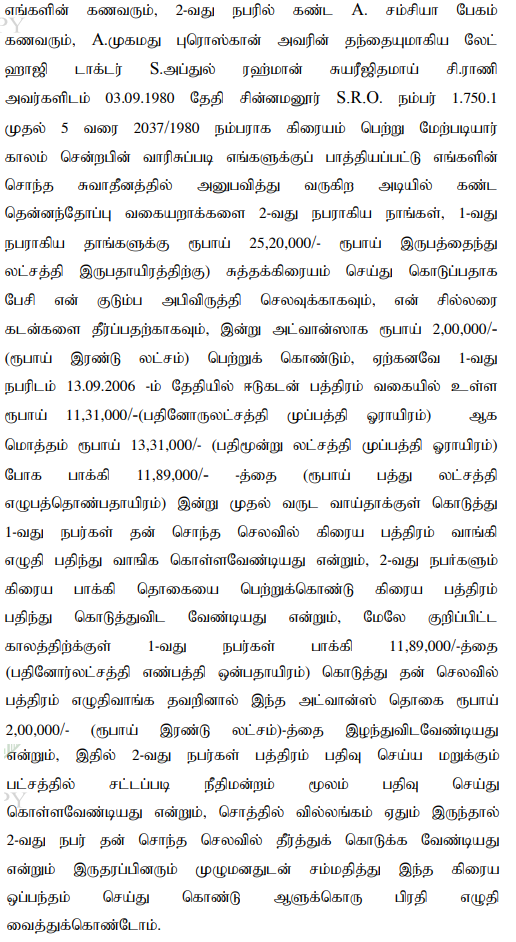
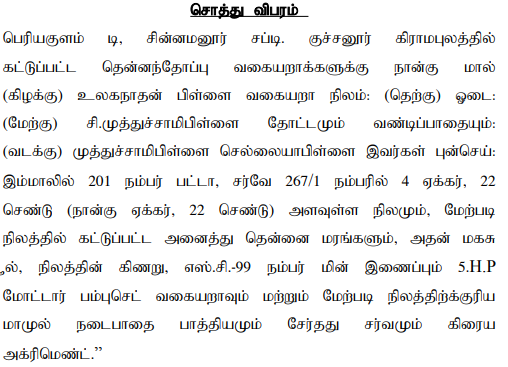
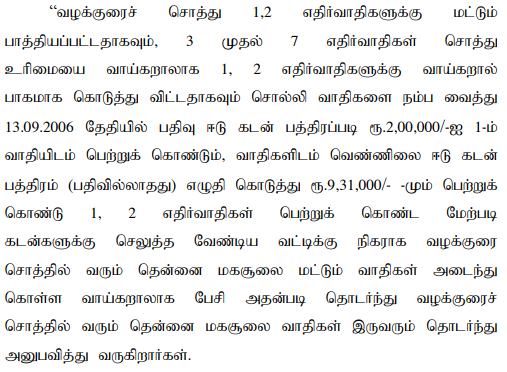
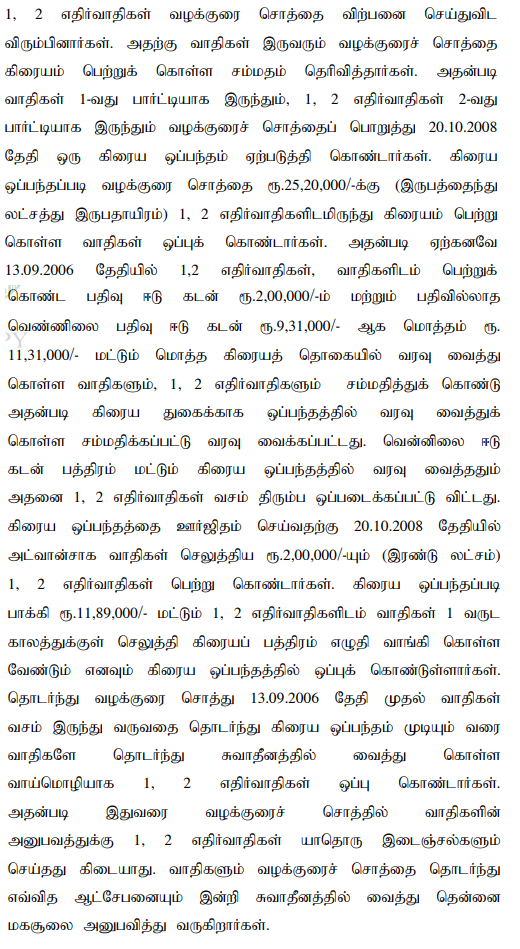
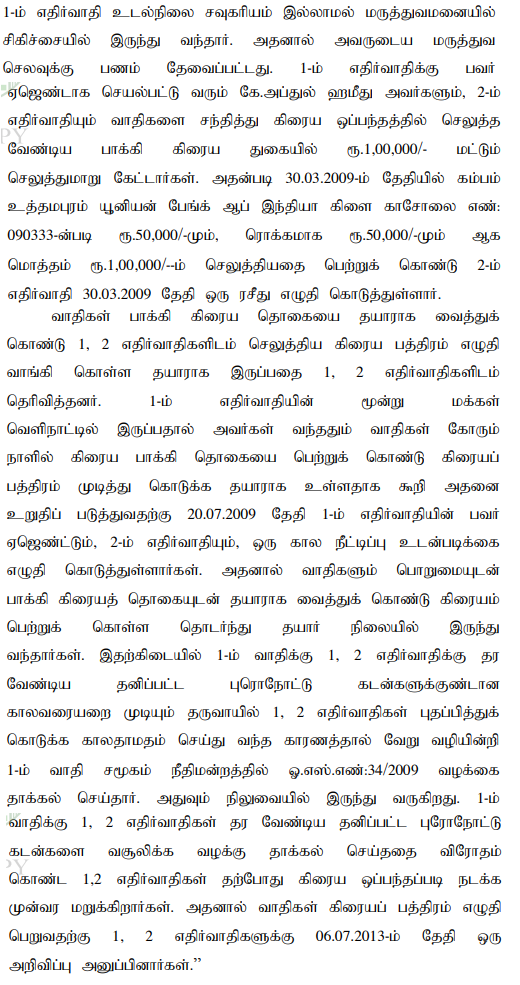
4. The brief facts as stated by the plaintiff is that the defendants had borrowed a sum of Rs.2,00,000/- from the plaintiff for some family expenses on 13.09.2006 and executed registered mortgage deed, dated 13.09.2006, in respect of their land in Survey No.267/1 admeasuring 4 acres 22 cents, situated at Kuchanoor Village. On the same date i.e. 13.09.2006 again Rs.4,40,000/- was given as secured loan by executing promissory note. On the next date i.e. on 14.09.2006 again Rs.4,40,000/- was given as secured loan by executing promissory note. And the accepted rate of interest is Rs.1/- for Rs.100/- rupees per month. The above said amount covered under the promissory note was not repaid and the interest was also not paid. Hence, the suit for recovery of money to the tune of Rs.11,95,623.20/- for the two promissory notes with agreed rate of interest was filed by the plaintiff.
5. The 1st defendant represented by the Power Agent, Abdul Hameed, had filed written statement wherein it is stated that she is aged about 68 years and having health issues. The 2nd defendant is the 1st son of the 1st defendant. Apart from the admitted facts and the other contents stated in the plaint are vehemently denied as false. The plaintiff had filed as if the 1st defendant had obtained loan from the plaintiff and the same is false. The 1st defendant is married to one Abdul Rahman who are blessed with four daughters, namely Sakkeena Parveen, Fathima Parveen, Sagitha Jawahar and Mathina Munawar and two sons namely, Mohammed Feroze Khan Noon and Beer Mohammed Jeilani. After the demise of the 1st defendant’s husband, the 1st defendant and their 6 children are the legal heirs to the deceased Abdul Rahman. All the legal heirs are entitled to share in the suit property as per Muslim Law. The 2nd defendant had transferred his share to his wife and two minor children. The plaintiff had filed a false case against the 1st defendant. The 1st defendant had not borrowed any money for interest as alleged by the plaintiff, the claim in the suit is false, hence, the 1st defendant is not liable to pay any money to the plaintiff. The property shown in the plaint is an agricultural land which was purchased by the deceased husband from his own income, thereafter was in possession and enjoyment by paying kist etc. After his demise, the 1st defendant and the other legal heirs are depended on the income derived through the agriculture activities in the said land. The above property is valued as Rs.15,00,000/-. The 2nd defendant was doing some business, but had incurred loss and the same is known to the plaintiff. The plaintiff was also well aware that the property belongs to all legal heirs and also the plaintiff is aware that the 2nd defendant is not having right over the suit property. Hence, the plaintiff cannot attach the suit property. The plainti
AI
Promissory notes were deemed security for othi transactions, and the plaintiff's claims were impacted by contract modifications, barring separate recovery under the original terms.

The plaintiff's failure to disprove the defense taken by the defendant and the finding of the suit promissory note as not true and valid influenced the court's decision.
Compliance with procedural standards, especially regarding valid demand notices, is essential in legal proceedings concerning negotiable instruments to ensure fairness and justice.
The presumption of validity under Section 118 of the Negotiable Instruments Act requires defendants to provide evidence to rebut the execution of a promissory note once established by the plaintiff.

Admission of signatures on blank promissory notes does not prove execution of completed documents in plaintiff's favour; plaintiff must fully prove transaction where denied, especially with evidence ....
The main legal point established in the judgment is the interpretation and application of Section 43 of the Indian Contract Act, which allows a suit to be maintained against one of the joint promisso....

The presumption of consideration under Section 118 of the Act is a statutory presumption and unless it is rebutted, it has to be presumed that consideration has passed.

The burden of proof to disprove the existence of consideration for a negotiable instrument lies with the Defendant, and the Plaintiff is entitled to the benefit of presumption under Section 118 of th....

The presumption of consideration under Section 118(a) of the Negotiable Instruments Act applies when the execution of a promissory note is admitted, shifting the burden to the defendant to prove non-....



An indispensable Tool for Legal Professionals, Endorsed by Various High Court and Judicial Officers
Please visit our Training & Support
Center or Contact Us for assistance

Scan Me!
India’s Legal research and Law Firm App, Download now!


For Daily Legal Updates, Join us on :



 Back to top


