
 Back
Back





BEFORE THE MADURAI BENCH OF MADRAS HIGH COURT
G.K.ILANTHIRAIYAN, R.POORNIMA, JJ.
Selvaraj – Appellant
Versus
The Inspector of Police, Karaiyur Police Station – Respondent
Crl. Appeal (MD) No. 852 of 2022
Decided On : 05-02-2026
| Table of Content |
|---|
| 1. the nature of the relationship and event leading to the prosecution. (Para 1 , 2 , 3) |
| 2. arguments regarding the credibility of evidence and dying declarations. (Para 6 , 7) |
| 3. assessment of the evidence presented against the accused. (Para 9 , 11 , 12) |
| 4. clarification regarding the appropriateness of the charges. (Para 15 , 16 , 17) |
| 5. final outcomes of the judicial assessment and adjustments in sentencing. (Para 19) |
JUDGMENT :
G.K. ILANTHIRAIYAN, J.
1. This appeal has been filed as against the Judgment passed in S.C.No.128 of 2016, dated 29.11.2022, on the file of the Mahila Court, Pudukottai, thereby convicting the appellant for the offences punishable under Sections 417 and 302 of IPC.
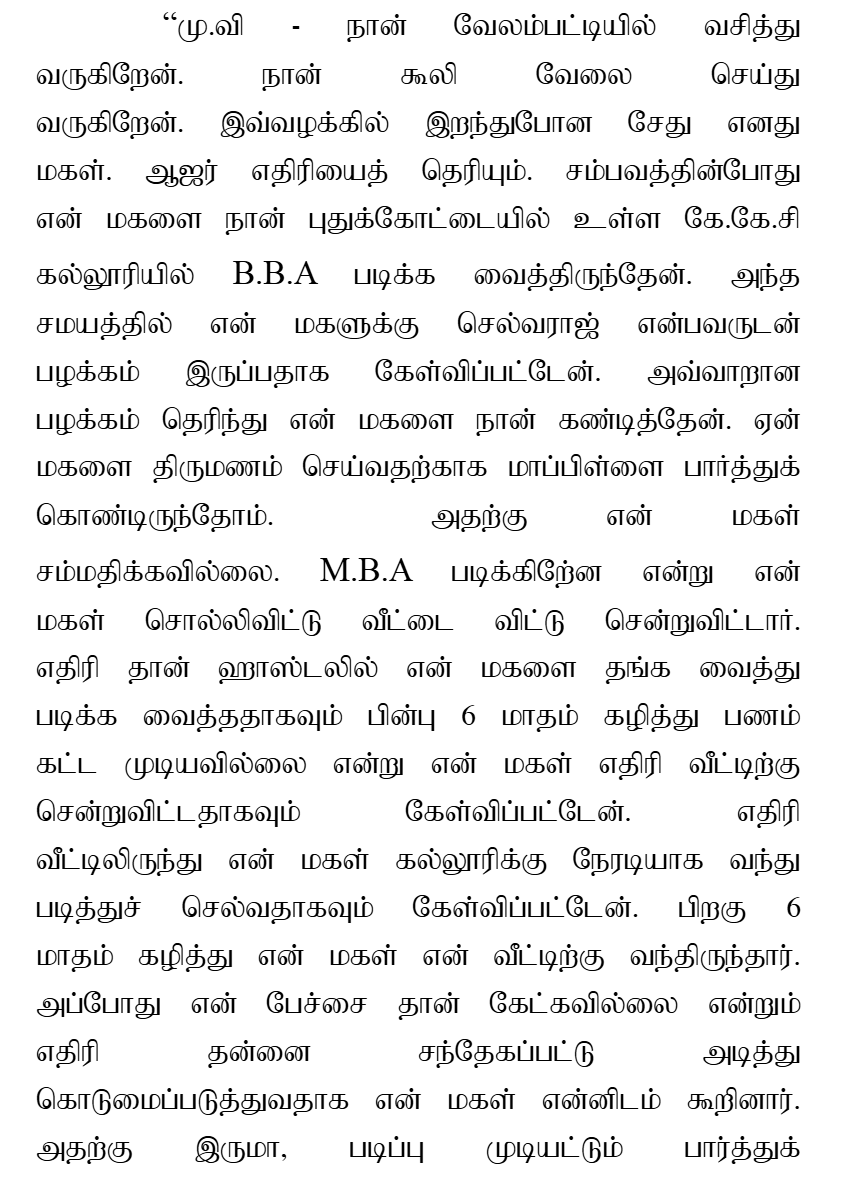
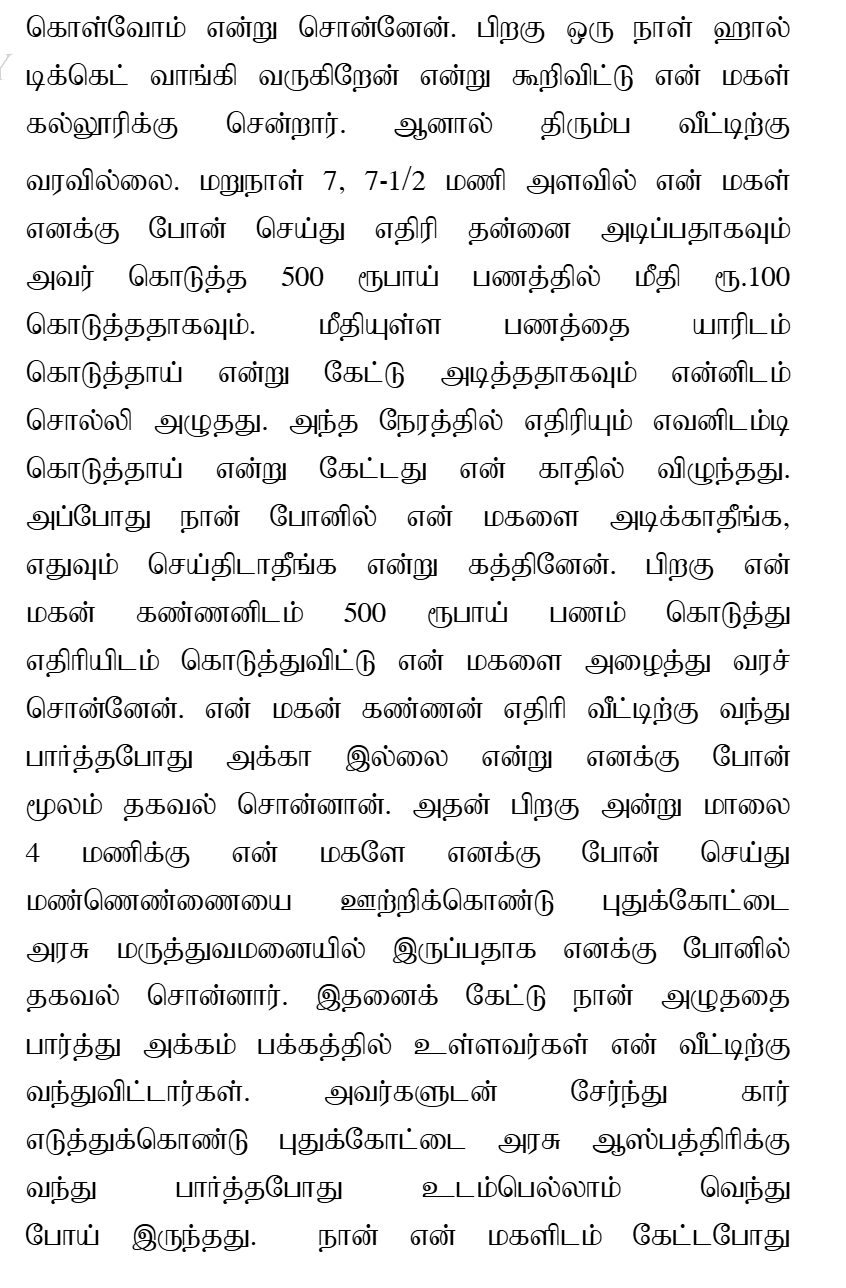
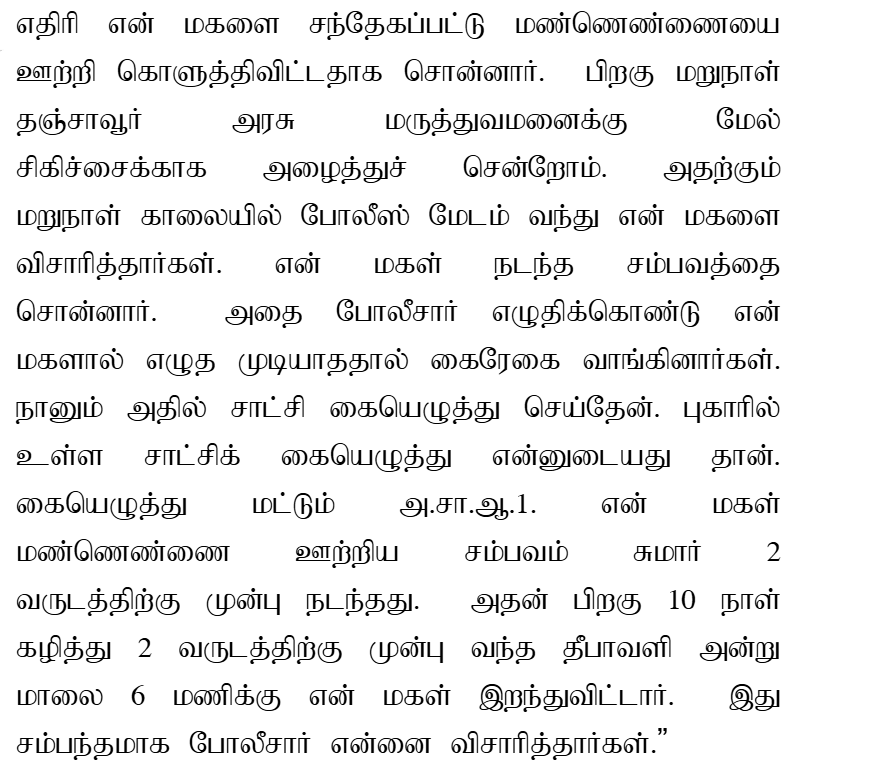
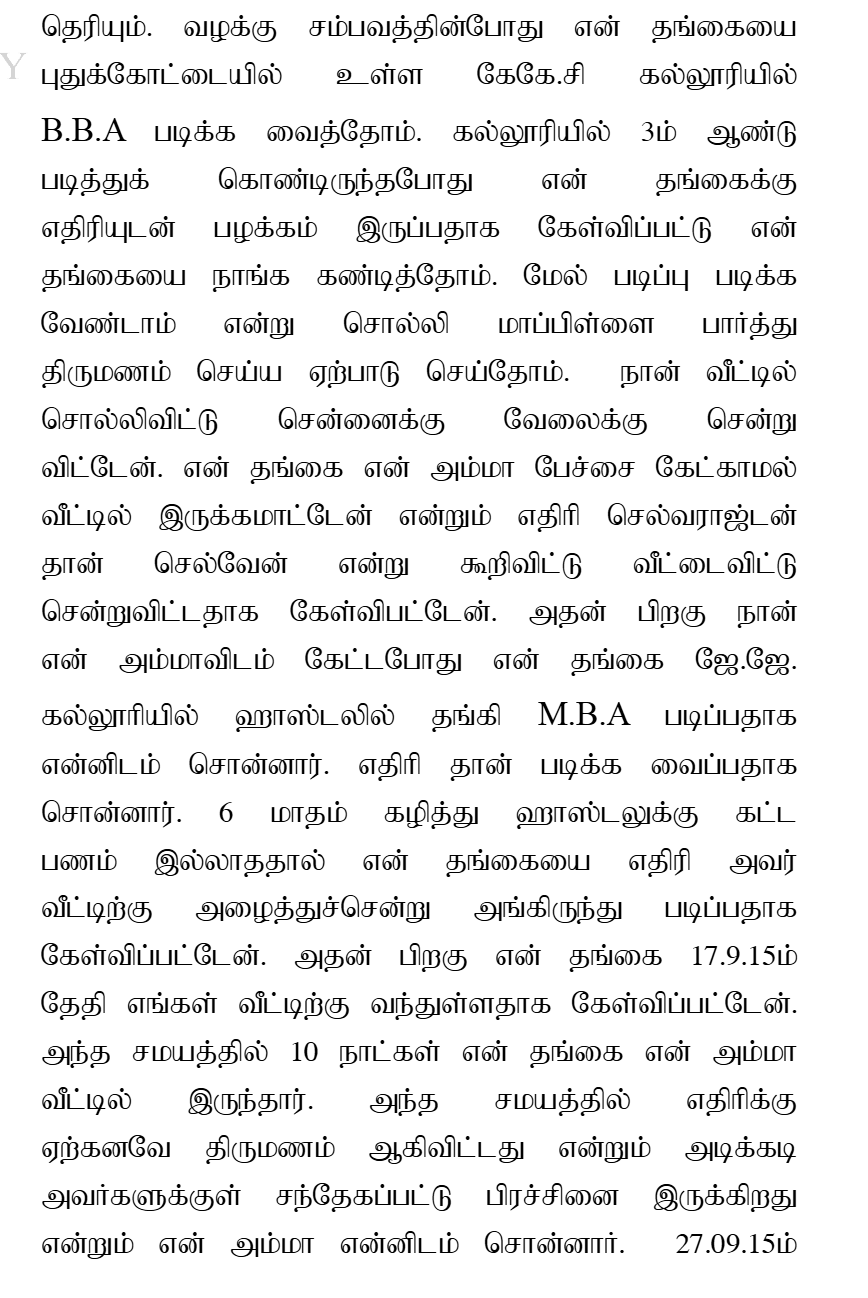
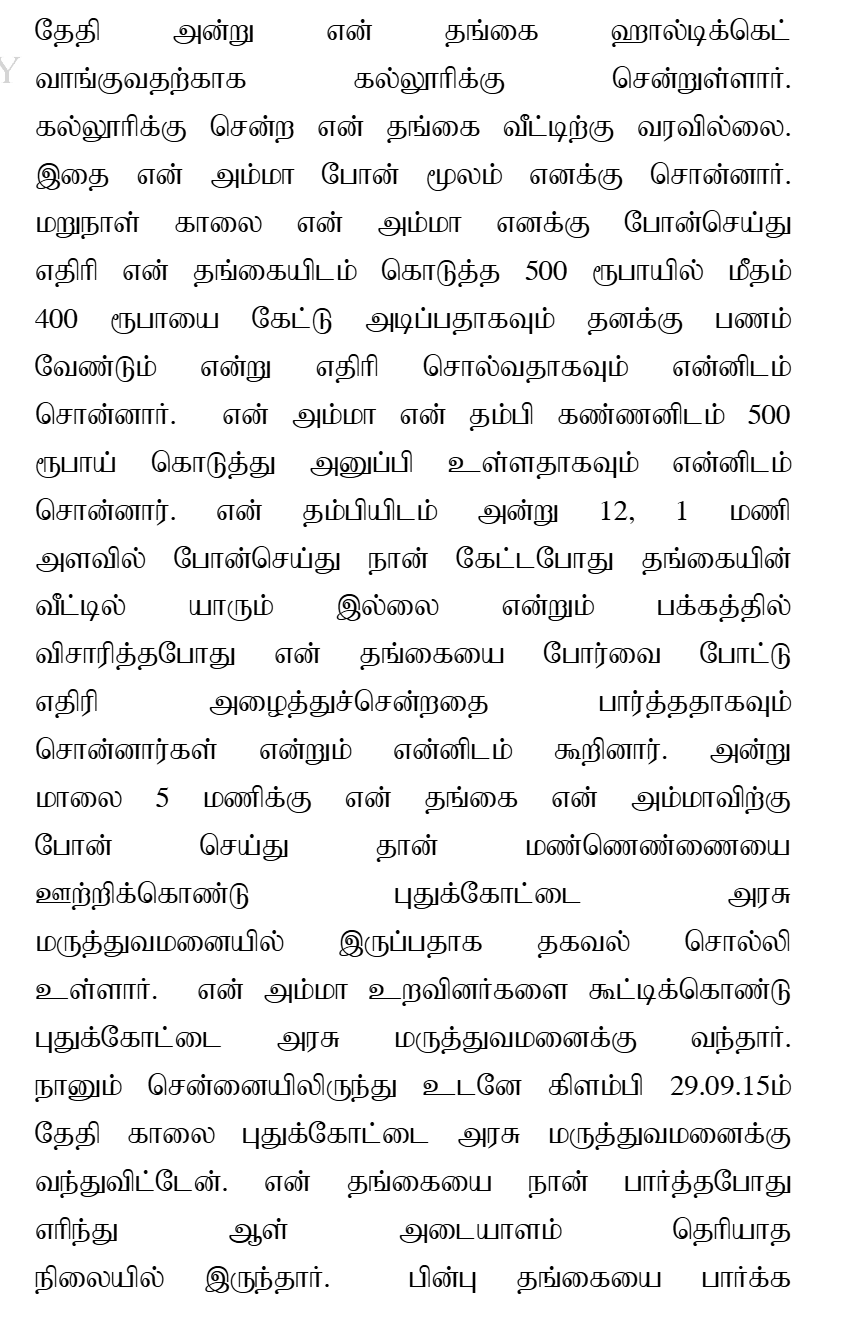
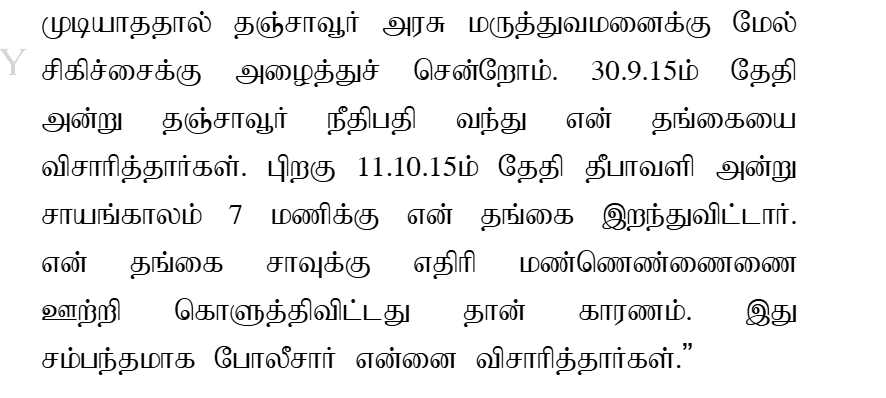
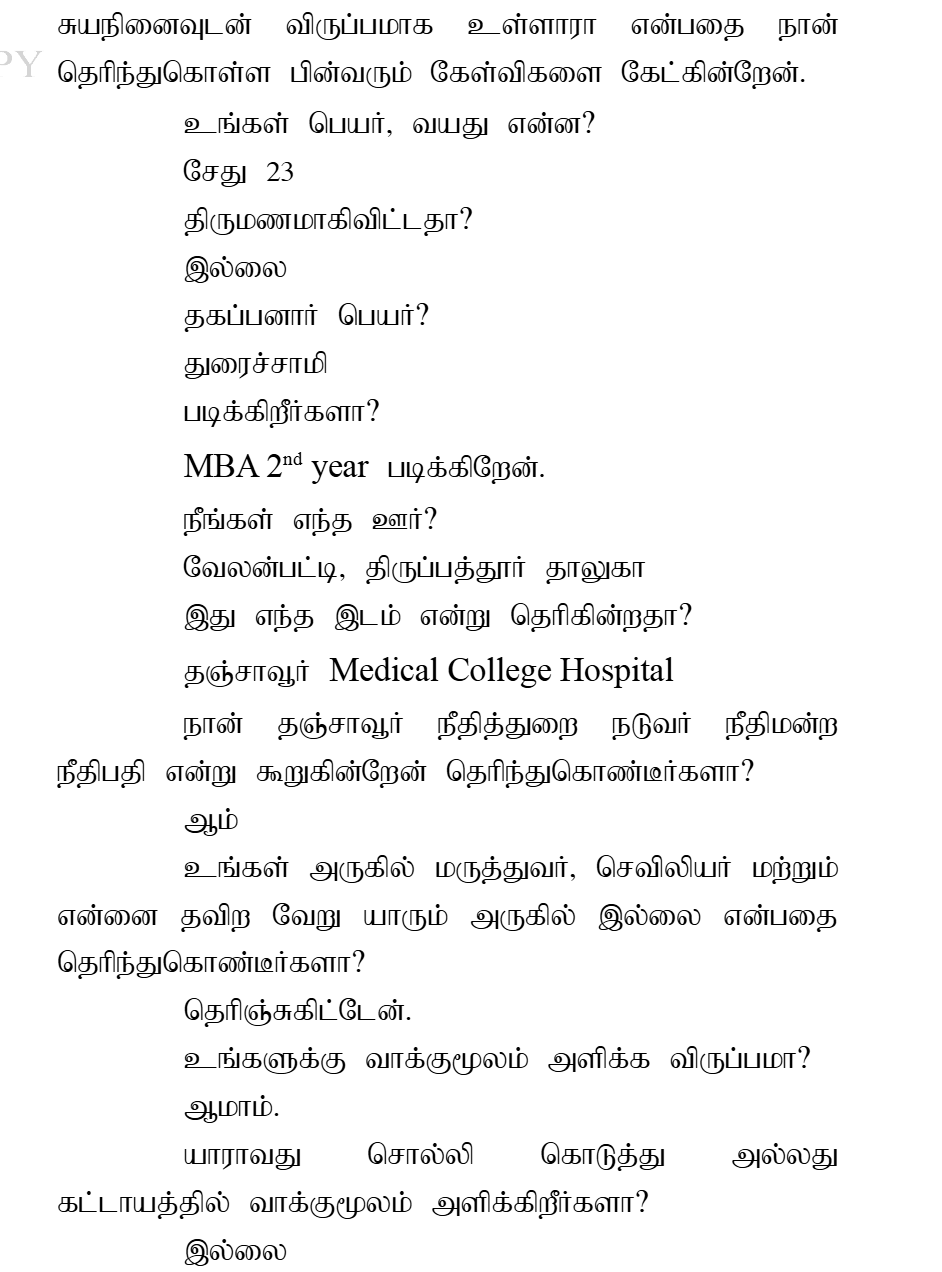
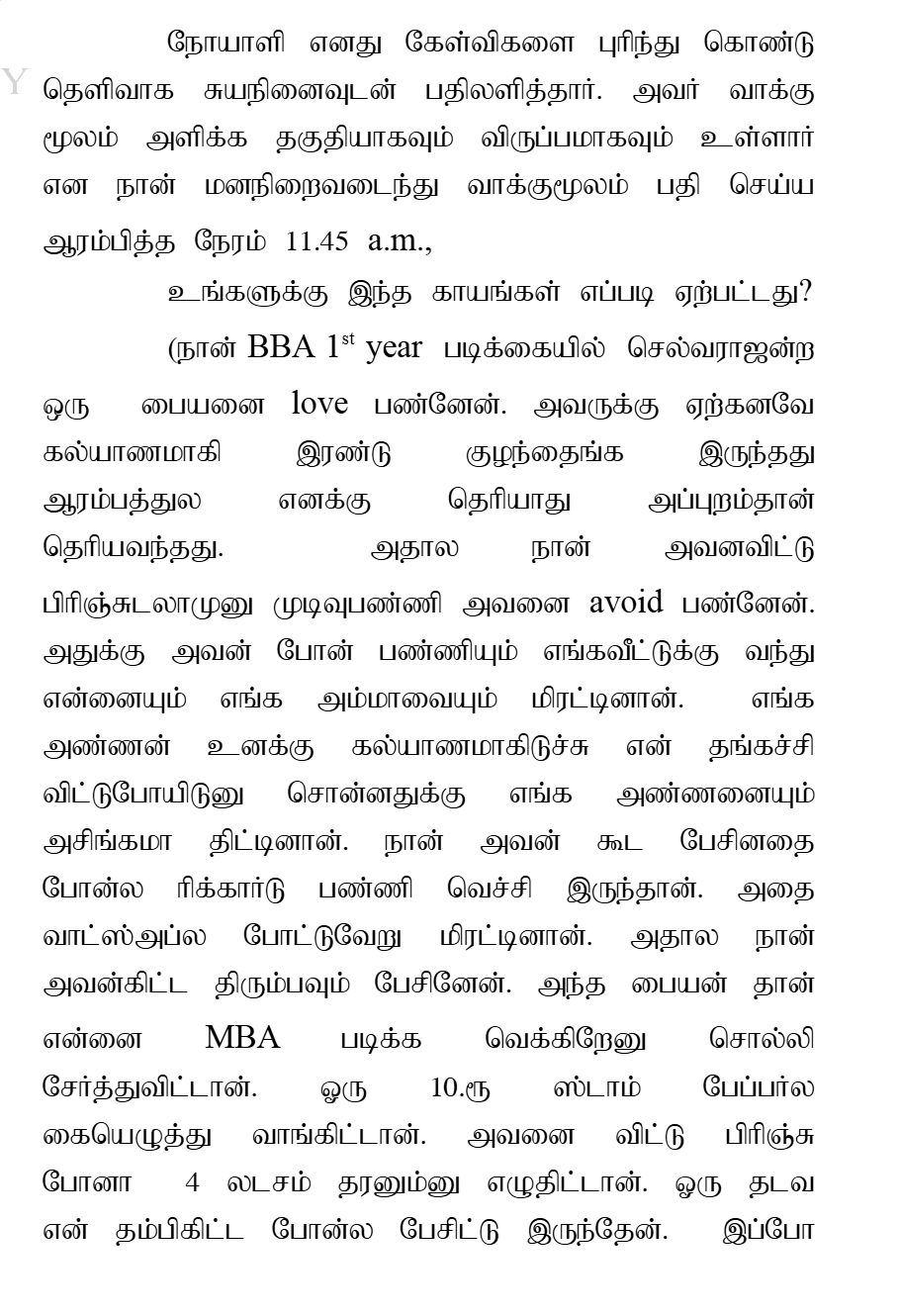
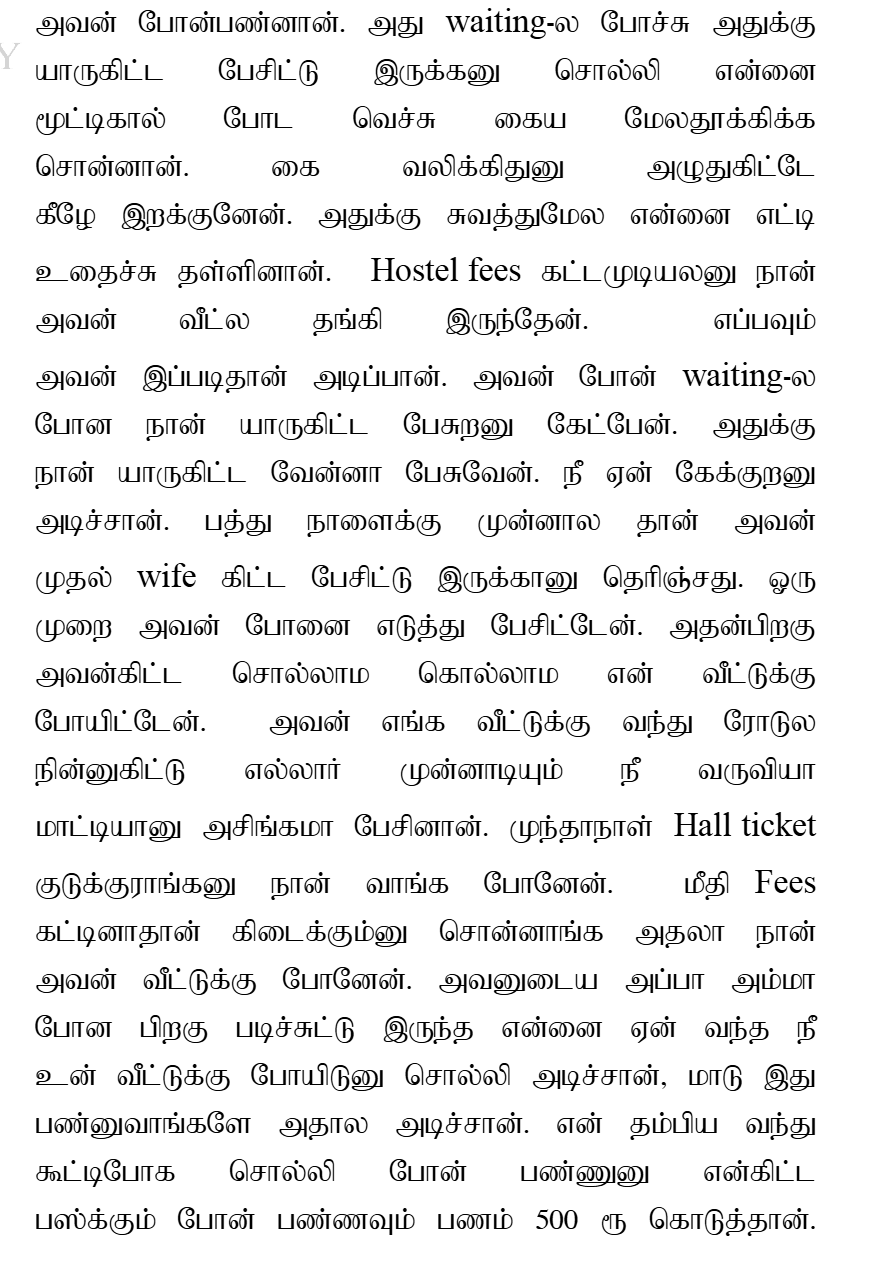
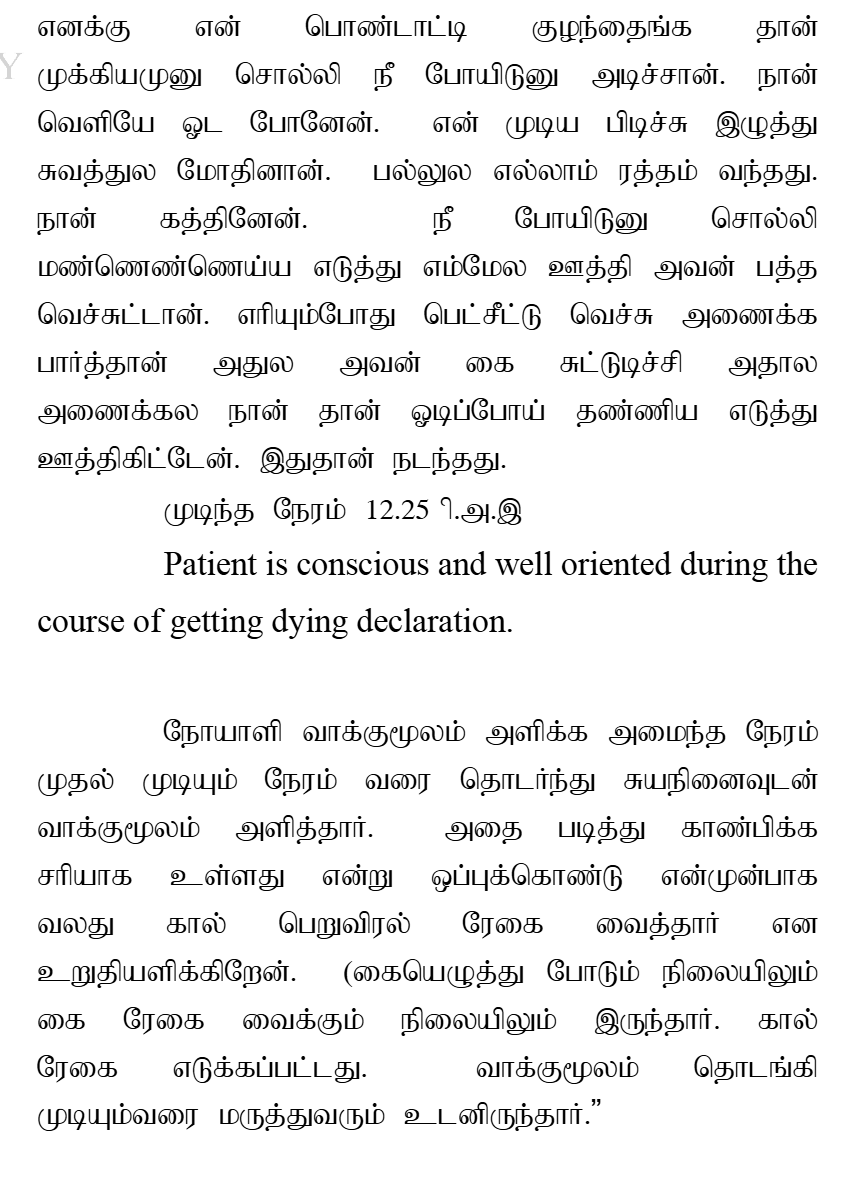
2. The case of the prosecution is that the accused and the deceased fell in love and were in a live-in-relationship. The accused deliberately concealed the fact from the deceased, that he was already married and had a wife and children. One year before the occurrence, the deceased had come to the knowledge of the said fact. Upon learning this fact, the deceased had a fight with the accused. The accused, without informing the deceased's parents, arranged for her stay in a women's hostel in Pudukkottai. He was helping her continue her studies. When the accused was unable to pay the deceased's hostel fees, he took the deceased to his own house, from where the deceased continued to attend college. Thereafter, the deceased went to her native village for semester holidays. She returned on 28.10.2015 at about 08.00 a.m. Upon return, she went to the house of the accused. At that time, the accused was alone in his house. At that juncture, the accused had a quarrel with the deceased because she had gone to her parents' house without informing him and requested the remaining portion of Rs.500/-, which he had given her for college expenses. The deceased had given only Rs.100/- as balance to the accused. Immediately, the accused became angry and imposed a minor punishment by making her kneel and raising her hands. He also pulled her hair and beat her. Thereafter, at about 9:00 a.m., the accused, with the intention to kill the deceased, took a kerosene bottle kept in the thatched kitchen outside his house, poured it on her, and set her on fire while she was standing in the middle of the tiled house. Therefore, the deceased suffered burn injuries. The accused took her to the Government Hospital, Pudukkottai for initial treatment. She was then referred to Thanjavur Medical College Hospital for higher treatment. Despite medical treatment, she died from her injuries on 10.11.2015 at 07.00 p.m.,
3. On the basis of the complaint, the respondent registered an F.I.R in Crime No.143 of 2015 for the offences punishable under Sections 307 of IPC and thereafter, the offences were altered into Sections 417, 420, 496, 495, 323, 366 and 302 of IPC. After completion of investigation, the respondent filed a final report and the same has been taken cognizance by the Trial Court.
4. On the side of the prosecution, in order to bring the charges to home, they examined P.W.1 to P.W.11 and Exs.P1 to P17 were marked. The prosecution also produced Material Objects M.O.1 and M.O.2. On the side of the accused, one witness was examined as D.W.1 and one exhibit was marked as Ex.D1. The Court documents Ex.C1 and Ex.C2 were marked.
5. On perusal of the oral and documentary evidence, the trial Court found the accused guilty for the offences punishable under Sections 417 and 302 of IPC . He was sentenced to undergo one year Rigorous Imprisonment and was imposed a fine of Rs. 50,000/-, in default, to undergo six months Simple Imprisonment for an offence punishable under Section 417 of IPC. He was further sentenced to undergo Life Imprisonment and imposed a fine of Rs. 2,00,000/- in default, to undergo one year Rigorous Imprisonment for an offence punishable under Section 302 of IPC. Aggrieved by the same, the present appeal has been filed by the appellant.
6. The learned counsel f
Dying declarations must be reliable; mere speculation of suicide may lead to alternative charges if harassment is proven.

The court ruled that the actions of the accused constituted culpable homicide under Section 304 Part II due to provocation rather than murder under Section 302, emphasizing the necessity of intent in....

Point of law: Statement given by the deceased in her dying declaration reveals that the appellant was in a fully drunken stage on the night when the incident took place.

Reliability of dying declarations is crucial for conviction under IPC Section 304(ii); conviction upheld as statements were consistent and trustworthy.


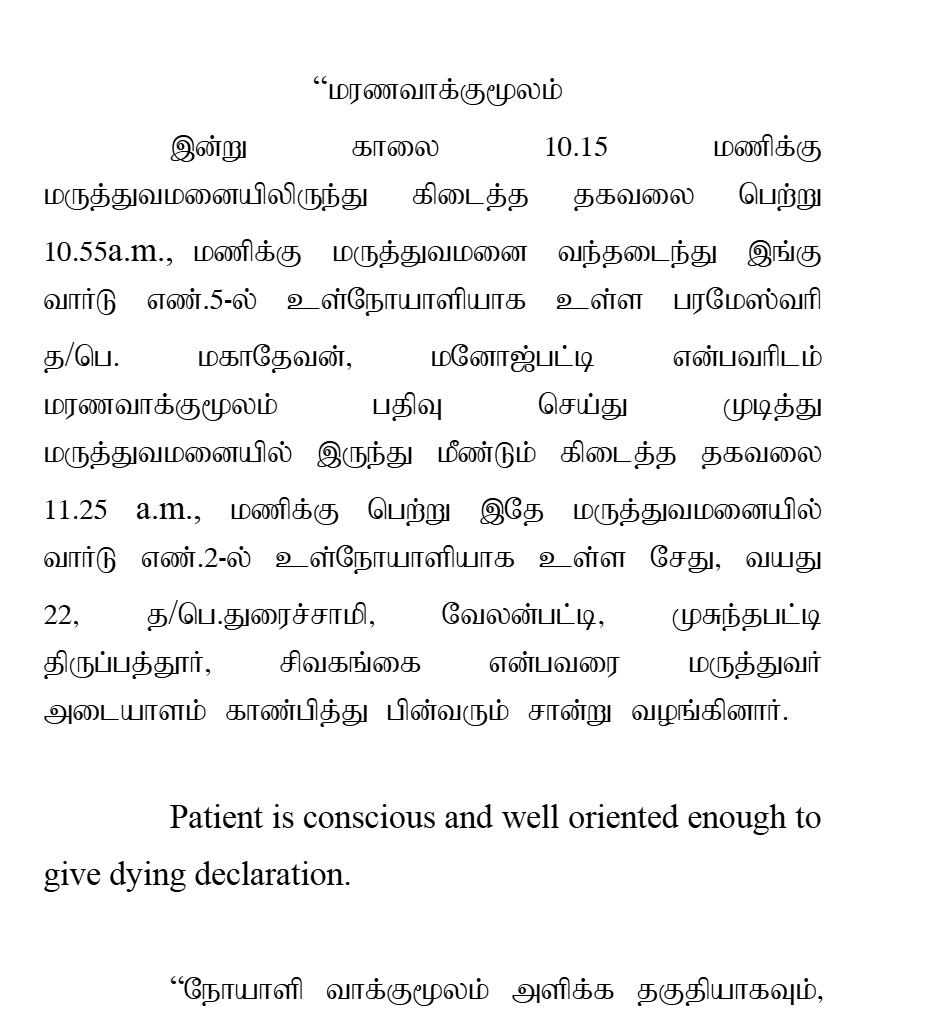
Evidence of witnesses who recorded the said dying declarations, Medical Officer and all other evidence in connection with the said dying declarations, it is abundantly clear that the Appellant poured....

The act of the accused was not pre-meditated or designed and at the relevant time as it has come in the dying declaration that he was under the influence of alcohol and committed the said act.

Point of Law : Dowry Death - When the deceased poured kerosene on herself, the appellant’s failure to stop her, will not amount to an offence under Section 306 of IPC. reduced to the period already u....
The court established that a conviction cannot solely rely on a dying declaration without corroborating evidence.



An indispensable Tool for Legal Professionals, Endorsed by Various High Court and Judicial Officers
Please visit our Training & Support
Center or Contact Us for assistance

Scan Me!
India’s Legal research and Law Firm App, Download now!


For Daily Legal Updates, Join us on :



 Back to top


