
 Back
Back





BEFORE THE MADURAI BENCH OF MADRAS HIGH COURT
G.K.ILANTHIRAIYAN, R.POORNIMA, JJ.
Saravanakumar – Appellant
Versus
State rep. by The Inspector of Police, Srivilliputhur Town Police Station – Respondent
Crl.A(MD)No.1107 of 2025 and Crl.M.P(MD)No.14538 of 2025
Decided On : 03-02-2026
| Table of Content |
|---|
| 1. factual background of the case (Para 2 , 3 , 4 , 5) |
| 2. arguments presented by both parties (Para 7 , 8) |
| 3. court's analysis of evidence and legal standards (Para 9 , 10 , 11) |
| 4. determination of the intention in the crime (Para 12 , 13 , 14) |
| 5. final judgment and sentencing (Para 15 , 16) |
JUDGMENT :
G.K.ILANTHIRAIYAN, J.
This Criminal Appeal is filed to call for the records and set aside the judgment passed by the Learned Sessions Judge (Fast Track Mahila Court), Virudhunagar District, Srivilliputhur, in S.C.No.108 of 2022, dated 21.12.2023, thereby convicting the appellant/accused for the offences punishable under Section 302 of IPC and Section 4 of the Tamil Nadu Prohibition of Women Harassment Act .
2. THE CASE OF THE PROSECUTION:
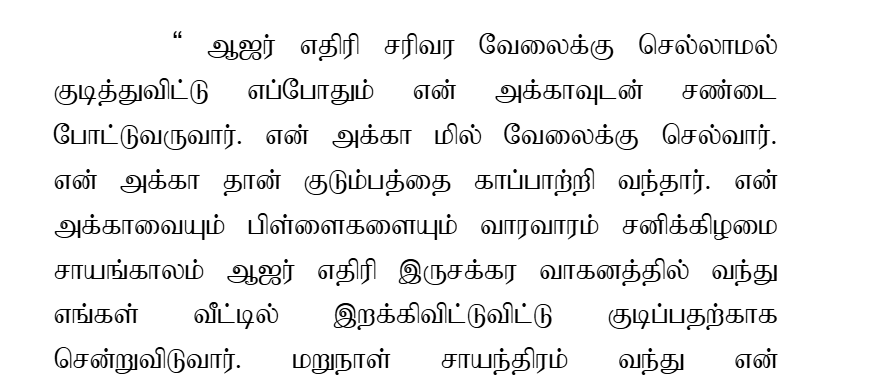
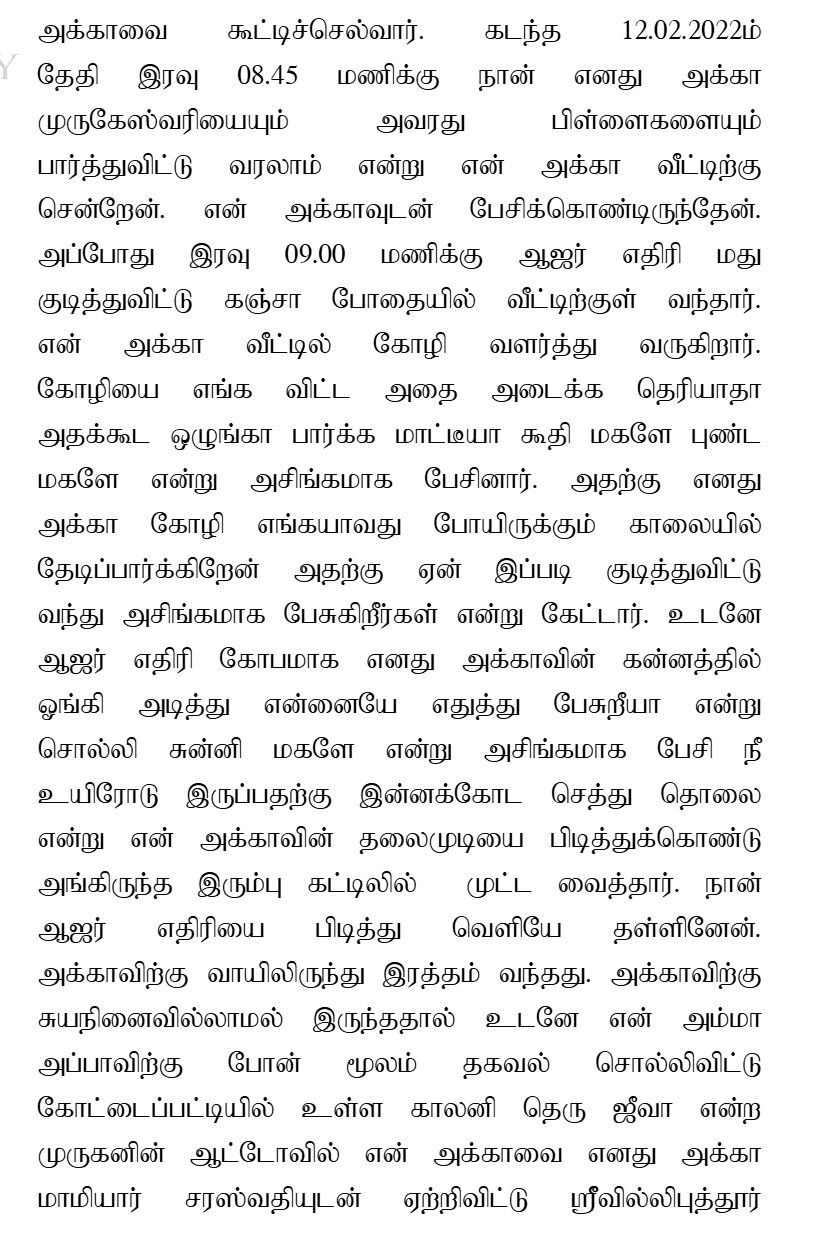
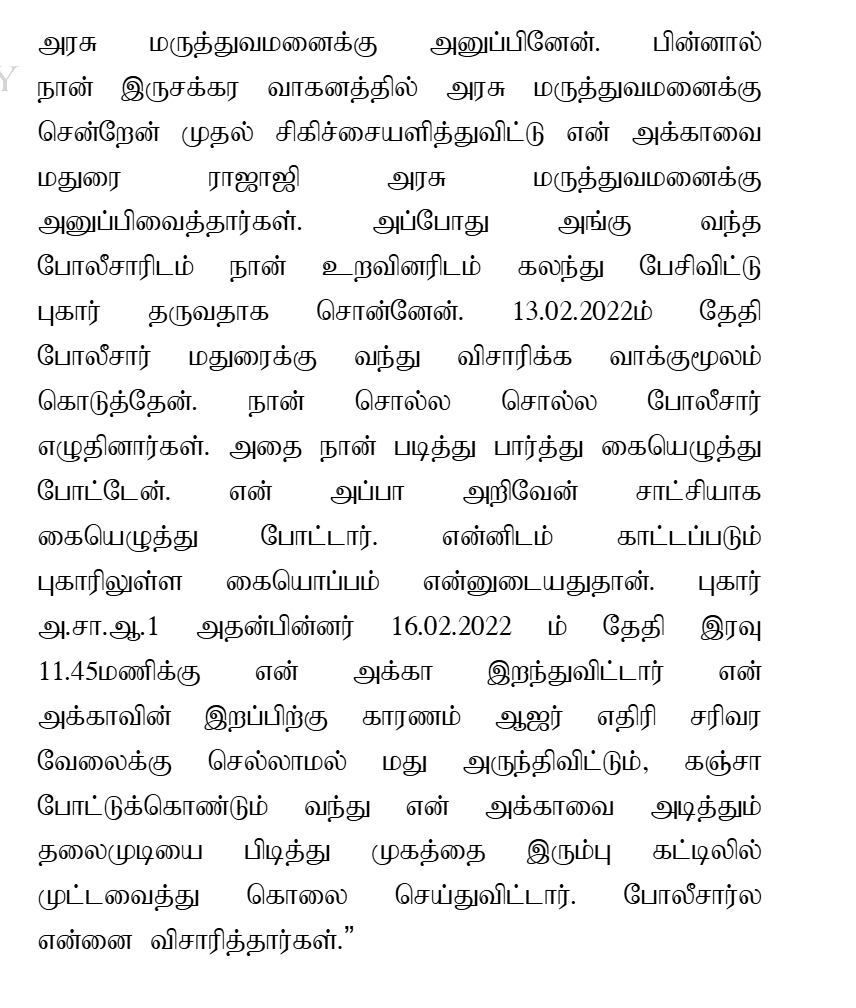
2(i) The appellant and deceased are husband and wife. The defacto complainant is the brother of the deceased. On 12.02.2022, at about 09:00 p.m., when the defacto complainant and the deceased were speaking in the appellant’s house, the appellant had come there and had questioned about a missing hen and had scolded the deceased using filthy language. When the deceased replied to the same, the appellant got angry and assaulted the deceased with hand and also pushed her and dashed her head on the iron cot. The deceased sustained injuries and became unconscious due to the same. Immediately she was taken to the Government Hospital Srivilliputhur where she was provided first aid treatment and she was later referred to Government Rajaji Hospital, Madurai for further treatment and was admitted there on 13.02.2022, where after four days i.e., on 16.02.2022, the deceased died.
3. On the basis of the complaint, F.I.R was registered in Crime No: 88 of 2022 for the offences under Section 294(b), 323, 307 of I.P.C r/w. Section 4 of the Tamil Nadu Prohibition of Women Harassment Act . Thereafter, the offences were altered 294(b), 323, 302 of I.P.C r/w. Section 4 of the Tamil Nadu Prohibition of Women Harassment Act . After completion of investigation, the respondent filed a final report and the same was taken cognizance by the Trial Court.
4. To bring the charges to home, the prosecution examined P.W.1 to P.W.13 and produced documents Ex.P.1 to Ex.P.19 and produced material objects which were marked as M.O.1 and M.O.2. on the side of the appellant, no witnesses were examined and no documents or material objects were produced.
5. On perusal of the oral and documentary evidences, the Trial Court found the appellant guilty for the offences under Section 302 of IPC and Section 4 of the Tamil Nadu Prohibition of Women Harassment Act and sentenced him to undergo life imprisonment and imposed a fine of Rs. 5,000/- and in default of the same, to undergo one-year Rigorous Imprisonment for the offence punishable under of and the appellant was also sentenced to undergo 3 years Rigorous Imprisonment and was imposed a fine of Rs. 10,000/- and in default of the same, to undergo six months Rigorous Imprisonment for the offence under Section 4 of the Tamil Nadu Prohibition of Women Harassment Act .
6. Aggrieved by the same, the appellant has preferred this present appeal.
7. ARGUMENTS ADVANCED BY THE LEARNED COUNSEL APPEARING FOR THE APPELLANT:
7(i) The learned counsel for the appellant submits that the prosecution has failed to establish the charges beyond reasonable doubt. Despite this, the Trial Court mechanically convicted the appellant, even though the material witnesses did not support the prosecution’s case. It was also submitted that the establishment of motive is essential in a case which is completely based on circumstantial evidences, but the prosecution had failed to establish the same.
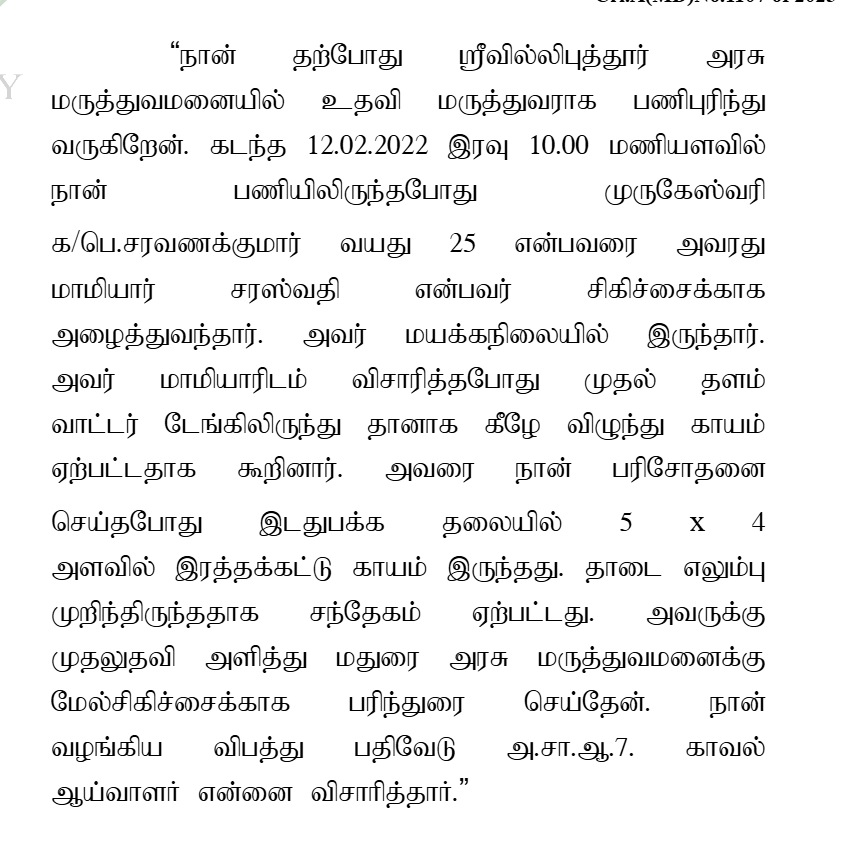
7(ii) It was the further contention of the appellant that, the evidence of P.W.1, who is the brother of the deceased and is also the defacto complainant, is not reliable as his presence at the scene of crime is highly doubtful as he did not take any step to prevent the alleged occurrence and P.W.8, who is the doctor attached to
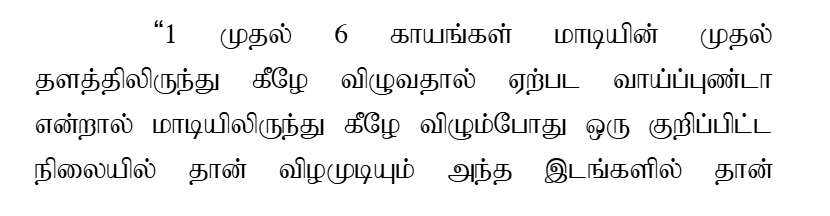
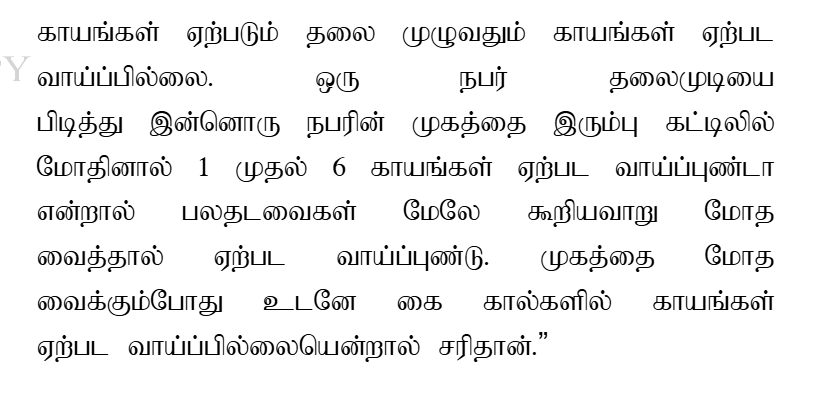
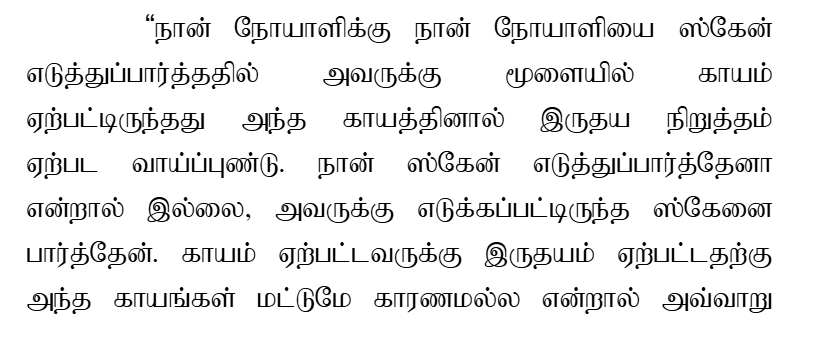
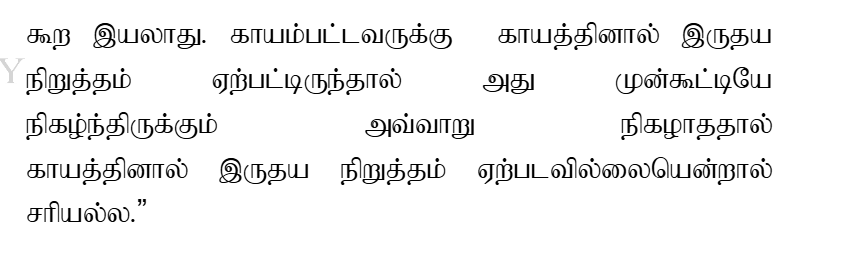
The court determined that the appellant's actions constituted culpable homicide not amounting to murder due to the absence of intent to kill, influenced by intoxication and sudden provocation.


The court established that sudden provocation can reduce a murder charge to manslaughter, particularly in domestic disputes.
The conviction for murder upheld, highlighting that circumstantial evidence and established patterns of cruelty can substantiate claims beyond reasonable doubt.
Assault with stick in sudden quarrel without premeditation falls under Exception 1 to Section 300 IPC, reducing Section 302 to 304 Part I conviction.
Provocation leading to loss of self-control can reduce a murder charge to culpable homicide under Section 304 Part I IPC, requiring evaluation of intent and the nature of prior events.

The court established that culpable homicide can be distinguished from murder based on the presence of intention and premeditation, particularly in cases of sudden provocation.
Sustained provocation and heat of passion can reduce murder to culpable homicide, allowing for a lesser sentence under Section 304(II) IPC.

As the attack is an outcome of the said incident, which took place immediately prior to the incident, we feel that it is a fit case where the nature of offence has to be scaled down from Section 302 ....
The prosecution failed to prove the charges against the accused beyond reasonable doubt, leading to an initial acquittal; however, the Appellate Court found conclusive evidence establishing guilt, wa....



An indispensable Tool for Legal Professionals, Endorsed by Various High Court and Judicial Officers
Please visit our Training & Support
Center or Contact Us for assistance

Scan Me!
India’s Legal research and Law Firm App, Download now!


For Daily Legal Updates, Join us on :



 Back to top


