
 Back
Back





BEFORE THE MADURAI BENCH OF MADRAS HIGH COURT
N. ANAND VENKATESH, K.K. RAMAKRISHNAN, JJ.
Reliance General Insurance Co Ltd, through its Branch Manager – Appellant
Versus
T. Nallammal – Respondent
C.M.A.(MD).Nos.140 to 144 of 2023, 835 of 2023 and 876 of 2024 and C.M.P.(MD).Nos.1323 & 1327 of 2023 and 9408 of 2024
Decided On : 01-06-2026
| Table of Content |
|---|
| 1. establishing the factual background of the accident and insurance litigation. (Para 1 , 2 , 3 , 4 , 5) |
| 2. summary of rival arguments regarding policy breach and quantum of compensation. (Para 6 , 7) |
| 3. insurer liability for accidents involving passengers within policy coverage limits despite overloading. (Para 8 , 9 , 10) |
| 4. correction of conventional head awards to align with supreme court precedents. (Para 11) |
| 5. final orders specifying modification or dismissal of appeals. (Para 12) |
JUDGMENT :
K.K. RAMAKRISHNAN, J.
1.The second respondent, namely, Reliance General Insurance Company, Tuticorin, has preferred this batch of appeals challenging the common award, dated 24.06.2022 passed by the Tribunal, whereby liability was fastened upon the insurer.
2. Brief facts of the case:
According to the claim petitions, the injured claimants as well as the deceased were travelling in a Mahindra maxi cab bearing Registration No. TN-69-AF-5182, insured with the appellant, on 21.05.2017 at about 10:45 p.m. When the said vehicle was proceeding from west to east on the Tirunelveli– Tuticorin National Highway, near Valanadu, Maruthur Keela Vaikal Bridge, the driver drove the vehicle in a rash and negligent manner, as a result of which the vehicle capsized. Consequently, several occupants sustained multiple injuries, and some succumbed to the injuries.
2.1. In respect of the said occurrence, a First Information Report in Crime No. 94 of 2017 was registered by the jurisdictional police for offences under Sections 279, 337, 338, and 304-A of the Indian Penal Code. Thereafter, the injured claimants and the legal representatives of the deceased filed separate claim petitions in M.C.O.P. Nos.1386 of 2017, 265, 266, 625, 678, 704 and 2012 of 2018 before the Tribunal, seeking compensation.
3. Case of the Insurance Company
The insurer filed its counter denying the manner of the accident and specifically contended that the vehicle in question was a maxi cab with a permitted seating capacity of 13+1 as per the Registration Certificate, and the insurance policy also covered only 13+1 persons. It was further contended that at the time of the accident, about 35 persons were travelling in the vehicle, in total violation of policy conditions and permit terms. On that basis, the insurer sought total exoneration from liability.
3.1.The owner of the vehicle (first respondent) also filed a counter denying liability.
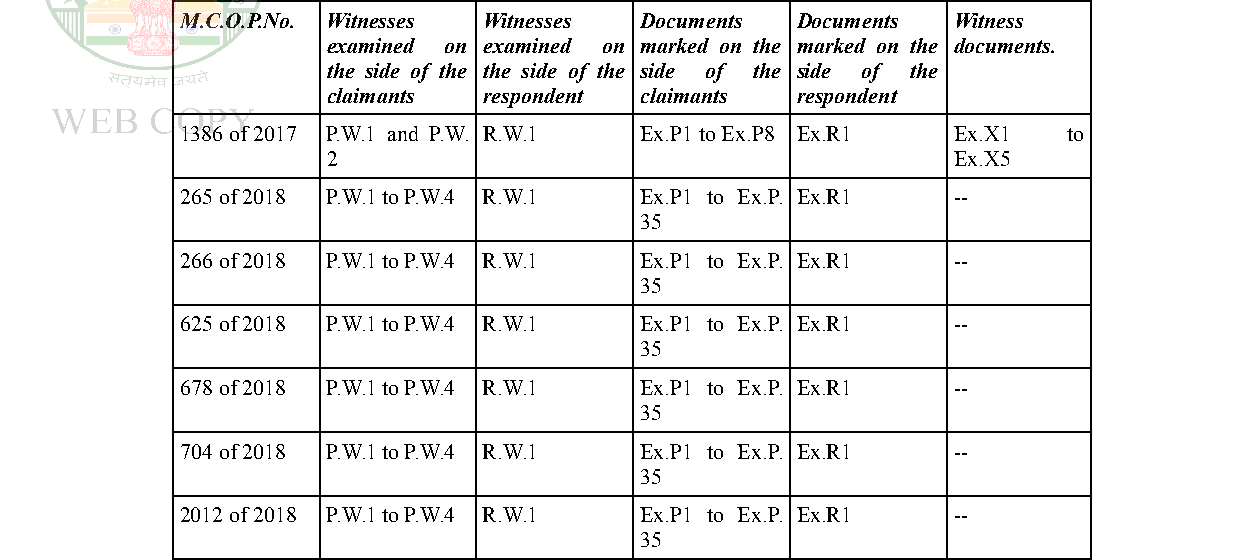
4. Before the Tribunal, on the side of the claimants, witnesses were examined and documents were marked in each case. On the side of the respondents, one witness was examined and the insurance policy was marked as Ex.R1, which is as follows:
5.Finding of the Tribunal:
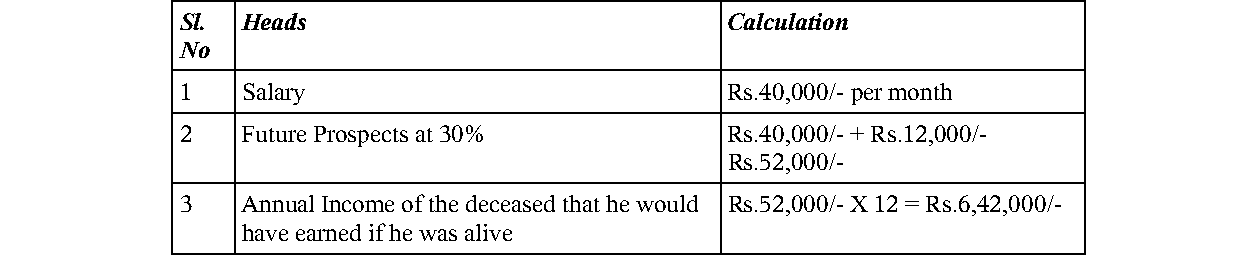
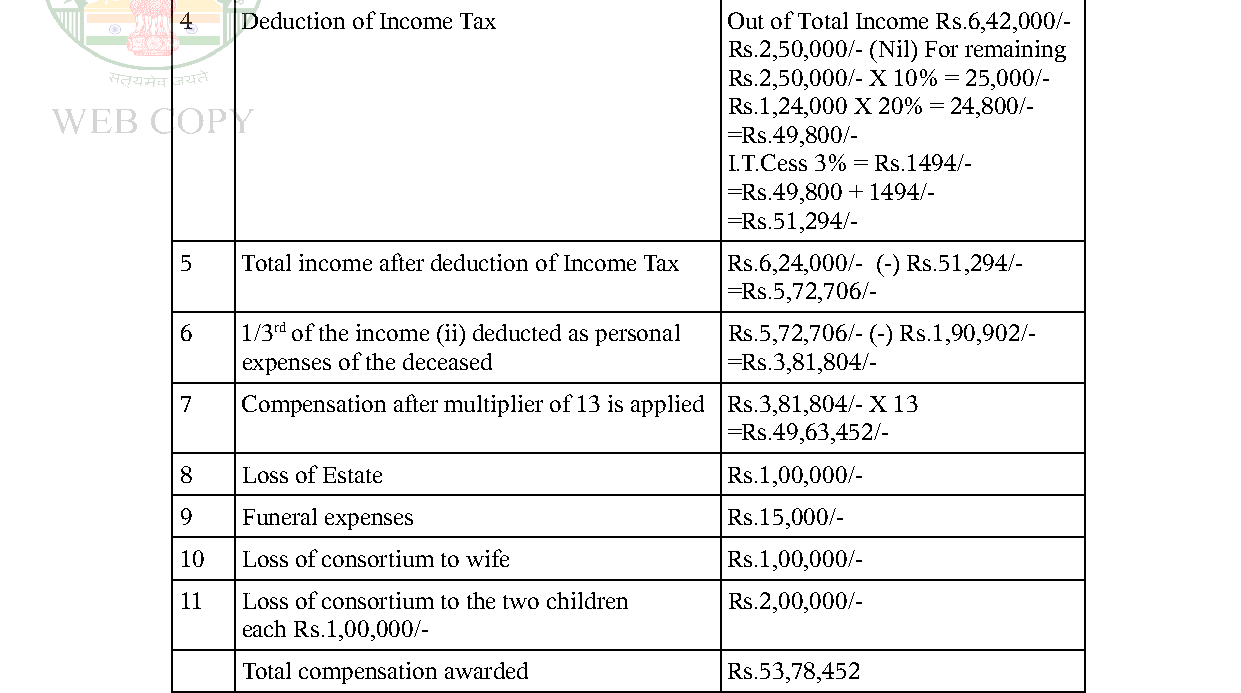
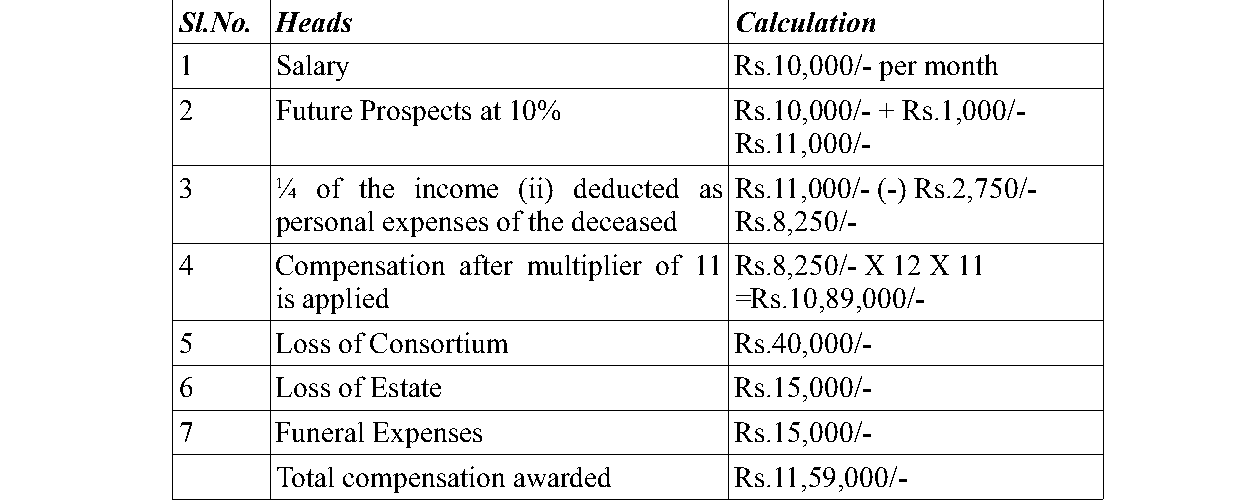
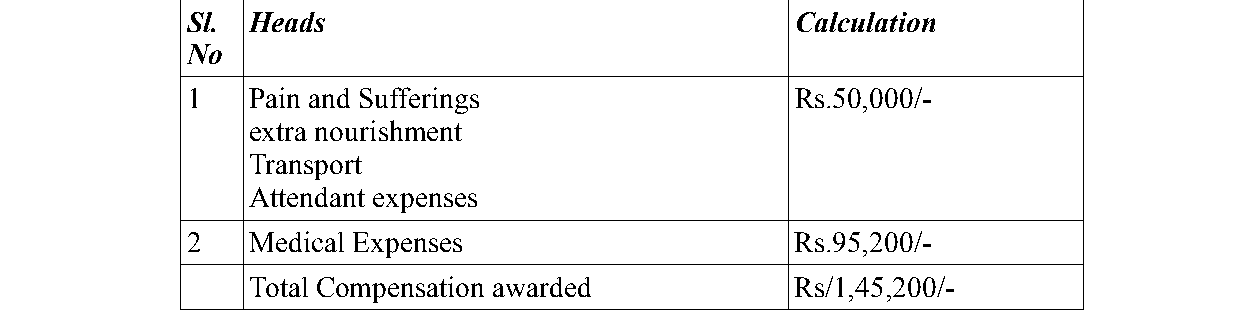
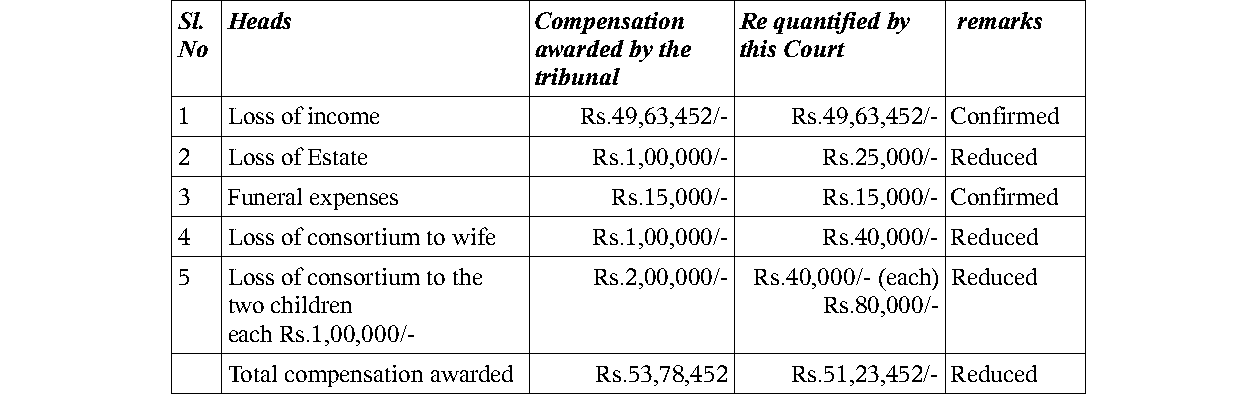
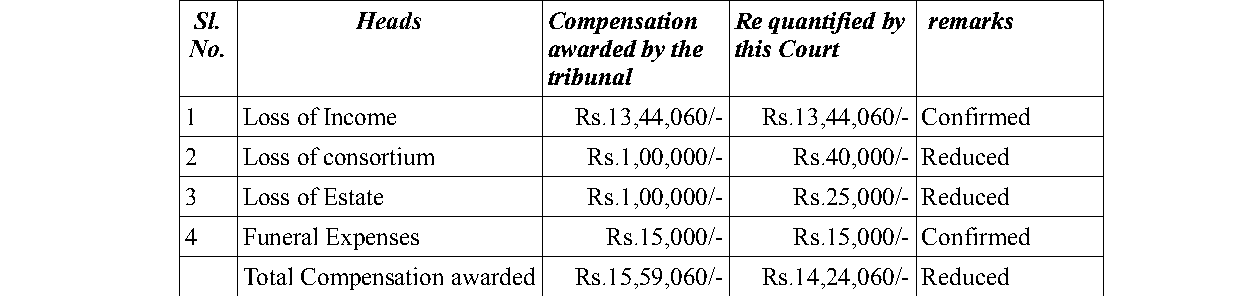
Upon consideration of the entire evidence, the Tribunal rejected the plea of the insurer that the accident occurred due to overloading and consequently declined to exonerate the insurer from liability and awarded the following compensation under various heads:
5.1.M.C.O.P.No.1386 of 2017
5.2. M.C.O.P.No.265 of 2018
5.3. M.C.O.P.No.266 of 2018
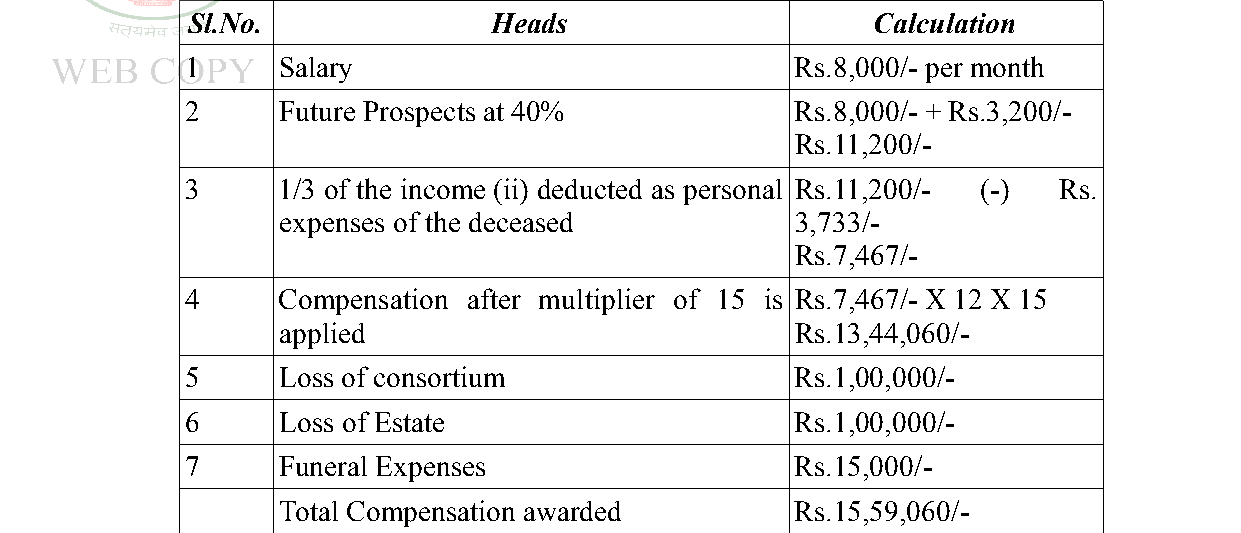
5.4. M.C.O.P.No.625 of 2018
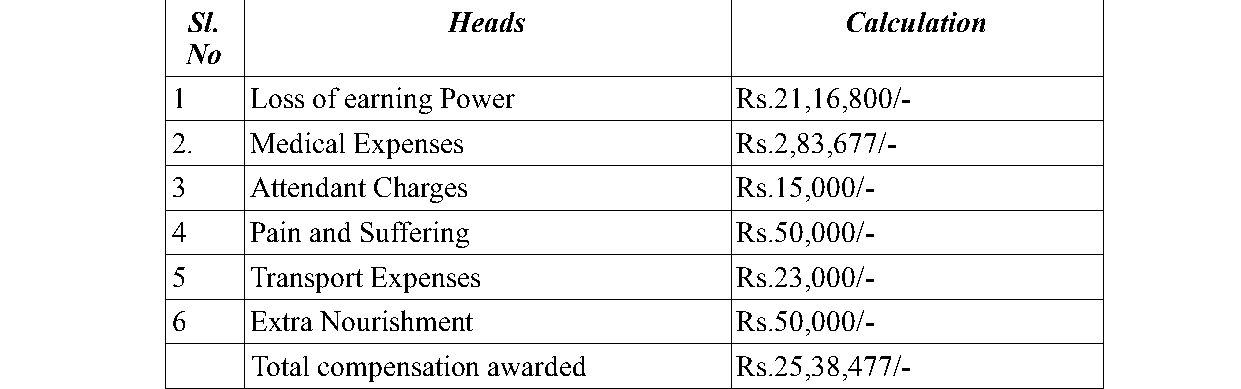
5.5. M.C.O.P.No.678 of 2018
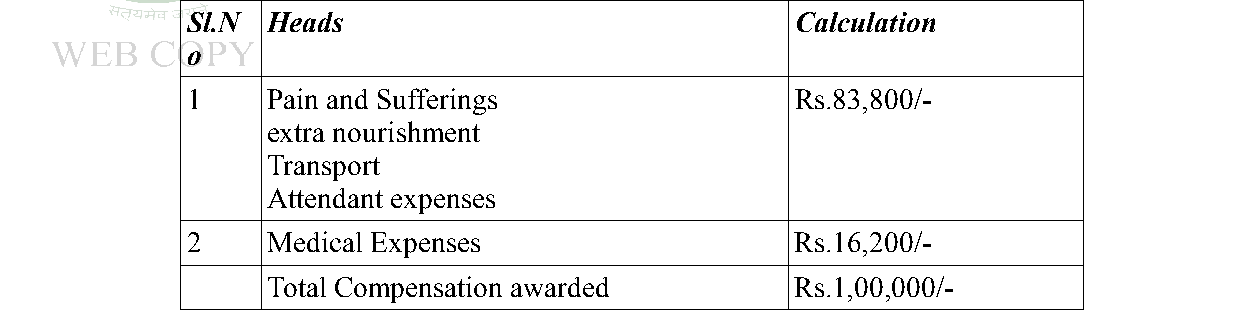
5.6. M.C.O.P.No.704 of 2018
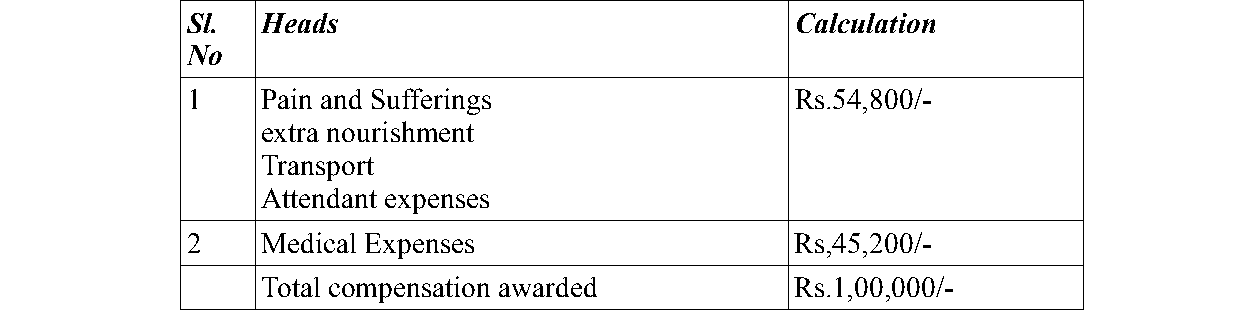
5.7. M.C.O.P.No.2012 of 2018
Aggrieved by the same, the present appeals have been filed.
6. Submissions of the learned counsel appearing for the appellant/insurance company:
The learned counsel for the appellant–insurer contended that there was a fundamental breach of policy conditions, inasmuch as the vehicle carried passengers far in excess of the permitted capacity. It was further submitted that such overloading contributed to the accident, and therefore the insurer cannot be held liable. In the alternative, it was argued that at least a “pay and recovery” order ought to have been passed in view of the violation of permit conditions.
6.1.The learned counsel also assailed the quantum of compensation in certain cases, particularly in M.C.O.P. No. 266 of 2018, contending that excessive amounts were awarded under the heads of loss of consortium and loss of estate.
7. Submissi
An insurer cannot be exonerated from liability for passengers covered under the policy due to vehicle overloading, provided the accident resulted from negligence. 'Pay and recover' applies only to pa....


Insurance liability is limited to the number of passengers as specified in the vehicle's registration, and insurers are not obligated to cover claims for unauthorized passengers.

Insurance liability confined to terms of policy, with provision for pay and recovery for excess claims beyond coverage.

The main legal point established in the judgment is that the Insurance Company cannot be held responsible for the compensation of unauthorized passengers in a goods vehicle when the risk is not cover....
The principle of 'pay and recover' is applicable in motor accident claims involving gratuitous passengers in goods vehicles, requiring the insurance company to satisfy the award to the claimant first....
The main legal point established in the judgment is that the insurance company is not liable to pay compensation for unauthorized passengers in goods vehicles, based on the interpretation of relevant....



An indispensable Tool for Legal Professionals, Endorsed by Various High Court and Judicial Officers
Please visit our Training & Support
Center or Contact Us for assistance

Scan Me!
India’s Legal research and Law Firm App, Download now!


For Daily Legal Updates, Join us on :



 Back to top


