
 Back
Back





BEFORE THE MADURAI BENCH OF MADRAS HIGH COURT
G.K.Ilanthiraiyan, R.Poornima, JJ.
Ajith @ Nalla Mohamed - Appellant
Versus
The State rep. by the Inspector of Police, Soolakkarai Police Station - Respondent
Crl.A(MD)No.329 of 2023
Decided On : 24-02-2026
| Table of Content |
|---|
| 1. facts regarding the case and charges. (Para 2 , 3 , 4 , 5) |
| 2. arguments presented by the appellant and respondent. (Para 6 , 7) |
| 3. discussion on the evidence and its sufficiency. (Para 11 , 12 , 13) |
| 4. principles regarding circumstantial evidence. (Para 14 , 15 , 16) |
| 5. final decision and order. (Para 17) |
JUDGMENT :
G.K. ILANTHIRAIYAN, J.
This appeal is directed as against the Judgment passed in S.C.No.157 of 2017, dated 11.04.2023, on the file of the learned Additional District and Sessions Judge, Virudhunagar.
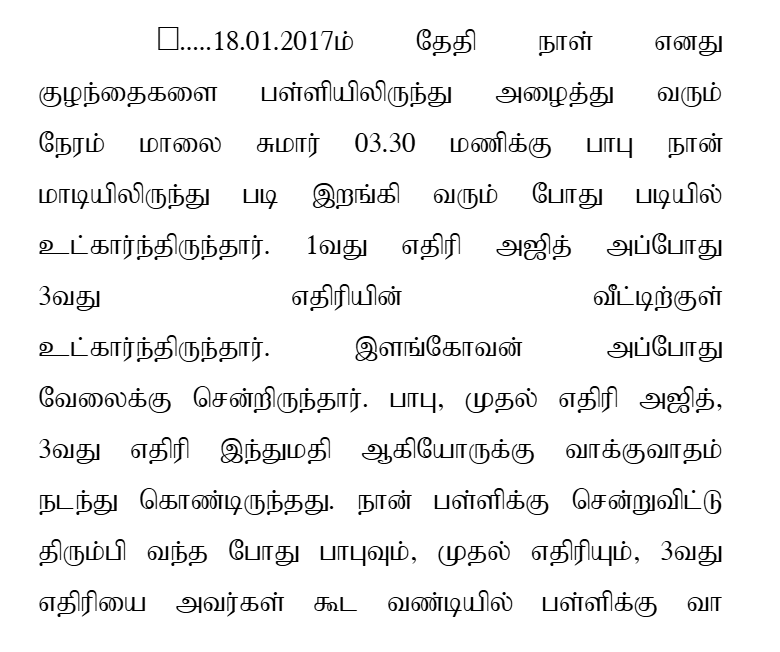
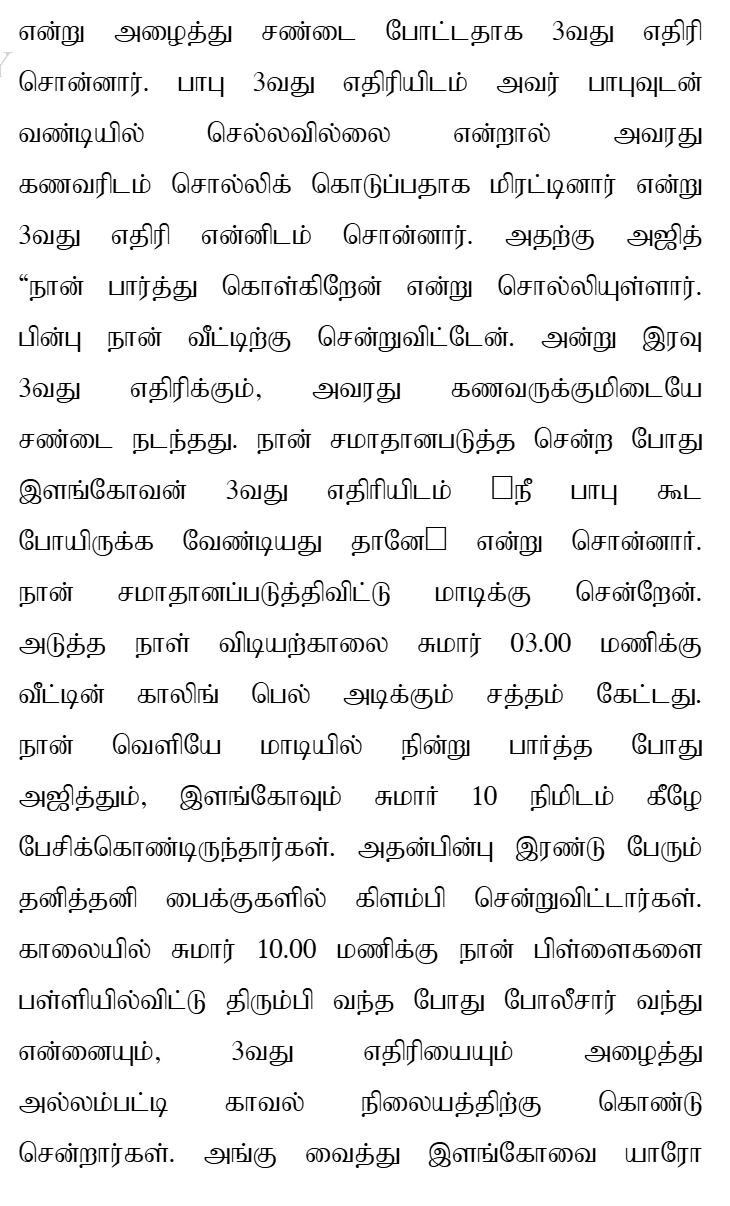
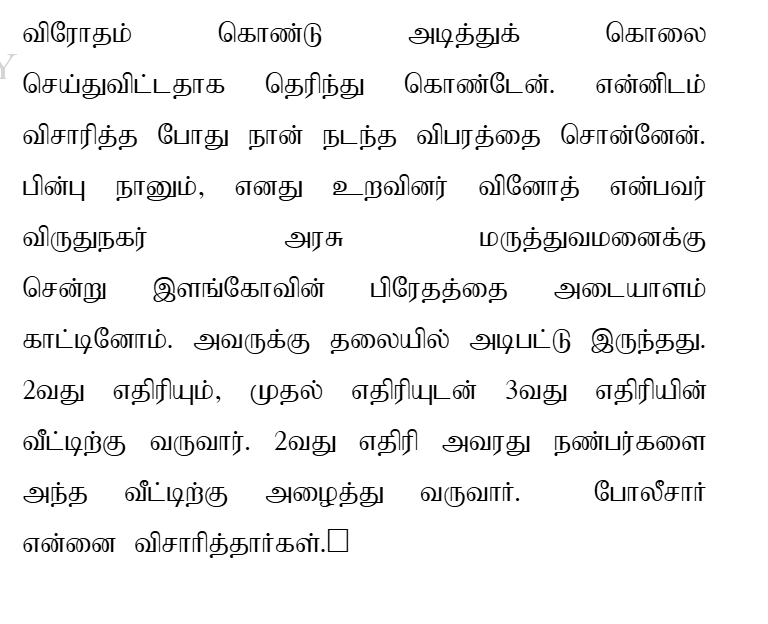
2. The case of the prosecution is that the third accused is the wife of the deceased and the first accused is is her paramour. P.W.11 is a friend of the deceased, who helped him to go for job in abroad. Thereafter, P.W.11 assisted the third accused and the deceased with their family expenses. During this time, the deceased persuaded the third accused to speak with P.W.11 and maintain a close relationship with him, as he was providing financial support to their family. Subsequently, while he was abroad, the third accused developed an illicit relationship with P.W.11. During this time, the third accused became acquainted with the first accused and developed an intimate relationship with him as well. In December 2016, the deceased returned to India and was working in Virudhunagar. Even at that time, the third accused continued her relationship with both the first accused and P.W.11. In fact, P.W.11 gifted a cellphone to the third accused and frequently spoke with her. However, the third accused was more closely intimate with the first accused than with P.W.11. Therefore, once again, the deceased compelled the third accused to continue her relationship with P.W.11 in order to receive monetary assistance. It was informed to the first accused, and therefore all the accused conspired together to do away with the life of the deceased. On 18.01.2017, when the deceased went to work, P.W.11 went to the house of the third accused, and at the same time, the first accused also went there. Therefore, P.W.11 quarreled with the third accused. On the same day night, when the deceased returned home, there was a wordy quarrel between the third accused and the deceased. On the next day, i.e., on 19.01.2017 at about 2:15 a.m., the first accused went to his workplace and took an iron pipe from there. Thereafter, at about 3:00 a.m., the first accused, along with the second accused and another juvenile accused, went to the house of the deceased on their motorcycle and informed him that the sister of the third accused had eloped with someone and was in Kulloorsandai and the third accused directed the deceased to go to that place. Believing their words, the deceased went along with the first accused and others on their motorcycle. They took him to Mathunaickenpatti on Soolakkarai Road, where they scolded him using filthy language. Thereafter, the first accused covered the deceased’s face with a towel, and the juvenile accused assaulted him with an iron pipe. When the deceased attempted to block the blow, the first and second accused pushed him down. Thereafter, the juvenile accused struck him on the back of the head with an iron pipe. As a result, he sustained grievous injuries and died. The accused then damaged the deceased’s two-wheeler with the iron pipe and fled from the scene of occurrence. The next day, Kalidhass, the pump operator of Sollakkarai Panchayat, found the body of the deceased and informed the Panchayat President. The President, in turn, informed the Village Administrative Officer and lodged a complaint.
3. Based on the complaint, an FIR was registered by the Inspector of Police, Soolakkarai Police Station in Cr.No.42 of 2017 for the offences punishable under Section 302 of IPC. After completion of investigation, a final report was filed and the same has been taken cognizance by the trial Court. The trial Court framed the charge under Sections 120-B r/w 302 of IPC, 294, 302 of IPC and Section 3 of Tamil Nadu Public Pro
The prosecution must establish a complete and cogent chain of circumstantial evidence to support a conviction for murder, failing which the accused is entitled to acquittal.

Convictions under circumstantial evidence require a complete and unbroken chain of proof; mere suspicion is insufficient for establishing guilt.

In a murder conviction based on circumstantial evidence, multiple corroborative factors, including the last seen theory and absence of alternative explanations, can establish guilt beyond reasonable ....

Circumstantial evidence must establish a clear chain of events linking the accused to the crime; failure to prove motive or support claims undermines conviction.
Circumstantial evidence must establish a continuous chain without breaks; otherwise, the accused is entitled to acquittal due to reasonable doubt.
The court reaffirmed that conviction based solely on circumstantial evidence requires clear establishment of motive, last seen theory, and connections through unbroken chains of evidence.

The central legal point established in the judgment is the requirement for cogent and unerring circumstantial evidence to establish guilt in cases based on such evidence, and the burden on the prosec....


The main legal point established in the judgment is the application of the 'last seen together theory' and the reliance on circumstantial evidence, medical evidence, and recovery evidence to establis....
In a murder case based on circumstantial evidence, mere last seen testimony is insufficient; a clear chain of circumstances must be established to support a conviction.



An indispensable Tool for Legal Professionals, Endorsed by Various High Court and Judicial Officers
Please visit our Training & Support
Center or Contact Us for assistance

Scan Me!
India’s Legal research and Law Firm App, Download now!


For Daily Legal Updates, Join us on :



 Back to top


