
 Back
Back





IN THE HIGH COURT OF ALLAHABAD
JAYANT BANERJI, J.
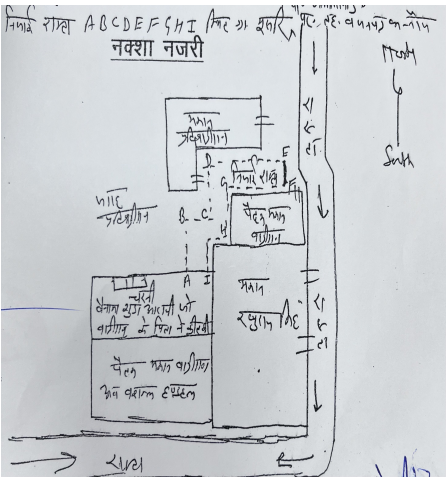
Upendra Singh @ Avdhesh Singh And 2 Others - Petitioners
Versus
Rajveer Singh And Another - Respondents
MATTERS UNDER ARTICLE 227 NO. 11046 OF 2023.
Decided On : 13-12-2023
| Table of Content |
|---|
| 1. initial hearing and status of caveat application. (Para 1 , 2) |
| 2. challenge to temporary injunction order and property dispute. (Para 3 , 4 , 5) |
| 3. arguments regarding trial court's decision on injunction. (Para 6 , 7) |
| 4. court's observations on procedural record and evidence. (Para 8 , 11) |
| 5. description of disputed property and plaintiffs' claims. (Para 9 , 10) |
| 6. appellate court's assessment of evidence and balance of convenience. (Para 12 , 13) |
| 7. clarification of appellate court's oversight regarding injunction. (Para 14 , 15) |
| 8. consideration of easement rights and necessity of evidence. (Para 16 , 17) |
| 9. final decision on maintaining status quo pending fresh appellate review. (Para 18 , 19) |
JUDGMENT
Jayant Banerji, J.
Heard Shri. Sujeet Kumar, learned counsel for the petitioners and Shri. Shiv Nath Singh, learned Senior Advocate assisted by Shri. Ravesh Kumar Singh, Advocate for the respondents.
2. Shri. Ravesh Kumar Singh, Advocate states that he had filed a caveat application on 26.10.2023 which has neither been reported nor is on record. However, the vakalatnama is not on record. Office is directed to trace out the same and place it on record.
3. By means of the instant petition, an order dated 04.10.2023 passed by the Additional District and Sessions Judge/F.T.C.-I, Kannauj passed in Misc. Civil Appeal No.32 of 2022 has been challenged, whereby an order of temporary injunction granted by the trial court on 03.12.2022 in Original Suit No.369 of 2022 was set aside.
4. The contention of the learned counsel for the petitioners is that the property in dispute is a 'rasta' (path) that separates the houses of the plaintiffs and the defendants. The plaintiffs had instituted the aforesaid suit seeking mandatory injunction directing the defendants for removing the constructions made in respect of the areas marked as A, I, & E, F in the plaint map. Thereafter, an application paper no.16-C2 seeking temporary injunction under Order XXXIX Rules 1 and 2 read with section 151 CPC dated 16.09.2022 was filed for restraining the defendants from changing the nature of the path and from not making any constructions thereon as well as from obstructing the passage of the plaintiffs on the path by constructing a wall or doing such other work thereon, which would adversely affect the rights of the plaintiffs. It appears that a written statement was filed by the defendants and a report of the court bailiff was called for by the trial court. The court bailiff submitted a report dated 06.08.2022 along with a site map.
5. By the order dated 03.12.2022, an injunction restraining the defendants from making interference in the possession of the plaintiffs over the suit property, was granted. Challenging the aforesaid order of temporary injunction, an appeal was filed that came to be allowed by means of the impugned order and the order dated 03.12.2022 was set aside.
6. The contention of the learned counsel for the petitioners is that the trial court had justifiably granted the injunction order after taking into account the factual situation as well as the amin report that was on record. It is stated that the three aspects of prima facie case, balance of convenience and irreparable injury were duly considered by the trial court before granting the order of temporary injunction. It is further contended that the court ought not to permit the nature of the property to be changed which also includes alienation or transfer of the property which may lead to loss or damage being caused to the party who may ultimately succeed and may further lead to multiplicity of proceedings. In this regard, the learned counsel for the petitioners has referred to a judgment of the Supreme Court in Maharwal Khewaji Trust, Faridkot v. Baldev Dass reported in (2004) 8 SCC 488.
7. Shri. Shiv Nath Singh, learned Senior Advocate for the respondents has strongly opposed this petition and has referred to the detailed order passed by the appellate court to contend that
AI
The court emphasized that granting a temporary injunction requires clear evidence of a prima facie case, balance of convenience, and irreparable injury, which were inadequately established by the pla....

A plaintiff can seek a temporary injunction to protect an easementary right even if a formal declaration of that right has not been made, provided they can demonstrate a prima facie case and the abse....

Concurrent findings of facts and law recorded by the lower courts cannot be interfered with unless found to be perverse.

Revenue records do not confer title or prove possession against commissioner report and admissions showing physical division by road and fencing; injunction suit maintainable on possession without de....

The plaintiff must prove the existence of a path through the defendant's land to claim permanent prohibitory injunction. The suit must be framed as per the requirement of Order 7 Rule 3 CPC.

In a suit for permanent injunction, the burden of proof lies on the plaintiffs to establish their right to the property, which they failed to do.

The dissolution of previous rights after land acquisition and the plaintiff's failure to challenge the acquisition proceedings.

Sale deed recital prima facie creates easement by grant for bullock cart way, entitling temporary injunction subject to compensation for tree removal, balancing equities; appellate court may reverse ....

Implied easement rights for property use transfer automatically, barring explicit contradictory intentions in property deeds.

Consistent recitals in prior sale deeds establish common pathway rights, prevailing over later exclusive claims absent explanation.



An indispensable Tool for Legal Professionals, Endorsed by Various High Court and Judicial Officers
Please visit our Training & Support
Center or Contact Us for assistance

Scan Me!
India’s Legal research and Law Firm App, Download now!


For Daily Legal Updates, Join us on :



 Back to top


