
 Back
Back


IN THE HIGH COURT OF ALLAHABAD
Hon'ble Ajit Kumar,J.
Padam Singh – Appellant
Versus
State of U.P. – Respondent
JUDGMENT :
Ajit Kumar, J.
1. Heard Sri Vinod Kumar Mishra, learned counsel for the petitioner and learned Standing Counsel appearing for the State respondents.
2. By means of present petition filed under Article 226 of the Constitution, petitioner has prayed for a writ of certiorari to quash the order of punishment dated 1st March, 2015 in the nature of dismissal from service as well as appellate order dated 29th April, 2019 and the order dated 24th July, 2019 passed in revision.
3. The only short legal point argued before this Court is that enquiry officer could not have proposed punishment in the ultimate finding part of the enquiry report whereas in the present case enquiry officer/circle officer, Baghpat while submitting enquiry report on 12th January, 2015 also made a recommendation for dismissal from service to be given effect to with the final approval by the authority and also “No Pay for No Work” for the 458 days.
4. Learned counsel for the petitioner has placed reliance of Rule 14(1) with appendix of the U.P. Police Officer of Subordinate Ranks (Punishment and Appeal) Rules, 1991. The relevant rules and are reproduced hereunder:
“14(1) Procedure for conducting departmental proc
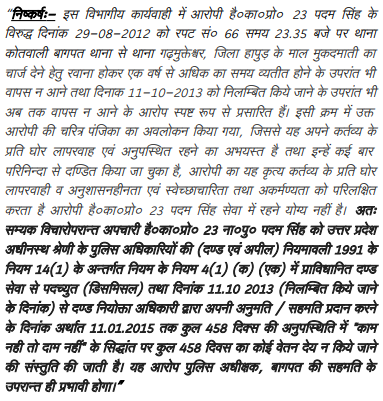
The enquiry officer exceeded authority by proposing punishment, which vitiated the enquiry report; only the disciplinary authority can impose punishment.

The Inquiry Officer must provide punishment recommendations separately from the inquiry report, ensuring adherence to procedural fairness and the exclusive jurisdiction of the disciplinary authority.

Punishment of dismissal of service should be awarded for gravest act of misconduct.


The court upheld the dismissal of a police constable for misconduct, affirming that the disciplinary proceedings adhered to natural justice and the punishment was proportionate to the charges proved.

The central legal point established in the judgment is the requirement for disciplinary authorities to base their findings on cogent reasons, seek explanation before inflicting major penalty, and pro....

Judicial review in disciplinary matters allows interference where procedural fairness is lacking and reliance on preliminary findings without proper evidence violates natural justice.


The main legal point established in the judgment is the substantial compliance with the procedural rules and the requirement for evidence to support the charges in a departmental enquiry.



An indispensable Tool for Legal Professionals, Endorsed by Various High Court and Judicial Officers
Please visit our Training & Support
Center or Contact Us for assistance

Scan Me!
India’s Legal research and Law Firm App, Download now!


For Daily Legal Updates, Join us on :

 Back to top


