
 Back
Back





IN THE HIGH COURT OF JUDICATURE AT ALLAHABAD
J.J. Munir, J.
Smt Sheela Dubey - Petitioner
Versus
State of U.P. and others – Respondents
WRIT - A No. - 3515 of 2023
Decided On : 06-10-2025
| Table of Content |
|---|
| 1. petitioner's claim for family pension denial based on service rules. (Para 1 , 2 , 3 , 5 , 6) |
| 2. government orders' applicability for family pension entitlement. (Para 4 , 7 , 11 , 12 , 13 , 14 , 15) |
| 3. judicial review process of the writ petition. (Para 8 , 9 , 10) |
| 4. arguments on the interpretation of regulatory amendments. (Para 19 , 20) |
| 5. legal entitlement affirmed under family pension rules. (Para 22 , 29) |
| 6. final order and directives for pension disbursement. (Para 30 , 31 , 32) |
JUDGMENT :
J.J. MUNIR, J.
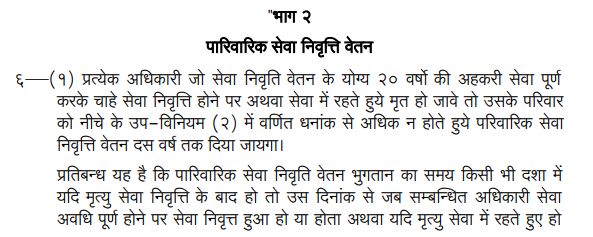
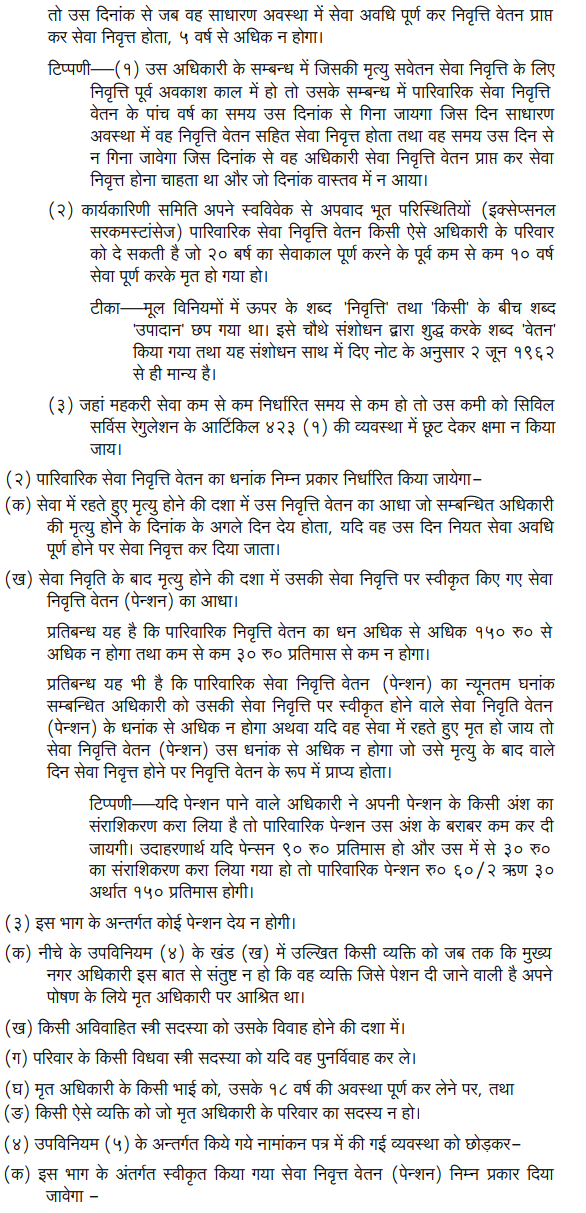
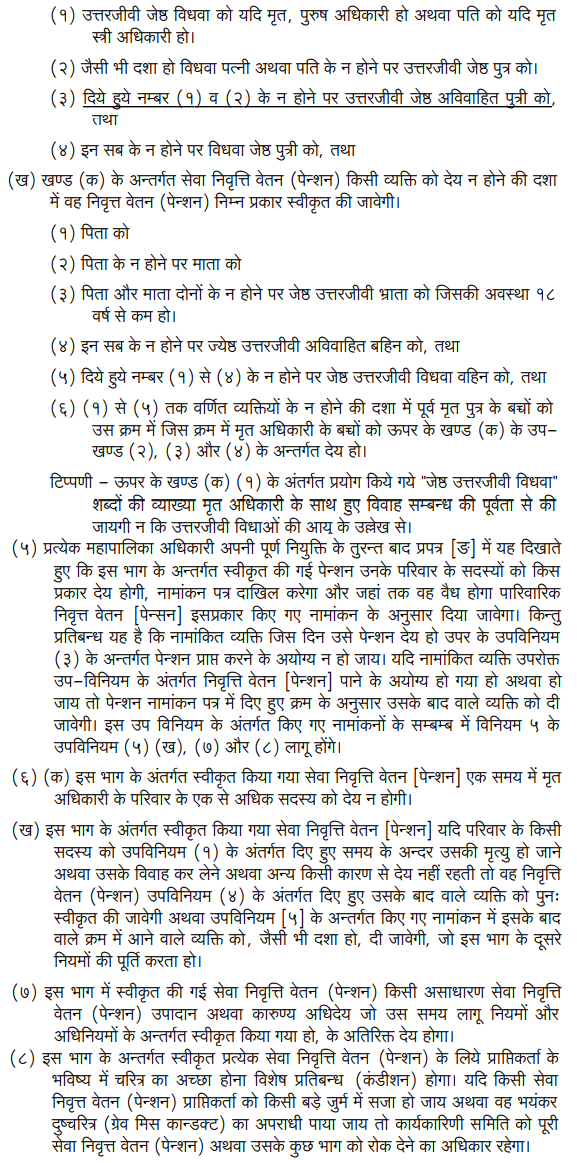
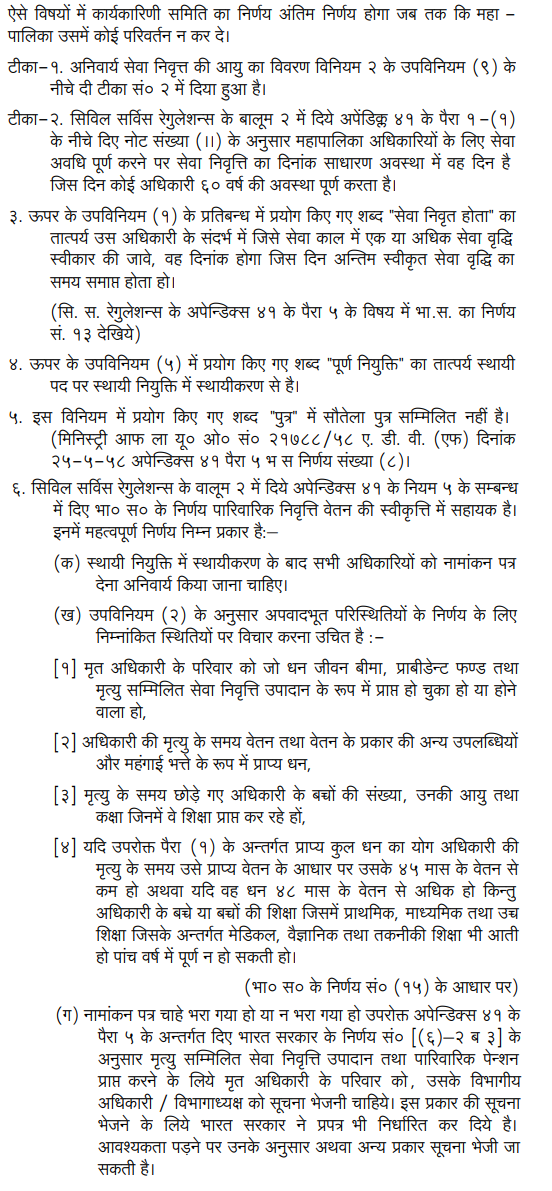
1. This writ petition is directed against an order dated 28.01.2023, rejecting the petitioner's claim for grant of family pension. By amendment made to the writ petition under orders of this Court, the petitioner seeks a writ in the nature of certiorari to quash the Uttar Pradesh Palika (Centralized) Services Rules, 1966 (for short, 'the SERVICE RULES of 1966') to the extent that these do not provide similar treatment in the matter of grant of family pension to employees of the Nagar Nigam, Kanpur Nagar, on one hand, and members of the centralized service, on the other. A further writ, order or direction in the nature of certiorari is prayed to quash the amendments made vide Notification dated 11.01.1988 (for short, ‘the Amendment of 1988’), published in the Gazette, to the extent it repeals Regulation 6 of the Kanpur Nagar Mahapalika Employees Pension and General Provident Fund Regulation s, 1962 (for short, 'the Regulations of 1962').
2. Smt. Sheela Dubey, the petitioner, is a widow. She is the daughter of Saraswati Narayan Tiwari, who was a Class-III employee with the Nagar Nigam, Kanpur Nagar (for short, 'the Nigam'). It is not in dispute that Saraswati Narayan Tiwari retired from the service of the Nigam in the year 1992, earning a retirement pension, amongst other post retiral benefits. There is also no cavil about the fact that Saraswati Narayan Tiwari received his retirement pension until his demise on 18.11.2013. After he passed away, his widow, Smt. Katyayani Tiwari claimed and was paid a family pension in accordance with rules. Katyayani Tiwari received her retirement pension until her demise on 23.07.2016. This course of nature would not have brought misfortune for the petitioner, but for the fact that the petitioner's husband, Anil Kumar, pre-deceased both his father-in-law and mother-in-law, exiting this mortal world on 11.05.2012.
3. Whatever the late Anil Kumar’s financial affairs be, it is not in dispute that the petitioner, after her husband’s demise, came over to her parents’ house and lived with them. After her father’s demise, she stayed on with her mother. It is her case that the only source of income, after her husband’s demise, was her father’s retirement pension, till he was alive, and, after his death, the family pension that her mother received for her father’s services. The petitioner claimed a family pension, after her mother’s demise, for her father’s services, she being a widowed daughter, who had become a widow before her father’s demise and was entirely dependent upon his pension for her sustenance.
4. In order to support her claim to receive a family pension, on account of her father’s demise, being a widowed daughter, dependent upon him, and after him her mother, the petitioner relied upon Government Orders dated 03.12.2012, 20.05.2014, 11.11.2019 and 07.04.2022. She said that these Government Orders entitled a widowed daughter, circumstanced as she was, to receive a family pension for her father’s services, rendered with the Nigam. We would make necessary allusion to the last mentioned Government Orders, four in number, during the course of this judgment. She put forward her claim to family pension, annexing all relevant documents, which included a certificate of family members of the deceased, besides the Government Orders, on which she relied. This claim was made before the Nagar Ayukt of the Nigam. There was a repetition and reminder of the claim before the Nagar Ayukt,
AI
Widowed daughters are entitled to family pension under regulations governing non-centralized services, affirming principles of equality and dependency despite amendments and previous rule interpretat....

A married daughter cannot claim family pension under the Rajasthan Civil Services (Pension) Rules, 1996, if she was married at the time of her father's death.

The right to receive family pension under statutory provisions is in the nature of property and cannot be denied without due process of law. Administrative actions affecting parties must adhere to pr....


The court ruled that the retrospective application of the family pension scheme must be interpreted liberally to benefit dependents, emphasizing adherence to natural justice before withdrawing vested....


The court affirmed the entitlement of a married disabled child to family pension from the date specified in an Office Memorandum, irrespective of procedural discrepancies in application.

Point of Law : Provisions of Pension Scheme is discriminatory on the ground of Sex (gender) as only unmarried daughter is entitled to get the family pension life time on other hand there is discrimin....

The denial of family pension based on unreasonable deductions of service years violates legal principles of fairness; unmarried dependent daughters are entitled to pension as per amended Rule 143.



An indispensable Tool for Legal Professionals, Endorsed by Various High Court and Judicial Officers
Please visit our Training & Support
Center or Contact Us for assistance

Scan Me!
India’s Legal research and Law Firm App, Download now!


For Daily Legal Updates, Join us on :



 Back to top


