Back
Back





2026 Supreme(All) 607
HIGH COURT OF JUDICATURE AT ALLAHABAD
KSHITIJ SHAILENDRA, J.
Tara Chand and others – Petitioners
Versus
State of U.P. and others – Respondents
Matters Under Article 227 No. 54 of 2022
Decided On : 22-05-2026
For the Petitioners: Suman Kumar Yadav, Usha Kiran
For the Respondents: C.S.C., Sumit Daga.
An executing court cannot go behind a decree, and supervisory jurisdiction under Article 227 cannot be invoked to challenge a final decree or executed proceedings after several decades of delay, particularly when the party participated in the proceedings and failed to pursue statutory remedies in time.
Headnote:(A) Constitution of India - Article 227 - Civil Procedure Code, 1908 - Sections 2(11), 47, 50, 146; Order VII Rule 14, Order XXI Rules 54, 72 - Execution of decree - Powers of High Court under supervisory jurisdiction - An ex-parte decree cannot be challenged under Article 227 after over three decades when remedies under civil law were available and exhausted - Executing court cannot go behind the decree; once issues regarding validity were raised and decided in execution proceedings, they attain finality - Appellate court should not intervene in execution proceedings via supervisory jurisdiction where the party had participated in the process and failed to challenge orders in a timely manner. (Paras 19, 21, 23, 33, 34, 36)
(B) Execution - Legal Representative - Status of - As per Section 2(11), a person representing the estate of deceased or inter-meddling with it is a legal representative; decree can be executed against them. (Para 22)
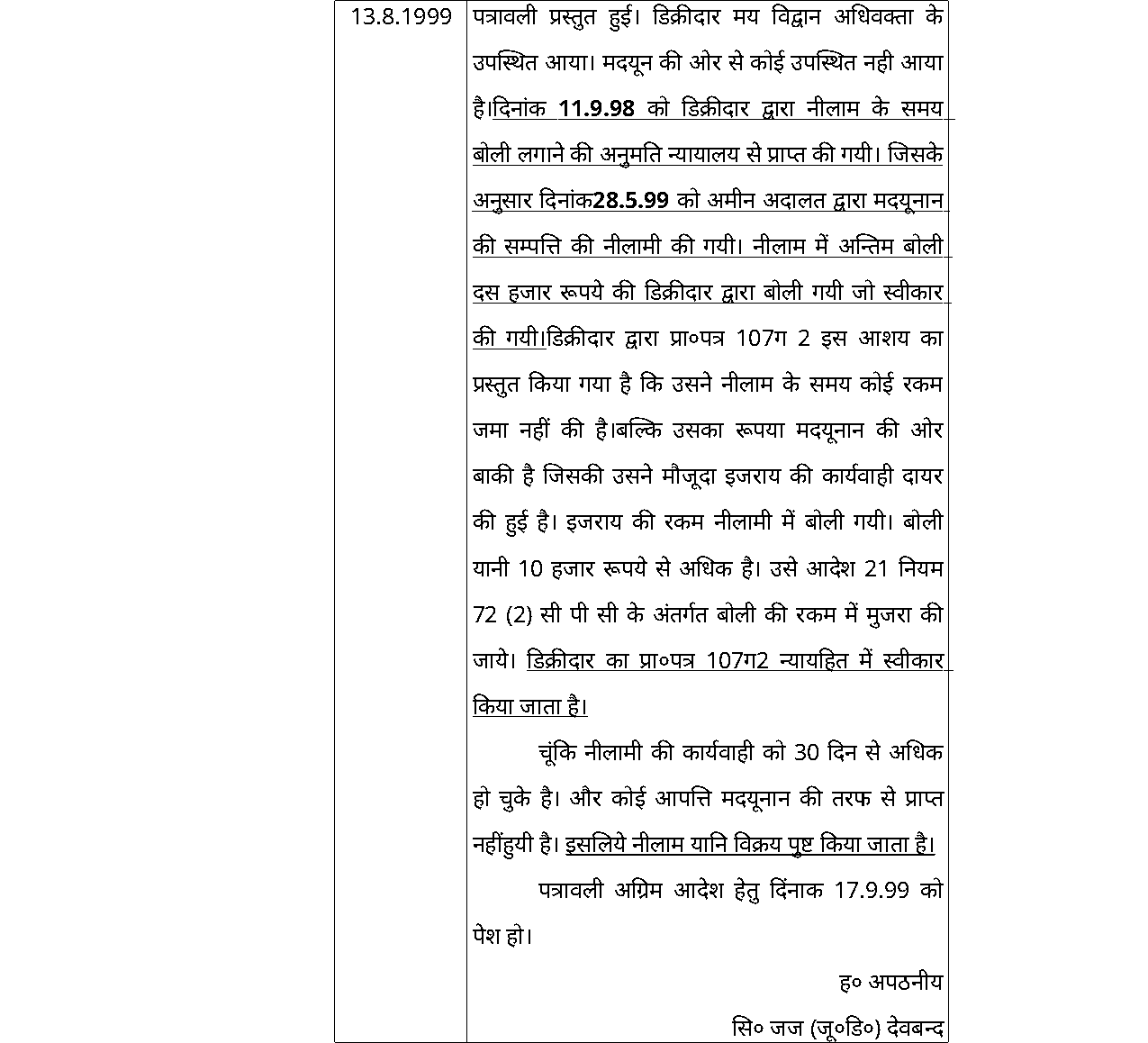
(C) Civil Procedure - Auction - Decree holder as bidder - Under Order XXI Rule 72, a decree holder may bid for or purchase property with express permission of the court; such sale remains valid if procedural due process is followed and objections are adjudicated. (Paras 28, 31)
Facts of the case:
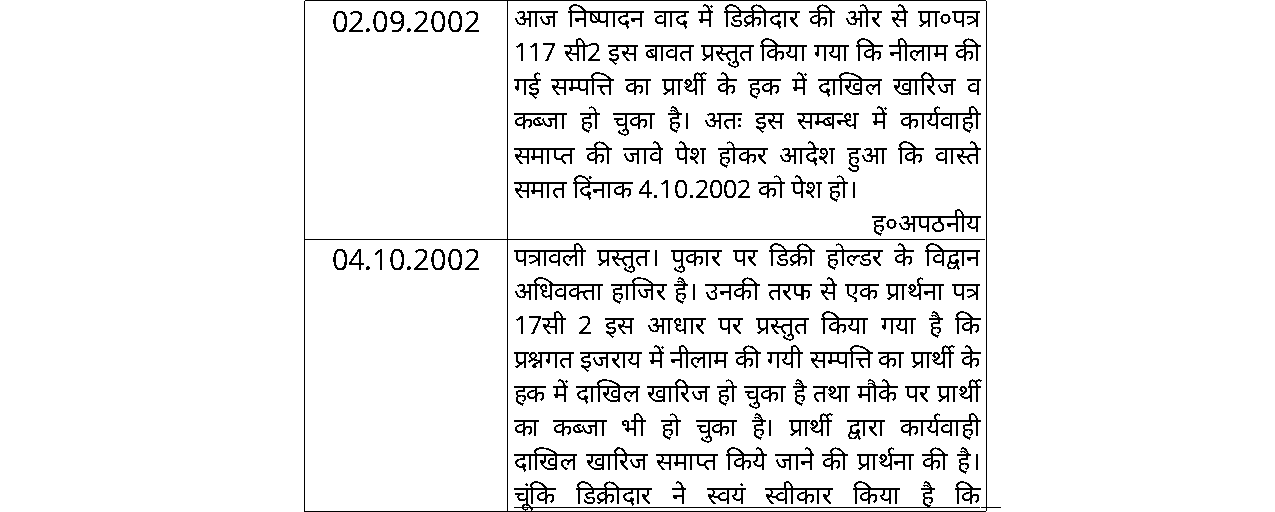
The petition was filed by legal representatives of a judgment debtor challenging an ex-parte money decree passed in 1985 and subsequent execution proceedings, including an auction sale and delivery of possession finalized in 2002. Petitioners alleged lack of knowledge of proceedings and procedural irregularities. Respondents contended that petitioners participated in execution proceedings, raised objections, and that the petition, filed after decades, was barred by laches and not maintainable.
Findings of Court:
The court held that the decree had attained finality, the execution proceedings were conducted in accordance with law, and the petitioners’ claims of ignorance were contradicted by the record of their active participation and previous objections. The remedy under Article 227 cannot be used to reopen settled matters or challenge a decree decades later.
Issues: Whether a challenge to an ex-parte decree filed decades later, and to execution proceedings that had long since culminated, is maintainable under Article 227 of the Constitution; and whether the executing court erred in the auction procedure.
Ratio Decidendi: A court executing a decree cannot go behind it. When the statutory remedies under the Civil Procedure Code have been exhausted or lapsed due to extreme delay (laches), the High Court’s supervisory jurisdiction cannot be invoked to reopen finalized civil proceedings or set aside a decree that has bound the parties for decades.
Result: Petition dismissed with costs.
| Table of Content |
|---|
| 1. overview of the petition, factual background, and legal challenge. (Para 1 , 2 , 3) |
| 2. summary of competing arguments and procedural contentions regarding the execution. (Para 4 , 5 , 6 , 7 , 8 , 9 , 10 , 11 , 12 , 13 , 14 , 15 , 16) |
| 3. high court's supervisory jurisdiction under article 227 vs. cpc remedial remedies. (Para 17 , 18 , 19 , 20 , 21) |
| 4. enforcement of money decrees against legal representatives of judgment debtors. (Para 22 , 23) |
| 5. compliance with order xxi rules for attachment and auction of immovable property. (Para 24 , 25 , 26 , 27 , 28 , 29 , 30 , 31 , 32) |
| 6. executing courts cannot go behind the decree; finality of civil judgments. (Para 33 , 34 , 35 , 36) |
| 7. applicability of legal precedents based on factual consistency and alternative remedies. (Para 37 , 38 , 39 , 40) |
| 8. court's disapproval of procedural conduct and abuse of judicial time. (Para 41 , 42 , 43 , 44 , 45) |
| 9. finding of abuse of process regarding misleading pleadings and false premises. (Para 46 , 47 , 48) |
| 10. final order dismissing the petition, imposing costs, and mandating compliance. (Para 49 , 50 , 51 , 52 , 53 , 54) |
JUDGMENT :
KSHITIJ SHAILENDRA, J.
1. Heard Ms. Usha Kiran, learned counsel for the petitioners, learned Standing Counsel on behalf of respondents No.1 and 2 and Shri Sumit Daga, learned counsel for respondents No. 4 to 8.
The Challenge
2. This petition under Article 227 of the Constitution of India has been filed by legal representatives of the defendant in Original Suit (‘OS’) No. 83 of 1984 filed by plaintiff-respondent No.3, challenging judgment and order dated 01.01.1985 passed in the suit as well as order dated 08.08.1993 passed by learned Munsif, Deoband, Saharanpur in Execution Case No.8 of 1989. Further prayer has been made to issue a direction to respondent No.2 i.e. Up-Ziladhikari, Tehsil Deoband, District Saharanpur not to dispossess the petitioners from the land in dispute, i.e. Khasra No.160, area 1.054 hectares, situated at Village Nandheda Khurd, Pargana and Tehsil-Deoband, District Saharanpur.
Brief facts as stated in the petition
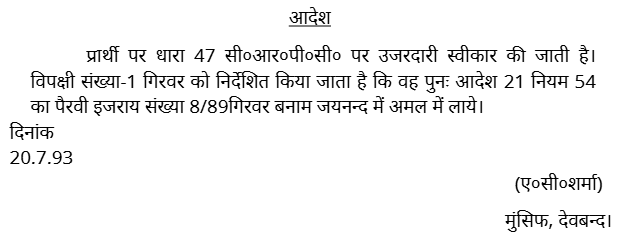
3. The case of the petitioners is that the suit was filed against their father for return of a sum of Rs.8,000/- and the same was decreed ex- parte on 01.01.1985 directing the defendant to return the money along with 6% interest per annum. The decree was put into execution in 1986. The defendant/judgment debtor died in the year 1988. The execution case was dismissed for want of prosecution, whereafter, the respondent No.3 filed another execution application in 1989 against the petitioners and on 08.08.1993, learned Munsif, without affording any opportunity to the petitioners, restrained them from selling, donating or transferring the property to any person, whereafter, an order was passed on 26.08.1993 for seizure of the property. Further case of the petitioners is that on 20.11.2012, respondent No.3 along with revenue authorities came to the land in dispute and attempted to measure the property for taking possession over the land and, only then, the petitioners came to know about the ex-parte proceedings initiated and decided against their father, prior to which they had no knowledge.
4. The grounds taken in petition are that the orders impugned were ex-parte; were issued without serving any notice upon the petitioners; were passed against principles of natural justice and since the petitioners are in actual and physical possession over the land and were not aware of the loan taken by their father, the orders being illegal and without jurisdiction, are liable to be set aside.
Supplementary Affidavit
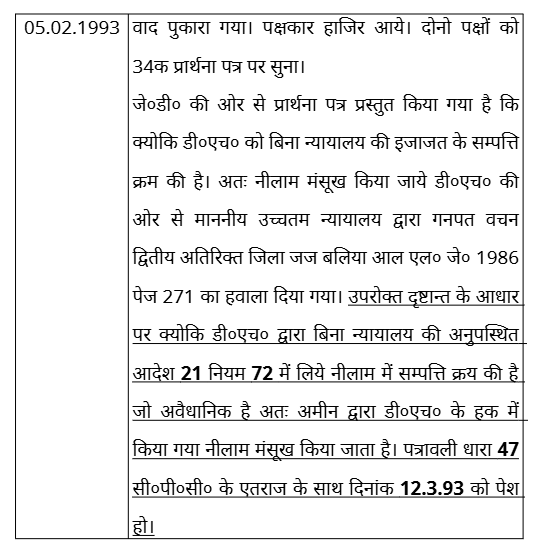
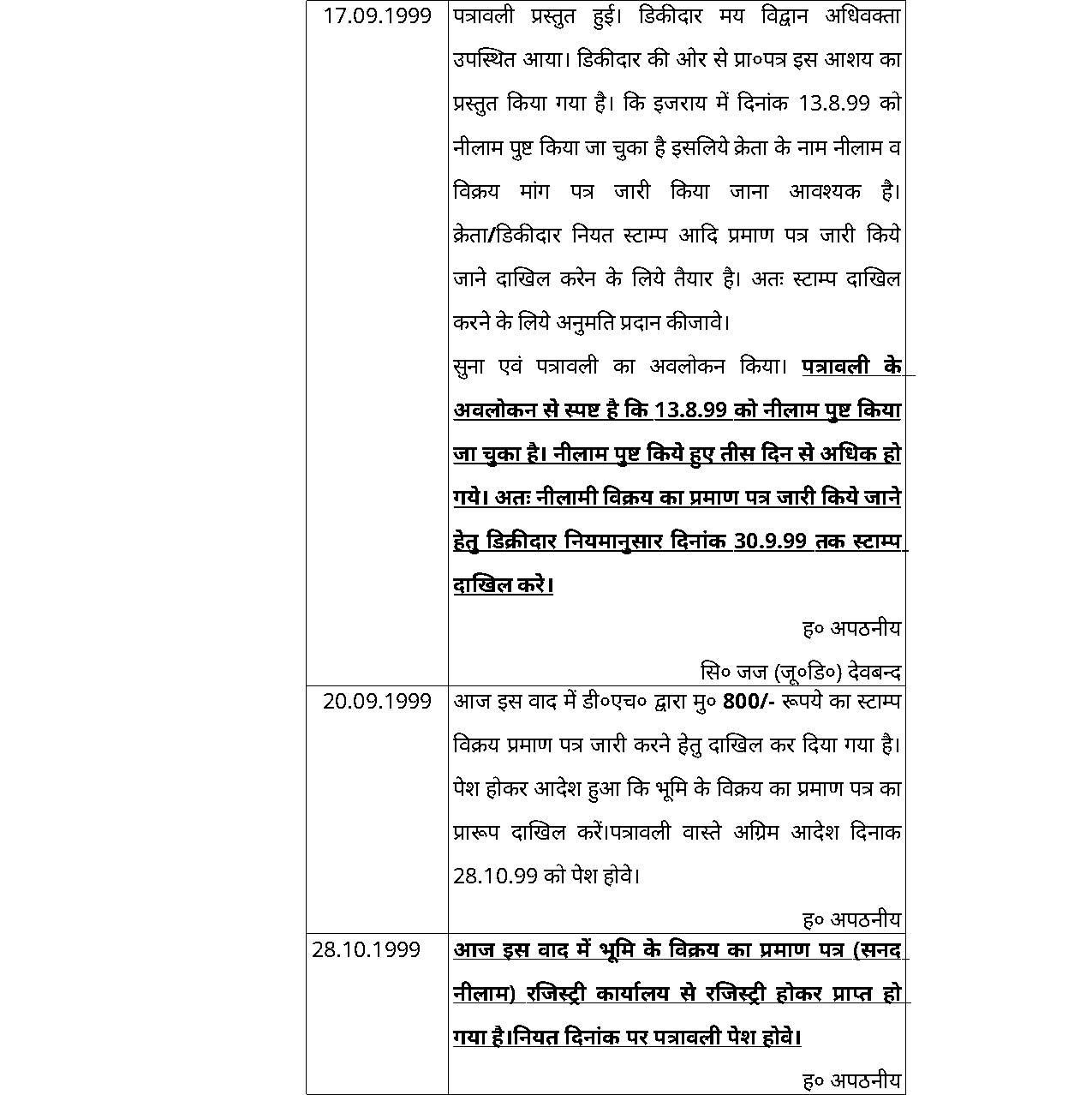
5. A supplementary affidavit dated 10.08.2025 filed on 16.02.2026 is on record annexing therewith certified copy of the selective order sheet of execution case and stand taken in the affidavit is that though the objections filed by the petitioners under Section 47 CPC were directed to be taken on record fixing 20.07.1993, the same were not decided and the executing court proceeded to