
 Back
Back





IN THE HIGH COURT OF KERALA AT ERNAKULAM
MOHAMMED NIAS C.P., J
Vishnu S. - Appellant
Versus
The State of Kerala - Respondent
WP(C) NO. 5487 OF 2021
Decided On : 10-11-2025
Petitioners' Grievance: - Petitioners challenge the regularization of contract/daily wage employees by various state instrumentalities as illegal and violative of equality and fair opportunity in public employment. (!) (!) - Petitioners claim they are qualified candidates from PSC ranked lists who were deprived of opportunities due to backdoor regularizations without proper selection. (!) (!) (!) (!) (!) - Regularizations ignore government orders limiting contract appointments to short durations and mandating PSC recruitment for sanctioned posts. (!) (!) (!) (!) (!)
Respondents' Defense: - Respondents argue the writ lacks maintainability due to non-joinder of regularized employees and petitioners' lack of locus standi as non-applicants without personal rights. (!) (!) (!) (!) - Institutions claim independent recruitment rules not under PSC, with selections via transparent processes, and regularizations as one-time policy for long-serving employees on sanctioned posts. (!) (!) (!) (!) (!) (!) (!) (!) - Regularizations justified by over 10 years continuous service, qualifications, and institutional exigencies, without court orders protecting continuance. (!) (!) (!) (!) (!) (!) (!)
Court's Analysis on Principles: - Public employment requires strict adherence to equality, transparency, and prescribed procedures; temporary appointments only for exigencies, not as route to regularization. (!) (!) (!) (!) (!) (!) (!) (!) (!) - Distinction between illegal appointments (void ab initio, no regularization) and irregular ones (minor procedural issues, eligible for one-time regularization if on sanctioned posts with 10+ years service, no court protection). (!) (!) (!) (!) (!) (!) - State instrumentalities bound by constitutional mandates; long service or humanitarian grounds alone insufficient without valid initial process and sanctioned posts. (!) (!) (!) (!) (!) (!) (!) (!)
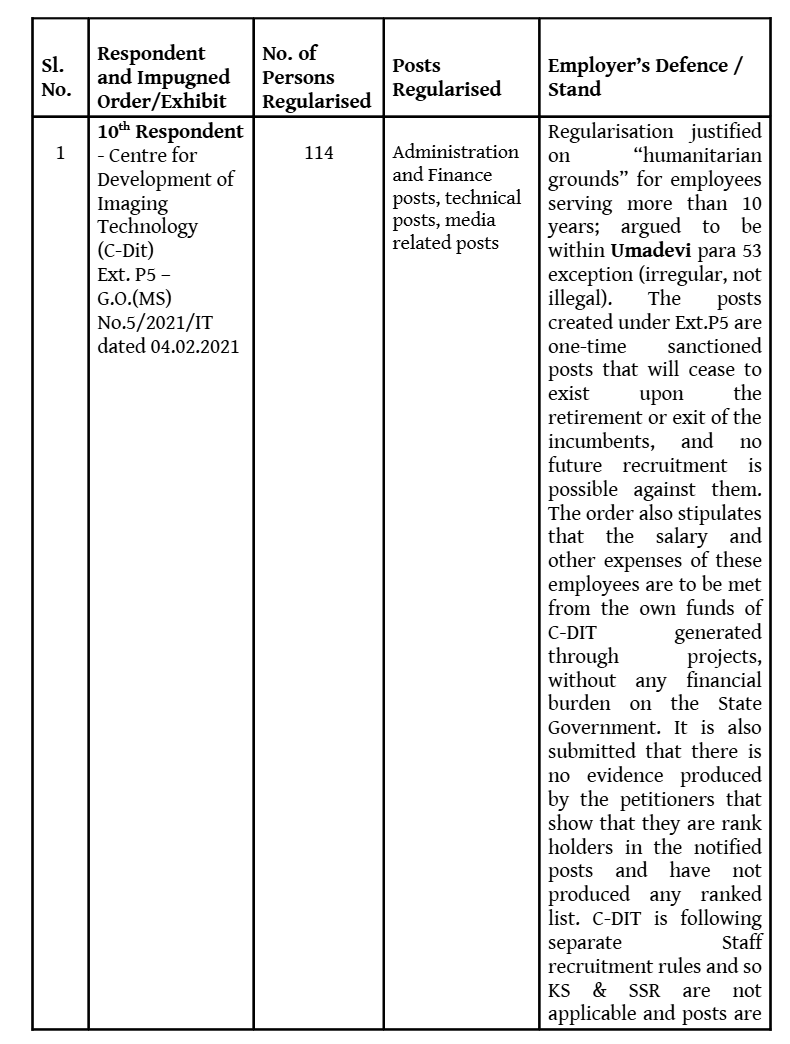
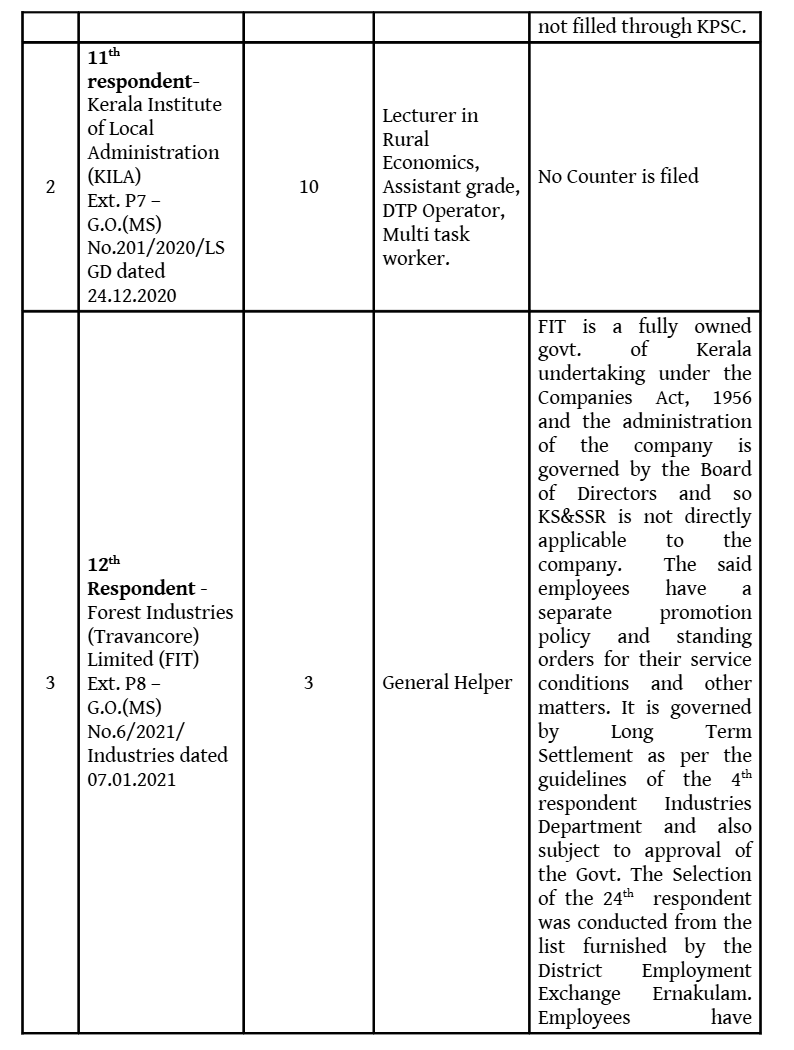
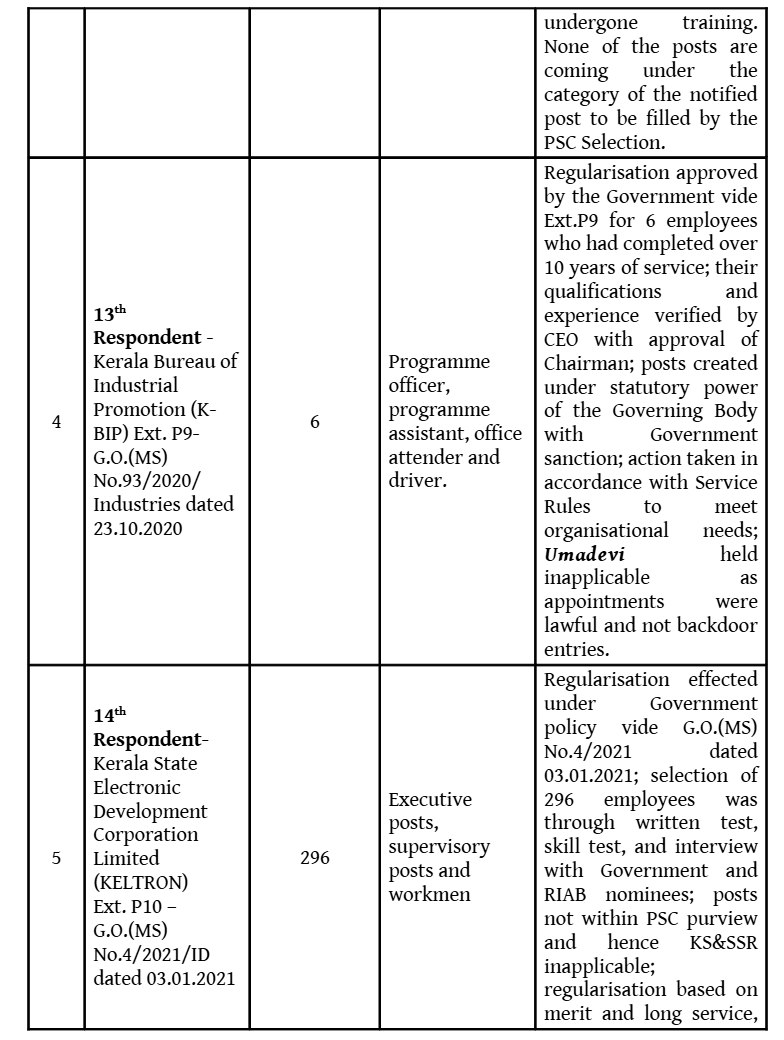
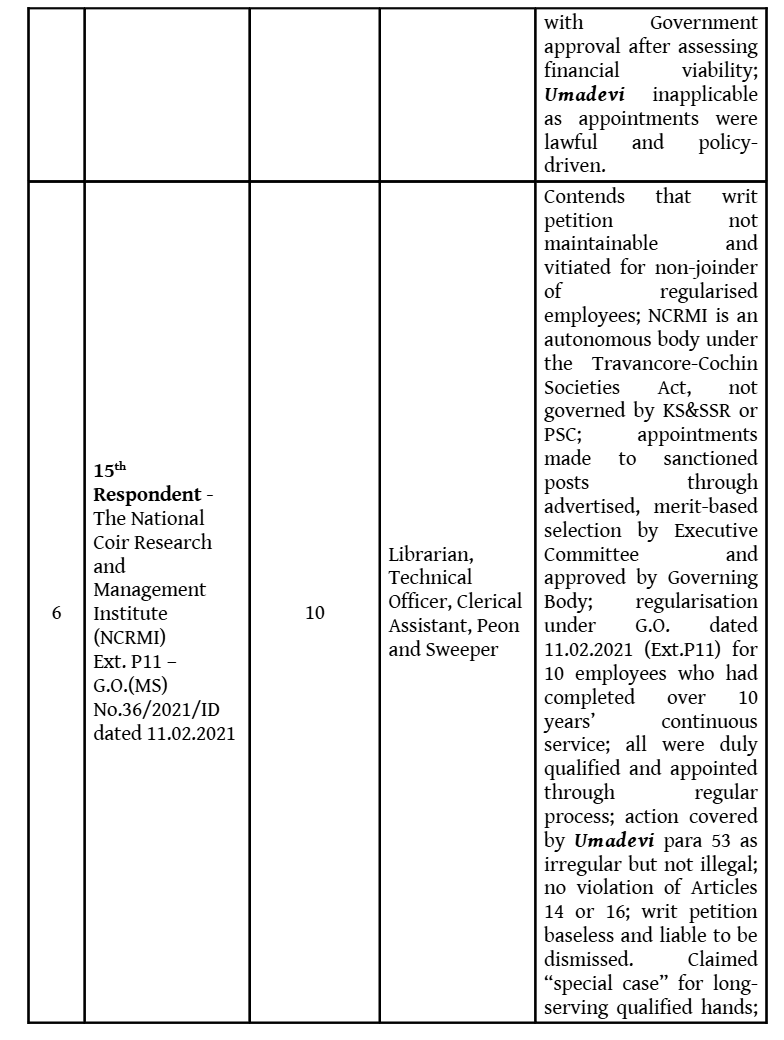
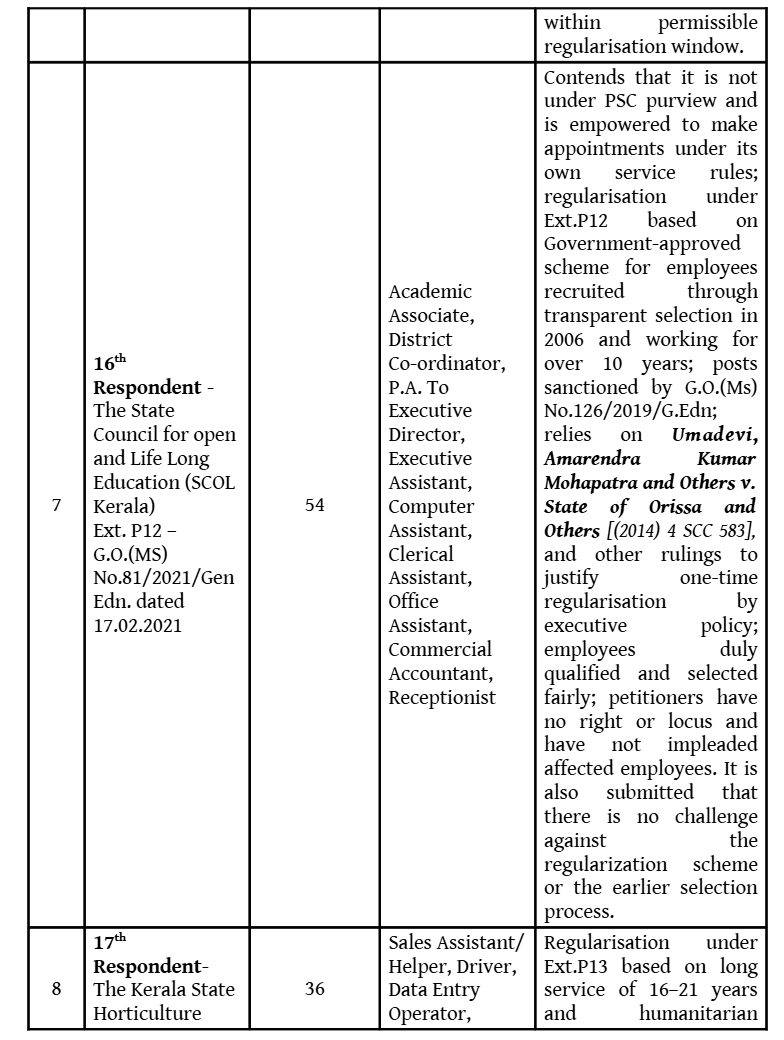
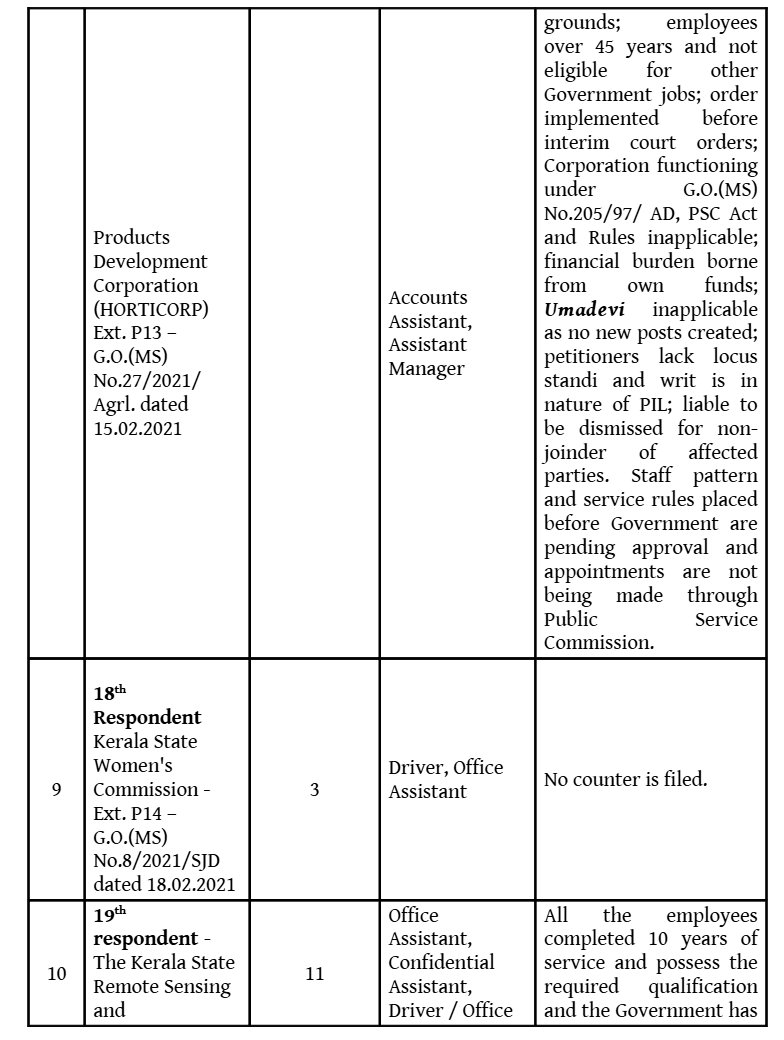
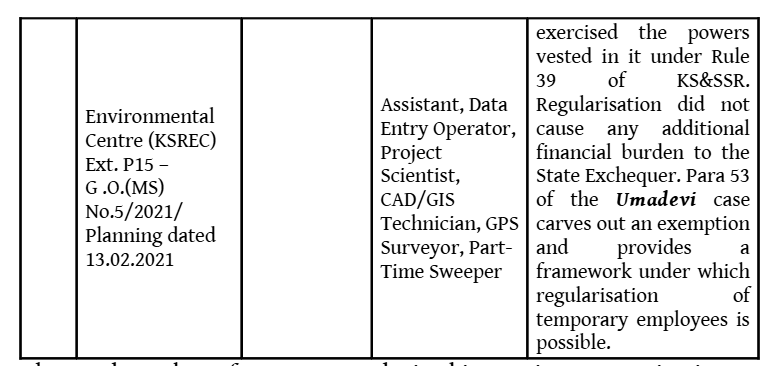
Court's Findings on Facts: - No evidence initial engagements illegal; unchallenged long continuous service (10+ years) on sanctioned posts by qualified employees. (!) - Regularized employees not parties, so qualifications not adjudicated; petitioners do not seek ouster but challenge process. (!) (!) - Total 543 employees regularized across 10 organizations via government orders. (!) (!)
Court's Directions and Conclusion: - Existing regularizations upheld as one-time measure for incumbents only; no precedent for future claims. (!) (!) (!) - Posts cease on retirement/cessation; no further similar regularizations allowed. (!) (!) - Institutions directed to strictly follow constitutional recruitment norms and government orders henceforth. (!) - Writ petition allowed in part. (!)
| Table of Content |
|---|
| 1. petitioners claim irregular regularisation. (Para 1) |
| 2. arguments highlighting illegal employment practices. (Para 2) |
| 3. respondents defend regularisations, assert legality. (Para 4) |
| 4. petitioners reiterate illegality of the process. (Para 6) |
| 5. court's observations on public employment principles. (Para 7) |
| 6. locus standi and procedural validity debated. (Para 8 , 10 , 11 , 12 , 13 , 14 , 15 , 16) |
| 7. distinction between irregular and illegal appointments. (Para 17 , 18) |
| 8. court's final declaration on regularisations. (Para 21 , 23 , 24 , 25) |
JUDGMENT :
The petitioners are aggrieved by the alleged illegal regularisation of the contract/daily wage employees by the Government in the respondent organisations.
2. The petitioners contend that they are qualified for appointments under respondents 10 to 19, given a fair and regular selection process. Petitioners 1 and 2 hold B. Tech degrees, with the 1st having been previously included in the PSC list for Civil Police Officer (Category No. 657/2017), while the 3rd petitioner was listed for Last Grade Servants (Category No. 71/2017). Petitioners 4 and 5 possess ITI qualifications, and the 4th was also part of the Civil Police Officer list. The 6th petitioner has a valid driving license, making them eligible for appointment as a Driver. All petitioners would have a fair opportunity if appointments were conducted through the Kerala Public Service Commission (KPSC) as mandated by law.
2.1. Respondents 10 to 19, as instrumentalities of the State under Article 12 of the Constitution, are required to make appointments strictly following Articles 14 and 16(1), ensuring transparency, fairness, and equal opportunity. Public posts must be filled through the PSC or open notifications to ensure equal opportunity for all eligible candidates. The petitioners argue that respondents 10 to 19 have routinely engaged temporary workers on a contract or daily wage basis, subsequently regularising these appointees and depriving qualified candidates of their rightful opportunities. Government Order, G.O.(P) No. 28/2016/Fin., issued on 26.02.2016, restricts such appointments to grave administrative exigencies and mandates specific remuneration. Additionally, further orders state that contract or daily wage employment should not exceed one year, with a possible extension to a maximum of two years, contradicting practices that have occurred.
2.2. Such actions contravene the directives outlined in Government Orders and Circulars, including Ext. P1 – G.O.(P) No.56/2017/Fin. and Ext.2 Circular No. 48/2015/Fin., which emphasises the binding nature of the judgment of the Honourable Supreme Court in Secretary, State of Karnataka and Others v. Umadevi and Others [ (2006) 4 SCC 1 ]. These directives prohibit long-term temporary engagements or subsequent regularisations and mandate that posts of a permanent nature be filled through regular recruitment. Under the Kerala State and Subordinate Services Rules (KS&SSR), temporary appointments are permissible only in genuine emergencies, confer no rights to regularisation, and must ideally occur through the Employment Exchange and be limited to 179 days. The doctrine of legitimate expectation does not extend to temporary or contractual employees, and regularisation is contingent upon open competition through the PSC.
2.3. The petitioners assert that despite the availability of sanctioned posts, respondents 10 to 19 have made appointments without adhering to reservation norms or the prescribed recruitment procedures, often driven by political influences. Irregular appointees were regularised under purported humanitarian considerations, disregarding the Umadevi judgment, which denies a right to regularisation for temporary or contract employees except in narrow circumstances. Moreover, the petitioners highlight that public appointments must adhere to reservation norms as per the KS&SSR and that respondents 10 to 19 ignored these norms while regularising employees, con


The main legal point established in the judgment is the binding effect of the settlement between the parties, the waiver of the right to seek re-employment by the workmen, and the entitlement of the ....

A lockout is justified if it is declared in response to an illegal strike or a strike that is in breach of a settlement or award.

The combination of eyewitness testimonies, recovery of the weapon used, and forensic examination results can establish guilt in criminal cases, even based on circumstantial evidence.


The conviction of an accused person under Section 27(3) of the Arms Act is not permissible in law if the accused is also charged with committing murder under Section 302 of the Indian Penal Code.

The court can enhance compensation based on the deceased's income and family dependency, and adjust the multiplier used by the Tribunal if found unjustified.



An indispensable Tool for Legal Professionals, Endorsed by Various High Court and Judicial Officers
Please visit our Training & Support
Center or Contact Us for assistance

Scan Me!
India’s Legal research and Law Firm App, Download now!


For Daily Legal Updates, Join us on :



 Back to top


