


1. Challenge to acceptance of technical bid of consortium in tender for transportation and unloading of food grains. (Para 1 , 2 , 24 , 25 , 27 )

 Back
Back





IN THE HIGH COURT OF MADHYA PRADESH AT JABALPUR
SANJEEV SACHDEVA, C.J., VINAY SARAF, J.
M/s Zenith Transport Co. - Petitioner
Versus
Madhya Pradesh State Civil Supplies Corporation Ltd and Others - Respondents
Writ Petition No. 42362 of 2025
Decided On : 29-05-2026
1. Challenge to acceptance of technical bid of consortium in tender for transportation and unloading of food grains. (Para 1 , 2 , 24 , 25 , 27 )
2. Petitioner contends documents of two consortium members violate NIT clauses; respondents argue interpretation by Managing Director is final and documents not essential. (Para 3 , 4 , 5 , 6 , 7 , 8 , 9 , 10 , 11 , 12 , 13 , 14 , 15 , 16 , 17 , 18 , 19 , 20 , 21 , 22 , 23 )
3. Petition dismissed; no interference with decision declaring respondent No.5 technically qualified and awarding contract. (Para 43 , 44 )
Courts defer to the tendering authority's interpretation unless it is mala fide, perverse, irrational, or arbitrary; mere plausibility is sufficient. (Para 32 , 33 , 34 , 37 , 38 , 39 )
Yes, if the contract involves distinct operations and the tender conditions do not prohibit it, the consortium can use different members' documents for each operation. (Para 40 , 41 , 42 )
No, if such documents are not listed in the technical qualification clause but are required only for a separate operation, they are ancillary and non-essential. (Para 30 , 31 , 35 , 36 , 41 )
Yes, under Clause 25.3, the Managing Director's interpretation is final, and courts will not substitute it unless it is plainly arbitrary. (Para 32 , 37 , 38 )
JUDGMENT :
Sanjeev Sachdeva, C.J.
1. Petitioner impugns the acceptance of Technical Bid of Respondent No. 5 consortium and seeks a direction to the tender inviting authority i.e. Madhya Pradesh State Civil Supplies Corporation Ltd. (hereinafter referred as to “MPCSCL”) to consider petitioner’s bid being L-2 for execution of the work under Notice Inviting Tender (NIT for short) dated 03.09.2025 whereby offers were invited for sector-wise long route transportation, unloading and stacking of food grains.
2. MPCSCL had invited bids for sector-wise long route transportation and unloading of food-grains for the year 2025–2027. Petitioner M/s Zenith Transport Company, Respondent No. 5 M/s Urja Transport Company and one M/s Sona Transport Company participated by submitting their bids and after technical evaluation on 10.10.2025, all the bids were declared technically responsive. On 13.10.2025, financial bids were opened and respondent No. 5 M/s Urja Transport Company was declared as L-1, the petitioner and M/s Sona Transport Company as L-2 and L-3 respectively.
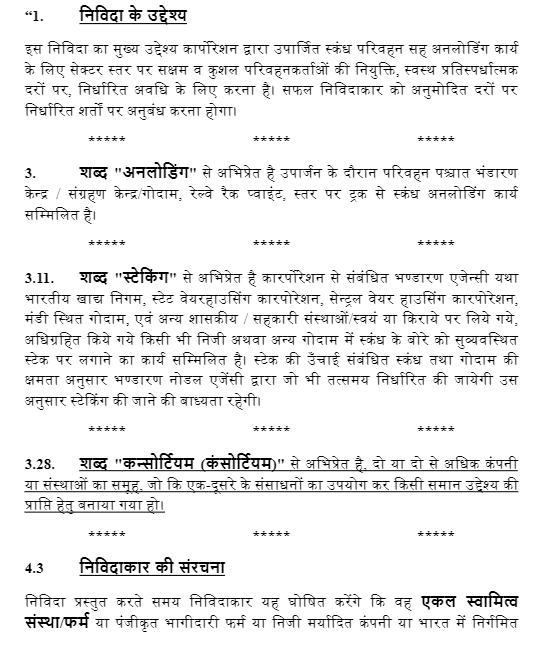
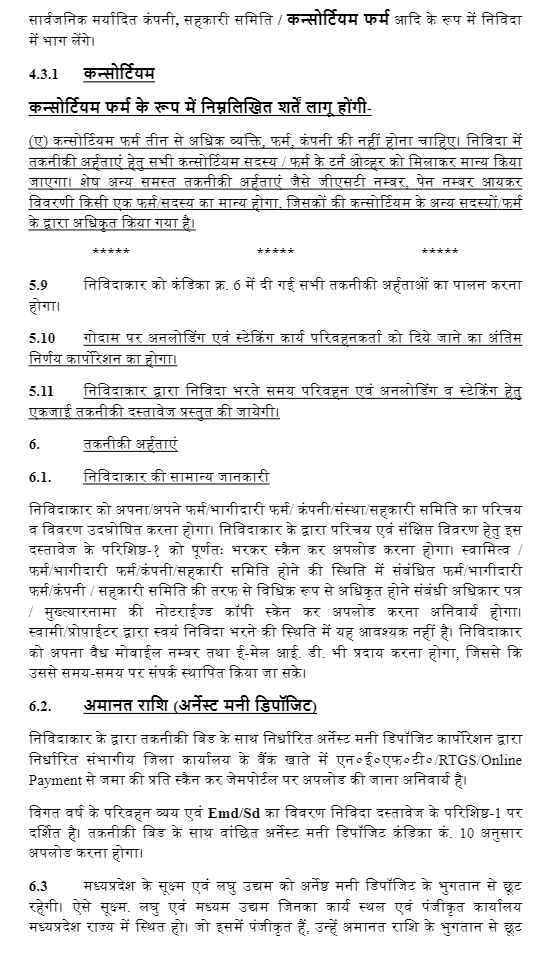
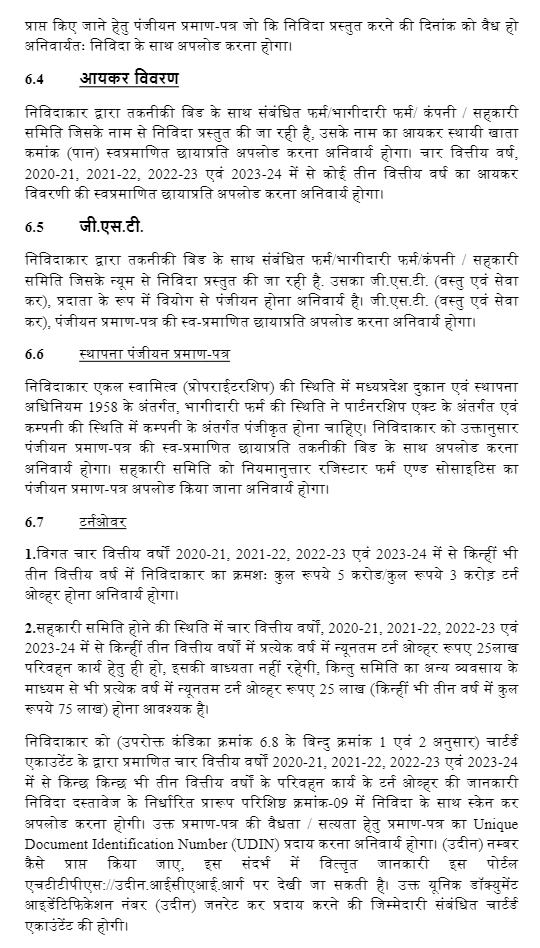
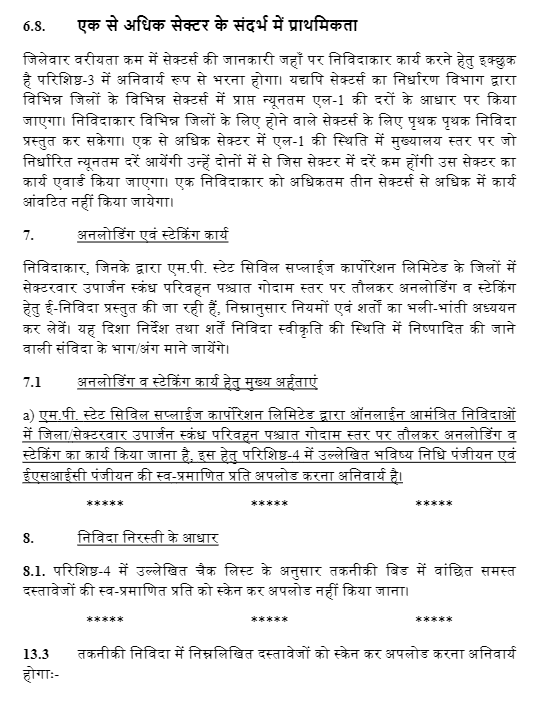
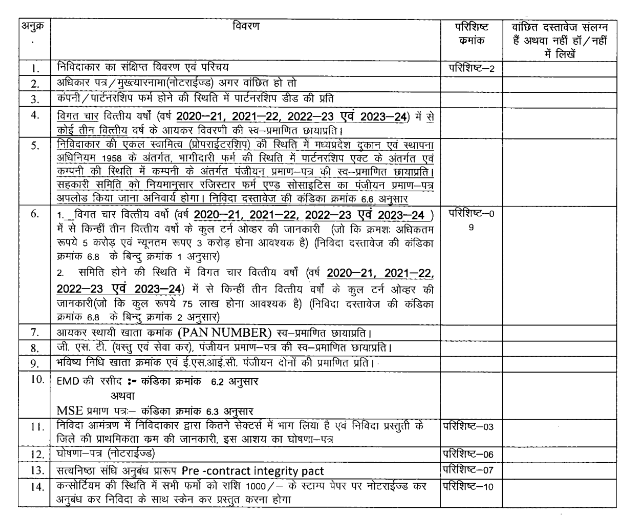
3. On 15.10.2025, petitioner submitted objections to the decision dated 10.10.2025 challenging the declaration of respondent No. 5 M/s Urja Transport Company as technically qualified on the ground that respondent no. 5 consortium had filed some documents of one member and other documents of another member. It was contended that as per Clause 4.3.1 of the NIT, documents of only one member, authorized by other members of the consortium, could be furnished, however only for the purpose of evaluation of turnover documents of all the members could be considered. It was contended that the respondent No. 5 consortium had submitted the requisite documents of Urja Transport Company except the documents pertaining to Provident Fund Account Number and ESIC Registration, which were of another member M/s Deep Transport Company, which was contrary to the term no. 4.3.1 of NIT and consequently, the bid submitted by respondent No. 5 was not compliant as per Clause 8.1 of NIT and could not be accepted.
4. It is contended that MPCSCL without considering the objections raised by the petitioner, proceeded to execute the contract with respondent No. 5. Challenging said action of MPCSCL, subject petition has been filed seeking a direction to MPCSCL to declare the bid of respondent No. 5 as non-responsive and to award the contract to the petitioner being L-2 bidder.
5. Mr. Sanjay Agrawal, learned Senior Counsel appearing for the petitioner submits that the bid of respondent No. 5 has been accepted arbitrarily in violation of Clause 4.3.1(a) and Clause 8.1 of the NIT by accepting the Provident Fund Account Number and ESIC Registration Certificate of Deep Transport Company, whereas other documents, were of Urja Transport Company, which could not be accepted in view of the aforesaid clauses, which provide that for technical evaluation of the bid submitted by consortium cumulative turnover of all the constituent members would be considered however, all the requisite documents for technical evaluation should be of one constitute member authorized by rest of the members of the consortium.
6. Learned Senior Counsel further submits that NIT was issued for composite work of transportation, unloading and stacking and as per Clause 5.9 of NIT, the tenderer must comply with all technical qualification and Clause 6 mandates that all the documents as per Annexure-IV, which includes EPF Account Number and ESIC Registration Certificate, should be furnished along with the bid document. Providing of PF Account Number and ESIC Registration Number were mandatory as per Clause 7.1 of NIT. Clause 5.11 provides that consolidated bid ought to be submitted in respect of transportation as well as unloading and stacking. He further submits that though respondent No. 5 submitted a composite bid, but submitted documents of two different members of the consortium, which could not be accepted.
7. Learned Senior Counsel submits that the re
AI



An indispensable Tool for Legal Professionals, Endorsed by Various High Court and Judicial Officers
Please visit our Training & Support
Center or Contact Us for assistance

Scan Me!
India’s Legal research and Law Firm App, Download now!


For Daily Legal Updates, Join us on :



 Back to top